Climate change and the gender justice backlash
In an increasingly hostile global landscape for civil society organisations working on gender and climate justice, we need to work together to foster an environment in which women's rights organisations can thrive.



Women are the quiet force driving resilience in Bangladesh’s coastal zones (Photo: UNDP Climate, via Flickr, CC BY-NC 2.0)
Climate change affects all of us, but not in the same way. A growing body of evidence proves that gender inequality exacerbates vulnerabilities to climate shocks.
Women and children are 14 times as likely to die during a climate disaster as men, while 47.8 million more women are facing food insecurity and hunger than men. The UN Women's Gender Snapshot 2024 report indicates that climate change may push up to 158 million more women and girls into poverty (16 million more than the number of men and boys).
LGBTQIA+ people are most at risk, with societal stigma resulting in higher unemployment rates and lack of access to support services. For example, during Hurricane Katrina in the United States, many of the women affected did not fit the traditional and heteronormative image of women and therefore faced sexism, homophobia and transphobia when accessing key relief services.
Not passive recipients
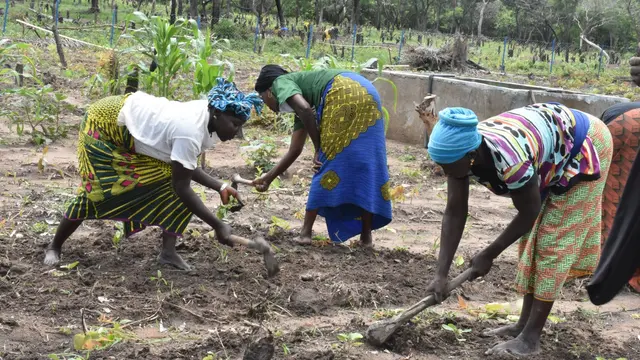
Women play a crucial role in climate adaptation, mitigation and disaster risk reduction. They are not the passive recipients of aid that they are often painted to be: women and marginalised communities are driving transformative, gender-just climate action. Grassroots feminist activists and organisations have lobbied hard for women's and LGTBQIA+ rights in climate policy decision making at community and national levels.
More participation of women and girls in community decision-making bodies is proven to ensure stronger protection of common property and land resources in climate crises.
A new report by the Global Alliance for Green and Gender Action showcases women-led climate projects and highlights community efforts to defend lands, secure food sovereignty, and create sustainable livelihoods in Burkina Faso, Brazil, the Democratic Republic of Congo, Nigeria and the Philippines.
Funding inequities
Nevertheless, climate action by women-led organisations is often underfunded and undermined in international climate policymaking and finance.
Just 2.3% of climate finance is dedicated to improving gender equality, and less than 0.1% of all global philanthropic funding is allocated to the intersection of gender and the environment. Of this, black feminist movements receive between 0.1 and 0.35% of annual grant dollars from foundations.
In terms of funding that reaches communities and local organisations, the picture is even more bleak. Of all bilateral climate-related Official Development Assistance (ODA), just 1% is directed to Indigenous Peoples, and less than 1% to feminist movements only.
At a time of drastic cuts to international aid, we can't rely solely on ODA to solve the climate crisis. But the critical issues addressed through ODA funding have not disappeared overnight, and without adequate financial support and political will, progress toward gender and climate justice will be severely limited. Governments must uphold their collective responsibility to deliver on climate finance and sustainable development.
This message was delivered at the recent 69 session of the Commission on the Status of Women (CSW69) (a United Nations-sponsored intergovernmental body promoting gender equality and women's rights) as well as through civil society-led campaigns such as Roots Rising and the Common Ask Framework, which call for increased financial commitments to address gender and climate justice in tandem.
So, what do we do beyond ODA?
While ODA still has a critical role, the current context requires us to think creatively about how to build new, progressive global partnerships between diverse climate funders. This includes looking at the role of public development banks, commercial banks, insurers, vertical climate funds, grant makers, UN agencies, community cooperatives and more to bridge the gap.
The 2X Challenge, initially launched by development and multilateral finance institutions to mobilise US$3 billion in investments for gender equality and women's rights, has taken the corporate world by storm. So far, it has mobilised $33.63 billion to support gender equality and women's economic empowerment. The new round of the 2X Challenge is now open, aiming to unlock at least $20 billion over three years, and specifically encouraging investments at the nexus of gender and climate.
While this is promising, we also need to ensure funding flows are directed towards critical social infrastructure that supports domestic and unpaid care work, strengthens social protection, and empowers community wellbeing.
To do this, climate financiers require stronger collaboration at every level to ensure that women and LGBTQIA+ communities are included in adaptation and mitigation efforts and that their solutions are recognised.
Women's funds, feminist funds, and environmental justice funds are already channelling (limited and decreasing) resources to organisations in ways that prioritise context and flexibility in how funds are dispersed and used. There is an opportunity for governments, development banks, philanthropy and the private sector to scale up investments in these solutions, partnering with these funds to support organisations leading transformative, gender-just climate action.
A call for shared responsibility and collective action
In an increasingly hostile global landscape of decreased funding and shrinking civic space, we must focus on building an enabling environment in which women's rights organisations can thrive and expand their vital work to advance climate justice.
We need to build on the momentum of CSW69 as we head into discussions on climate action at key international meetings, including the forthcoming International Conference on Financing for Development and the G7 and G20 forums.
We need to push for action on the UNFCCC Enhanced Lima Work Programme on Gender, which was established in 2014 to ensure that countries participating in the Paris Agreement integrate gender-responsive approaches into their climate policies, including national adaptation plans and nationally determined contributions. The work programme was recently extended for a further 10 years.
As we prepare for this year's COP30 climate summit in Brazil, we need to centre conversations on just and equitable access to climate finance, ensuring that women and LGBTQIA communities most impacted by climate change are those equipped to drive the solutions.
The question is not whether we can afford to support feminist climate movements but whether we can afford not to.
With thanks to Sydney Church, May Aung and Ebony Holland of the Gender Justice Network at IIED for their contributions.