De-risking the transition to agroecology in humanitarian contexts
Learn how practitioners, policymakers, donors and researchers are working across the humanitarian, development and agroecology sectors to strengthen food systems in crisis-affected contexts

Women group in a farmer field school in Barbardiya Municipality, Nepal, preparing homemade botanical pesticide (Photo: copyright Pratik Adhikari/LI-BIRD)
Around the world, deepening humanitarian crises are driving record levels of acute food insecurity, particularly in contexts affected by conflict, climate change and displacement. At the same time, shrinking humanitarian funding is forcing organisations to scale back emergency food assistance.
This moment demands more than short-term response. It calls for practical pathways to strengthen local food systems, build resilience and support greater self-reliance – even in fragile and crisis-affected settings.
This event marked the launch of a new learning report that explored how agroecological food systems transitions can be initiated in anticipation of, during, and in recovery from humanitarian crises. The report examines the available evidence and presents concrete, field-tested models for easing and de-risking these transitions in fragile contexts.
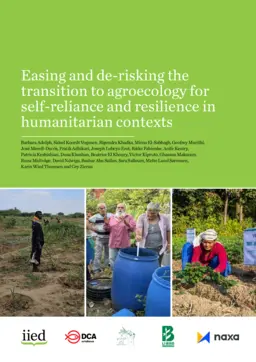
Event participants gained early insight into the key findings and practical recommendations of the report, grounded in real-world experience. They heard directly from practitioners about pilot initiatives in Lebanon, Kenya and Nepal implemented by DanChurchAid and its partners Agrimovement and LI-BIRD.
Together, they explored what these lessons mean for programme design, policy choices and funding priorities, and engaged with leading voices in agroecology and food systems on how to tackle the root causes of food insecurity and support crisis-affected communities to build more resilient and equitable food systems.
Speakers
- Karin Elisabeth Lind, international director, DanChurchAid
- Barbara Adolph, senior associate, IIED
- Rigendra Khadka, resilience programme manager, DanChurchAid Nepal
- Mirna El Sabbagh, head of programme, DanChurchAid Lebanon
- Geoffrey Murithi, programme coordinator, DanChurchAid Kenya
- Natalie Topa, global expert in regenerative design and resilience
- Leonard Mizzi, advisor on food systems focusing on FAO and IFAD, European Commission (DG INTPA)
- Afton Halloran, senior scientific manager, global and environmental health, Novo Nordisk Foundation
Event coverage
You can watch a recording of the entire webinar below or on IIED's YouTube channel, where there are also timestamped links to each of the speakers' contributions.
IIED events newsletter
Sign up to our mailing list for updates and invitations to events throughout the year, including webinars, critical themes and debriefs.
Contact
Larissa Schneider-Kim ([email protected]), internal communications and events manager