Items tagged:
Agroecology
-
African social movements call on UN food summit to give people back control
In the second blog in our ‘food year’ series, guest blogger Million Belay explains why now is the time to demand a better food system that works for small-scale food producers in Africa – who account for most of the world’s food insecure
-
Resilient food systems and COVID-19: lessons for a Just Transition
The COVID-19 pandemic has exposed huge vulnerabilities and inequalities in food systems. They are highly vulnerable to the impacts of climate change: to droughts, floods, typhoons, sea-level rise – the current locust outbreak in East Africa. But they are also part of the problem, contributing about one third of global greenhouse gas emissions and being highly inequitable too. Krystyna Swiderska spells out what needs to change
-
No room for manoeuvre: debt prevents investing in the future
This case study highlights the challenges that farmers in Malawi face when trying to intensify their agricultural production. It focuses on smallholder farmers in the Mwansambo area of Central Malawi. Mwansambo and neighbouring areas are important food and cash crop producing regions. But despite decades of agricultural development interventions, farmers are still struggling to feed their families and invest in sustainable land management
-
Difficult choices: balancing competing priorities on Burkina Faso farms
The SITAM project looked at how to support progress towards sustainable intensification of agriculture in three African countries. This case study looks at how farming households in eastern Burkina Faso are balancing different priorities as they try to increase their productivity
-
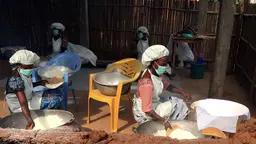
Tapioca tech in Togo – how producers are organising to transform lives and land
Togo’s expanding populations need both food and means of generating income. After a recent visit, Duncan Macqueen reflects on how multi-tiered self-organisation is supporting sustainable solutions among tapioca producers
-
Upscaling agroecological practices
This project aimed to promote the dissemination and adoption of agroecological practices around the world through research, lobbying and advocacy efforts
-
Five ways to make farming more sustainable
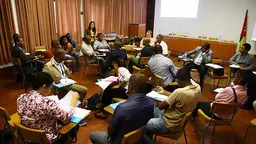
A recent workshop in Mozambique identified five ways to sustainably intensify agriculture. In food insecure countries, large-scale investments are often considered a major driver of agricultural growth, but these can promote monocultures and intensive approaches that damage the environment and progressively decrease soil fertility.
-
Agroecology offers FAO a 'new window' on agriculture
Long-neglected by mainstream development actors, agroecology is gaining momentum as a farming and landscape approach – as a recent Food and Agriculture Organisation symposium demonstrates
-
Spreading the word about the no-till agricultural revolution
Never heard of no-till agriculture? It's revolutionising agriculture in Australia and other drylands countries. "No-Till Bill", a pioneer in the technique, is now spreading the word in Europe
-
Trade-offs in sustainable intensification
It is a huge challenge to achieve food security for all in a way that is sustainable in environmental, economic and social terms. And there are different views on what dimension of sustainability should have priority when trying to produce 'more with less'.
-
Sustaining local food systems and agricultural biodiversity
How and under what conditions can decentralised governance, capacity building and participation by farmers promote food systems that adapt to changing conditions and climates and maintain agricultural biodiversity?
-
Building resilient food systems
IIED strengthens the capacity of local organisations and institutions by designing resilient food systems and sustaining local food systems.
-
Introduction to building greater local control and resilience into agricultural and food systems
IIED is working to promote farming systems that are sustainable, productive and resilient – and to support smallholder farmers and farmer-led innovation
-
Democratising food and agricultural research
IIED's action-research work aimed to help farmers ensure agricultural research better meets farmer's needs and priorities
-
Agricultural development: business as usual is not an option
Following the 2008 global food price hikes and riots, national governments and transnational corporations are increasingly interested in investing in large-scale African agricultural projects. While these land acquisitions gather pace, 925 million people remain undernourished worldwide, with 239 million living in sub-Saharan Africa. In this new context, the question is not only how sustainable large-scale industrial agriculture is, but also what model of food production and farming is most effective in addressing the question of hunger – and for whom.
-
Opportunities for farm seed conservation, breeding and production
With increasing demand for speciality and conservation seeds in the face of threats to the survival of local varieties and biodiversity more widely, IIED worked to provide research on research to stimulate public engagement and citizen involvement in decision-making
-
Can small-scale farmers feed the world?
The world’s food systems are being squeezed from all sides: rising populations and shifting diets are increasing the global demand for food, while food production is increasingly compromised by climate change and land degradation.