Cities are vulnerable to climate change and central to its solutions
Worldwide, over a billion people live in informal settlements without access to essential services and vulnerable to the impacts of climate change. As COP29 marks ‘Urbanisation Day’ (20 November) and as countries continue to consider their climate commitments, Tucker Landesman and Anna Walnycki explain how achieving global climate change targets depends on equitable climate action in cities. They also highlight the need to work directly with – and learn from – communities and local practitioners.




Building climate resilience of urban systems through ecosystem-based adaptation in Latin America and the Caribbean (Photo: UNEP & Climate Adaptation, via Flickr, CC BY-NC 2.0)
Over half of the world’s population lives in towns and cities. 1.1 billion of those people live in informal settlements without access to adequate housing, infrastructure and basic services, making them especially vulnerable to climate change. At the same time, up to two-thirds of global greenhouse gas emissions come from urban areas.
Heard it all before?
That’s because these statistics are typically used to draw the straightforward conclusion: cities are where the climate battle will be won or lost, as UN Secretary General Antonio Guterres puts it.
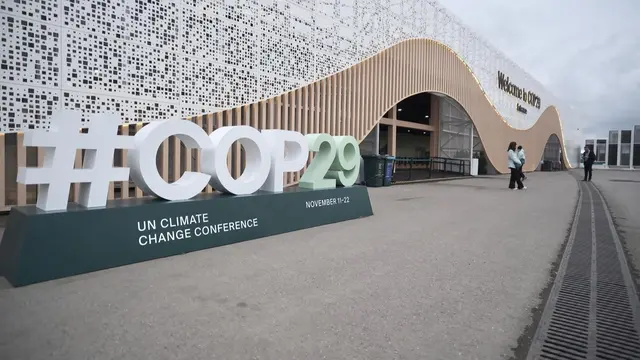
These facts have helped to build much-needed global momentum. For example, a thematic ‘Urbanisation Day’ is currently under way at COP29 in Baku, with ministerial-level roundtables and a declaration on pathways for resilient and healthy cities. And after years of advocacy by scientists and urban experts, the IPCC is preparing a Special Report on Cities and Climate Change, expected in 2027.
But for the 1.1 billion people in informal settlements who are already facing the dire impacts of climate change – at hugely disproportionate levels compared to their tiny carbon footprints – this momentum is slow and is failing to produce material change. It’s time for decision makers, from global arenas to local government, to take urban informality seriously – especially when you consider some additional, less well-known facts:
- By 2050, the population of people living in ‘slum like’ conditions will triple to over 3 billion people (PDF)
- A mere 1.2% of climate finance for cities is spent on adaptation, and
- Only 3.5% of the money from the major global climate funds is intended to benefit urban residents living in poverty.
This leads us to another straightforward conclusion: integrated approaches that provide low carbon, climate-resilient housing and infrastructure for all must be prioritised, to forge sustainable pathways for growth while boosting resilience and decreasing inequalities.
Solutions that draw on expert innovation, local knowledge and traditional practices already exist. We know it is possible to use widely available technology and know-how to dramatically reduce urban emissions and protect people and infrastructure in cities. Decades of participatory upgrading of informal settlements (where residents are engaged throughout) can provide knowledge and experience highly relevant to the twin crises of inequality and climate change.
Climate impacts: testing resilience limits
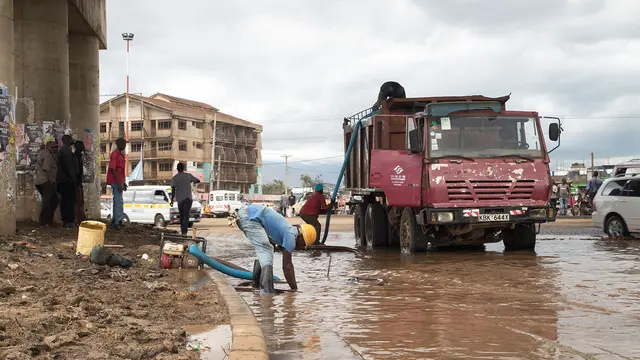
Unplanned and informal urban settlements are often located in parts of cities that are vulnerable to climate impacts, such as low-lying coastal areas and floodplains, or steep hillsides. Homes and infrastructure are easily damaged by hazards such as flooding, strong winds, landslides and rising sea levels. More action-oriented data and research is needed to understand hazards, such as extreme heat and how they affect health and wellbeing.
Residents in informal urban settlements lack the resources and capacity to significantly reduce risk on their own, and struggle to access support and subsidies that governments may offer to middle class and wealthier residents. Low levels of public investment in urban infrastructure and basic services, reliance on insecure work with little or no social protections, and a lack of financial and material assets to fully recover from adverse climate events all reinforce vulnerability.
The intersection of inequality and climate risks can create traps of poverty and vulnerability, and threatens to undo hard-won gains in poverty reduction. Left unchecked, these factors will have an increasingly corrosive impact as vulnerable settlements increase in size, number and density, and as ecosystems that provide some natural protection from climate change are further degraded.
Prioritising sustainable housing for all
UN Habitat’s new director, Anacláudia Rossbach, has said that creating affordable, sustainable housing for all must be a global priority and we must put people at the centre of policies. The IPCC’s recent scientific assessment (PDF) backs this up. It affirms with high confidence that “the greatest gains in wellbeing in urban areas can be achieved by prioritising investment to reduce climate risk for low-income and marginalised residents and targeting informal settlements”.
Any upgrading of settlements needs to include climate proofing in order to deliver housing and infrastructure that is resilient to climate shocks. Greater recognition of this is needed, along with robust evidence that illustrates linked-up policy and funding for scalable, inclusive solutions.
IIED is working with partners to co-produce evidence that stakeholders and decision makers can use to transform informal settlements and develop scalable interventions that promote equitable climate action.
For instance, forthcoming research with the Centre for Community Initiatives in Dar es Salaam, Tanzania demonstrates how extreme heat, high winds and excessive rainfall leading to flooding have cumulative impacts on the health, incomes and wellbeing of informal settlement residents. This methodology is now being developed so that it can be used by members of the Slum Dwellers International (SDI) network.
Connecting climate action and equitable urban development
Hope lies in the fact that there are interventions that connect climate action (adaptation and mitigation) with efforts to tackle urban poverty, inequality and injustice at scale.
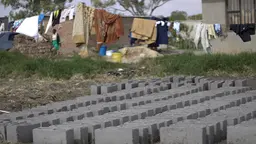
Participatory settlement upgrading could be a highly effective form of integrated climate action to boost city-wide resilience and reduce the risk of high-carbon development pathways. For example, IIED research has identified supply chains of affordable, quality building materials as a key avenue for positive impact for residents of informal settlements.
Elsewhere, IIED is working with partners, Cities Alliance and SDI, to integrate sustainable construction as a pillar of community-led, climate-resilient upgrading strategies, along with additional approaches such as nature-based solutions. Evidence that links decarbonisation and integrated climate action with urban justice is growing; as are practical examples from communities, and collaborations between communities and governments via urban labs. But policy-level support and significant funding is needed.
Right now, low-income and informal settlements are often excluded from climate planning and action, meaning they don’t benefit from the already limited funding available. It also means they cannot advocate on the issues that affect them the most or ensure that interventions reflect local needs.
There is a real opportunity to work with communities to enable effective climate action that benefits all. Lessons learnt from experiences of settlement upgrading, community-based practices, struggles for tenure and the right to stay put – and community-generated and validated data and knowledge – are central to equitable climate action.
Local-level information and decision making must be extrapolated to national, regional and global levels, so that national and global climate agendas and resource flows reflect, and respond to, the realities of urban climate change.
As cities and the number of people living in vulnerable informal settlements continue to grow, climate-resilient urban development pathways are essential. Without them, we cannot successfully meet the Paris Agreement’s climate targets, detailed in Nationally Determined Contributions, or improve life for all urban residents. To enable this, money needs to get to where it matters most, to ensure vulnerable urban residents have safe, sustainable homes.
Well-resourced, collaborative planning and multi-stakeholder climate action is our best way forward to protect the rights of all city residents and keep the world’s cities safe places for all, in the face of our climate reality.
With thanks to IIED's Jodie Frosdick for contributing to the development of this insight.