CBA19: daily updates
The 19th International Conference on Community-Based Adaptation to Climate Change (CBA19) took place between 12-16 May 2025 in Recife, Brazil. This page features daily reports from the event.
The 19th International Conference on Community-Based Adaptation to Climate Change (CBA19) hosted hundreds of people collectively seeking to enable community-driven climate action. The conference featured a packed agenda of parallel sessions under themes of 'Locally led adaptation action', 'urban' and 'nature'.

IIED executive director Tom Mitchell in conversation with Alice de Moraes Amorim Vogas, programme director, COP30 presidency (Photo: IIED)
Event coverage
Day 5
And the Shark Tank winners are…
During CBA19, 11 project teams pitched their ideas for innovative projects to the sharks – experts with real-world investment experience. Today the sharks revealed the winning finalists.
Jesper Hörnberg, CEO of the Global Resilience Partnership and organiser of the CBA Shark Tank, congratulated all the project teams, saying they had demonstrated grit and a resilience that was humbling to witness.
The three winners of the shark tank are:

Winners being announced (Photo: IIED)
Most inclusive solution: Sustainable Enterprises for Urban Resilience
This partnership with SDI Zambia aims to address the challenge of poorly managed waste. Project presenter Ian Matimba of SDI Zambia says the solutions they are offering include farming Black Soldier Fly Larvae, which provide protein-rich larvae for fish farming and biodegradable waste for protein-rich compost.
Most impactful solution: Ih Alagou
This start-up from Recife is focused on urban flooding and the need for timely citizen alerts. They noted that 44% of the greater Recife area has a high risk of flooding, but there are no real-time warnings about flooding and landslides, putting lives and property at risk. Their project provides real-time water level monitoring, with the information sent to civil defence organisations and then to citizens. They already have a first client in Olinda and want to expand.
Most innovative solution: Pyro Alert
Co-founder Clara Félix introduced the Pyro alert device and app, which are designed to minimise fire damage to crops and forested areas. The Pyro Alert system includes a small device to monitor soil moisture levels and fires, and an app delivers alerts to farmers.
Congratulations to the three winners and all the project teams! GRP and Climate-KIC will continue to mentor all three winners, as well as everyone else who pitched their projects.
Day 4
First entrepreneurs enter the Shark Tank!
The excitement was palpable as climate entrepreneurs took the stage for the first round of Shark Tank pitches.
The Shark Tank offers CBA19 participants the chance to pitch their innovative climate adaptation ideas to a panel of 'sharks' – experts with real-world investment experience.

Pitches being presented (Photo: IIED)
It's an opportunity to present bold, locally-led solutions that can attract investment support. The contestants with the best bids will be announced on Friday.
Innovators showcased diverse climate solutions, addressing challenges from fire detection to urban waste recycling and community-led climate resilience across multiple countries.
Participants shared their personal stories and the impact their projects are having in communities in Brazil, Tunisia, Bangladesh, Uganda and Zambia. Their pitches highlighted the power of technology, traditional knowledge and community-driven action in building a sustainable future.
The representative of Sustainable Enterprises for Urban Resilience from Zambia spoke about how he came from a slum himself and has faced challenges that now inspire him to "be the change" he wants to see in the world. It was a particularly moving presentation.
The first two days of the Shark Tank are dedicated to working with the pitchers on their proposals.
The final round
Three of the pitchers advanced to the final round. These finalists will present their updated proposals to the plenary on Friday, offering an opportunity to secure critical support for scaling up their ideas.
The three finalists are: Pyro Alert, Sustainable Enterprises for Urban Resilience and Alagou Brasil.
The Shark Tank sessions have offered a compelling insight into how innovations can address climate adaptation, environmental protection and socio-economic empowerment all at once.
Stay tuned for the final pitch event, when these visionary entrepreneurs will present their projects and the sharks will decide who the overall winner is.
Fireside chat with Alice de Moraes Amorim Vogas

IIED executive director Tom Mitchell in conversation with Alice de Moraes Amorim Vogas, programme director, COP30 presidency (Photo: IIED)
CBA19 was joined by Alice de Moraes Amorim Vogas, programme director, COP30 presidency, for a chat with IIED executive director, Tom Mitchell. She shared the three main objectives of the COP30 agenda:
- To strengthen multilateralism: she discussed the need to protect the system that is under attack and emphasised that the solutions are here, not in the negotiation room
- To advance implementation of climate action, and
- The "need climate to be closer to people's lives": she discussed all the ways that Brazil is bringing its people together through participative processes to feed into COP30. And she stressed that COP is not an end in itself, rather it is a means to something bigger and there is room for creativity.
We appreciate her contribution to CBA19 and we look forward to contributing the CBA19 key messages to the COP presidency, to make sure that our voices are heard!

Audience members asking questions (Photo: IIED)
A ‘lightning fast’ session on locally led and nature-based solutions for just and equitable climate adaptation
This super-interactive session featured ‘lightning talks’ – putting pressure on the presenters to deliver quickfire presentations, and the participants to think quickly and respond to what they’d seen and heard.

Participants discussing and writing ideas down on flipcharts (Photo: IIED)
The session was hosted by the British Red Cross, the Rainforest Alliance and the International Institute of Tropical Agricultur (IITA). It kicked off with organisations sharing examples of how their cross-sectoral, multi-faceted programmes combine locally-led nature-based solutions with scientific and Indigenous knowledge to achieve impressive outcomes.
Participants were seated in groups around tables, given sheets of flipchart paper, and asked to focus on one question during the presentations. They then had two minutes to write down their thoughts before passing the flipchart pages to the neighbouring table, and then the next presentations began.
This cycle of quick presentations followed by fast questions and answers was repeated twice more, until all the flipchart pages had been passed around the room and everyone had seen and considered the responses of the other participants.
By the last round, the groups ended with the flip chart they started with and were instructed to look at all the notes and pick one key highlight: something inspiring or interesting.
The hosts asked participants to note down any examples of nature-based solutions at scale that they’re aware of, and whether they are locally led.
The session was conducted in English, Portuguese and Spanish. Speakers of the different languages had a different topic to summarise:
- What actions are needed across programme and policy spaces to take locally led NBS to scale?
- What are the actions of actors to scale but keep it locally led?
- What actions are needed to ensure locally led NBS at scale is just and equitable?
Again in quick-fire style, they delivered short responses back to the room in the three languages.

Session leads (Photo: IIED)
Day 3
Festival clima de mundança
Participants were only a little deterred by the rain from attending the 'climate for change' festival hosted by Habitat for Humanity Brazil and organised by our local advisory committee. The festival featured local dance and music performances, as well as a vast array of local market stalls with delicious food and creative crafts.

Local dance and music performances at the CBA19 festival clima de mundança (Photo: IIED)
Out of the box thinking at the forum theatre
An interactive 'out-of-the-box' session used forum theatre to get participants to explore the challenges around adaptation finance. Through interactive theatre, they worked through real-world scenarios and worked together to expose roadblocks in the climate-finance system.

Laughter and chatting at the forum theatre (Photo: IIED)
Climate justice in Muribeca: Community planning, biodiversity, and culture as catalysts for climate awareness
Participants on this field trip visited Muribeca and learned how grassroots mobilising, environmental planning, and cultural expression are intersecting in communities at the forefront of climate vulnerability.
Muribeca lies on the periphery of the city of Jaboatão dos Guararapes, within the wider Recife metropolitan area. Participants were welcomed by Somos Todos Muribeca (STM), a local collective, and members of the Jaboatão dos Guararapes Environmental Commission.

CBA19 participants and team members from STM and local community (Photo: IIED)
Community plan highlights urgent challenges
The hosts presented the community's plan for adaptation and risk reduction, developed with support from Fiocruz and Brazil's National Secretariat for the Peripheries. The plan highlights urgent local challenges, such as recurrent flooding, unregulated landfills, and environmental racism. It proposes community-led solutions grounded in nature-based strategies, capacity building, and collective resistance to harmful development projects.
The visit also featured an engaging display of the tools and outcomes from climate literacy workshops that educate residents in climate awareness and citizen science. These efforts aim to empower the community to generate data and enhance response strategies to extreme weather events.
A highlight of the day was the "Primates of Pernambuco" exhibition, developed in collaboration with the Federal University of Pernambuco (UFPE). It showcased native primates and their habitats, drawing links between biodiversity conservation and climate resilience. Visitors learned how protecting local fauna contributes to broader environmental sustainability and ecosystem balance.

Biologist working on the "Primates of Pernambuco" exhibition, explaining the project to CBA19 participants (Photo: IIED)
Cultural traditions inspire engagement and connection
As the day drew to a close, participants were invited into a mood of celebration and connection. A local live band performed traditional forró music while community members warmly encouraged guests to join the dancing. The shared rhythms, spontaneous laughter, and movement transformed the gathering into a collective expression of joy, solidarity, and resilience.
Alongside a colourful São João food fair offering regional delicacies, this festive moment underscored the deep role of cultural traditions in inspiring community engagement and amplifying climate awareness.
This vibrant, community-led field trip underscored how inclusive, locally-driven adaptation planning—paired with environmental education and cultural vitality— can serve as a model for climate justice in peripheral urban areas.
Roots of resilience - learning about Afro-Brazilian heritage and sustainable livelihoods
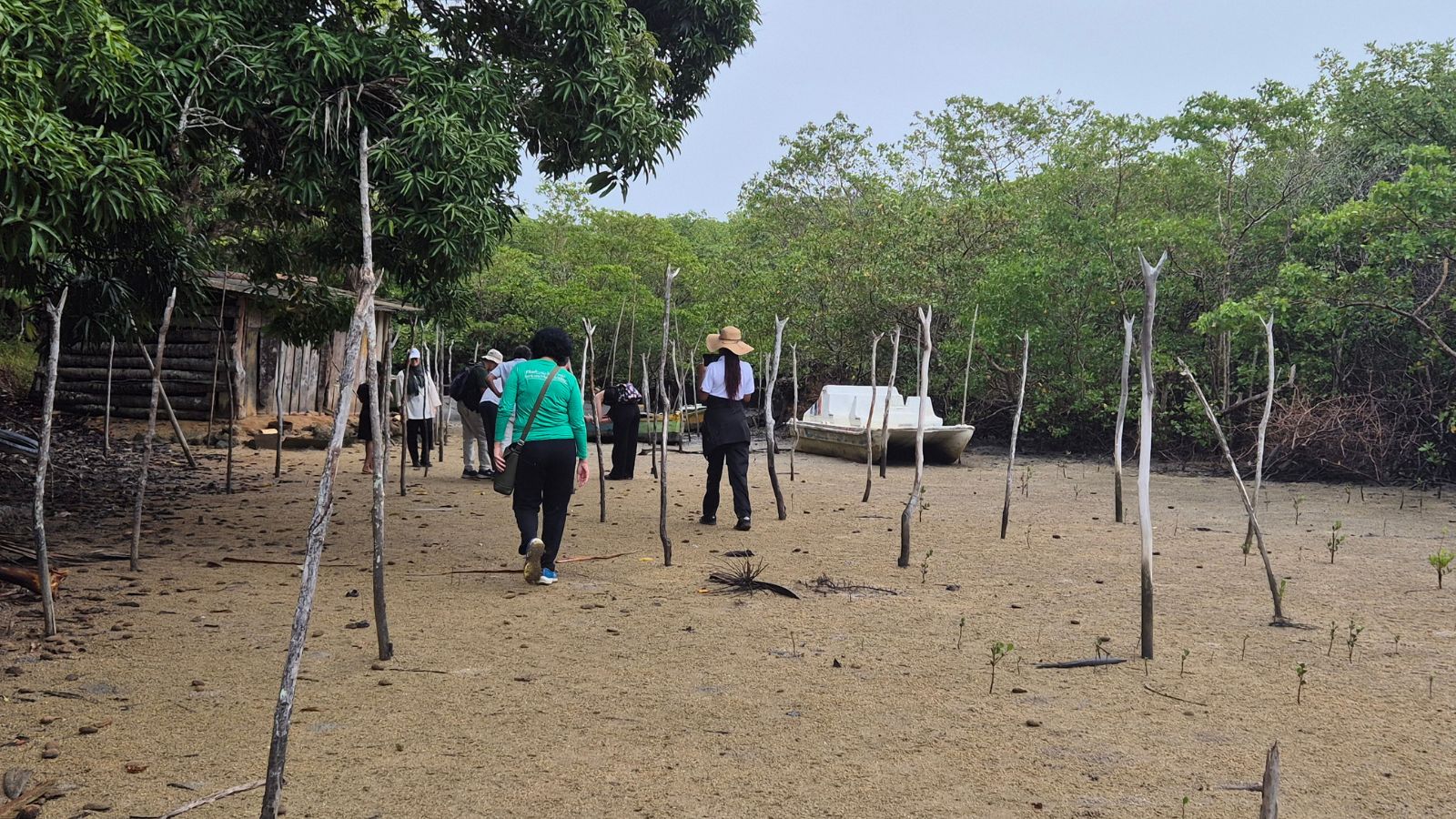
This CBA field trip visited the Quilombola community of Engenho Siqueira in Rio Formoso to learn how they are linking their Afro-Brazilian heritage and climate-resilient livelihoods.
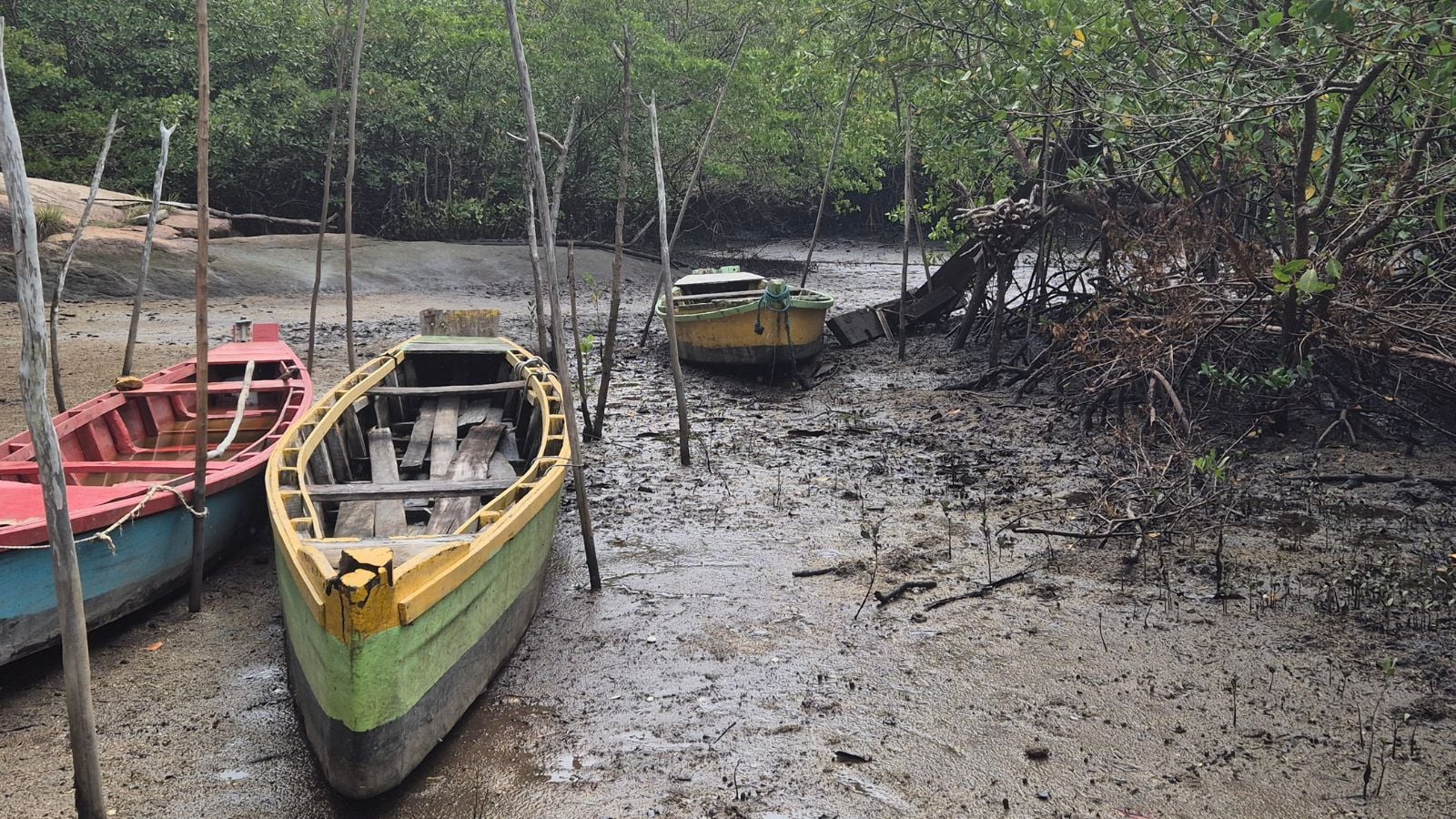
Quilombos are Afro-Brazilian communities originally established by escaped slaves. This rural community in the south of Pernambuco state practices traditional agriculture, growing their own fruits and vegetables, and artisanal fishing in the surrounding mangrove forests.
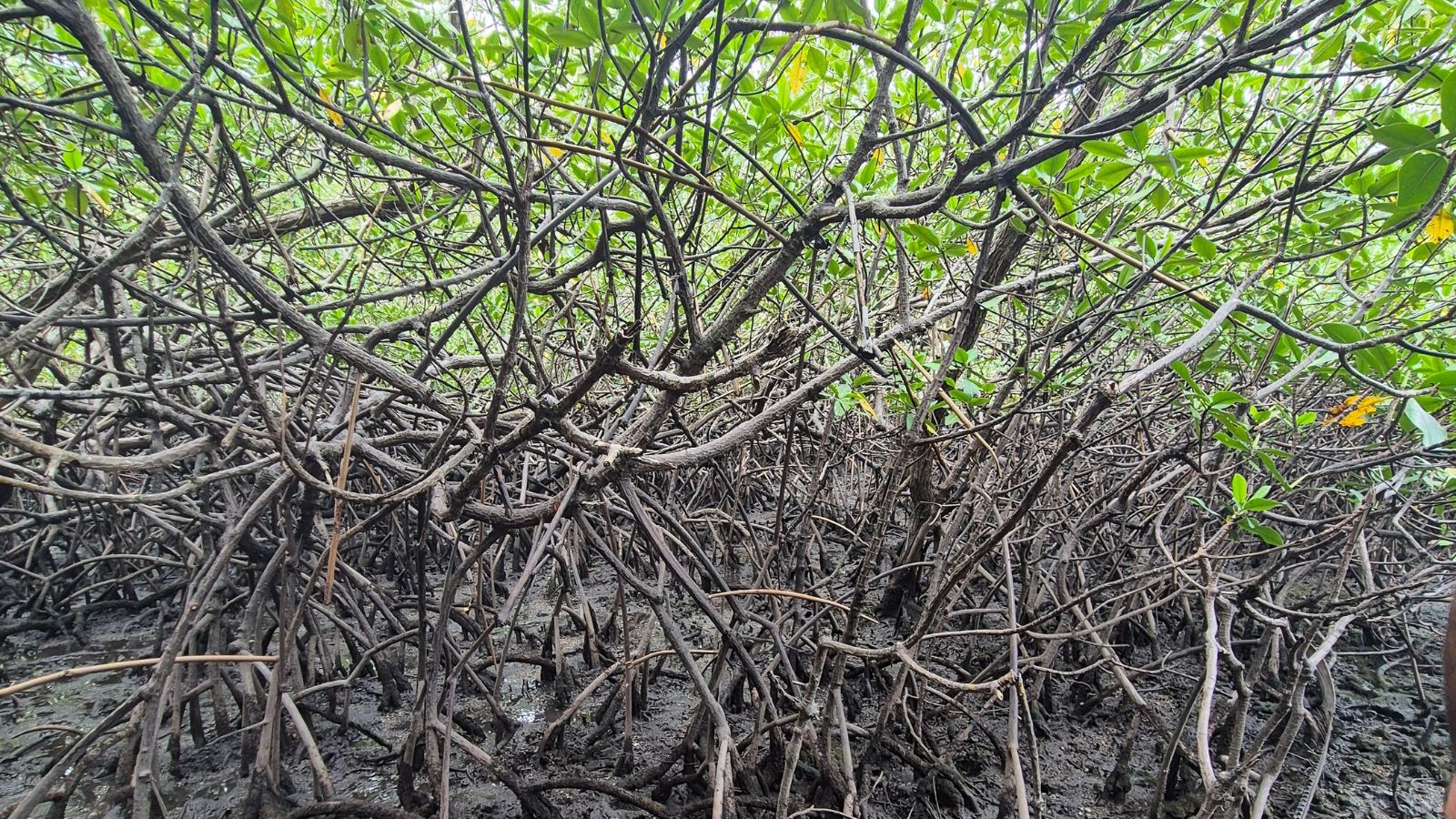
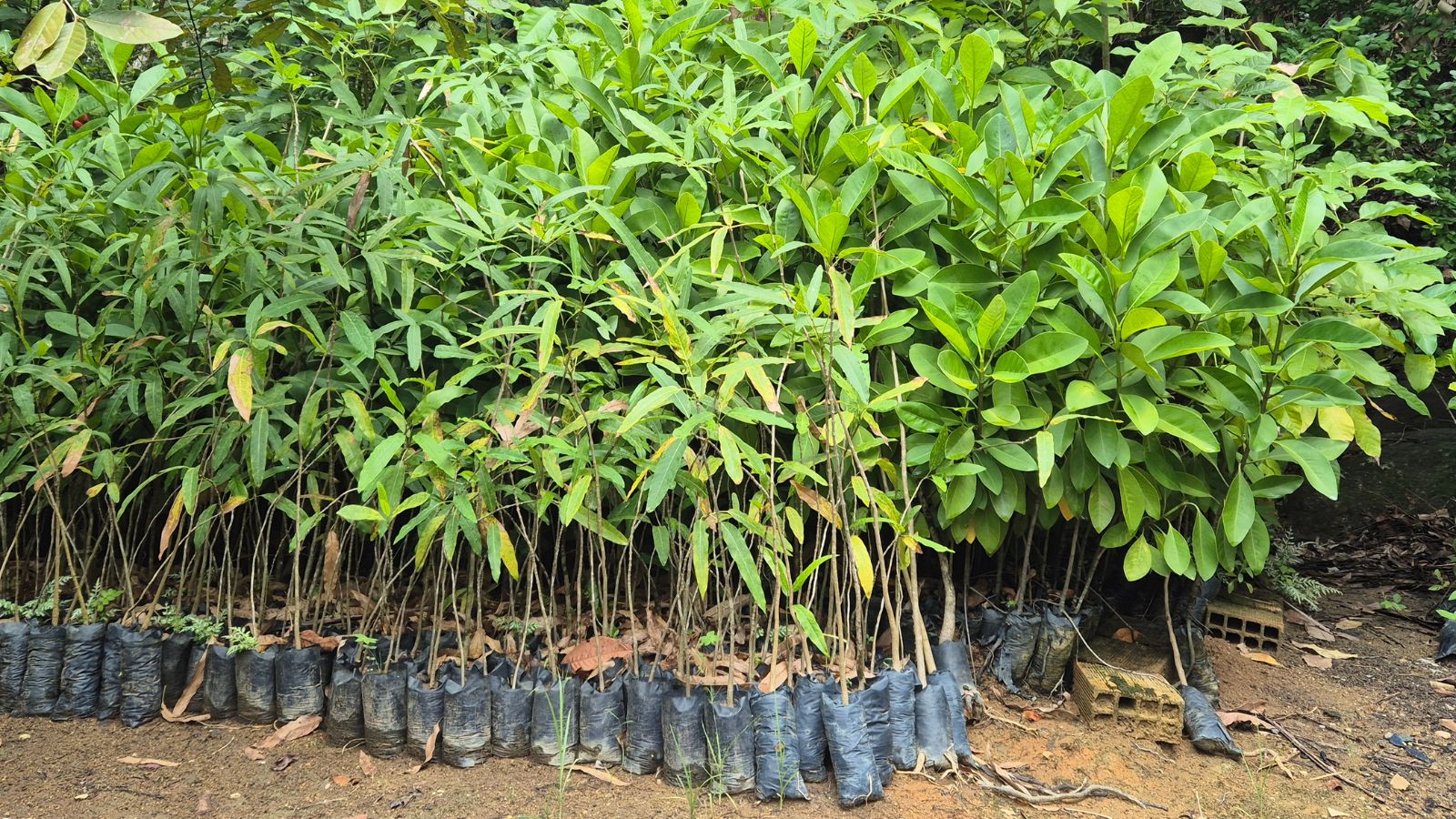
Members of the community use their traditional knowledge to conserve the mangroves. Protecting and restoring mangroves is an important way to shield against climate impacts, and the local forest is one of the most well-preserved mangrove estuaries in the region.
The Sabiá Agroecological Development Centre, also known as Centro Sabiá, has collaborated with the local community to promote environmental tourism in the area, aiming to develop more sustainable livelihoods. Centro Sabiá works with family farmers, fighting hunger, tackling the climate crisis and building socio-environmental justice. It has directly supported more than 15,000 farming families, strengthening agroecological systems without the use of pesticides and developing practical solutions for climate adaptation.
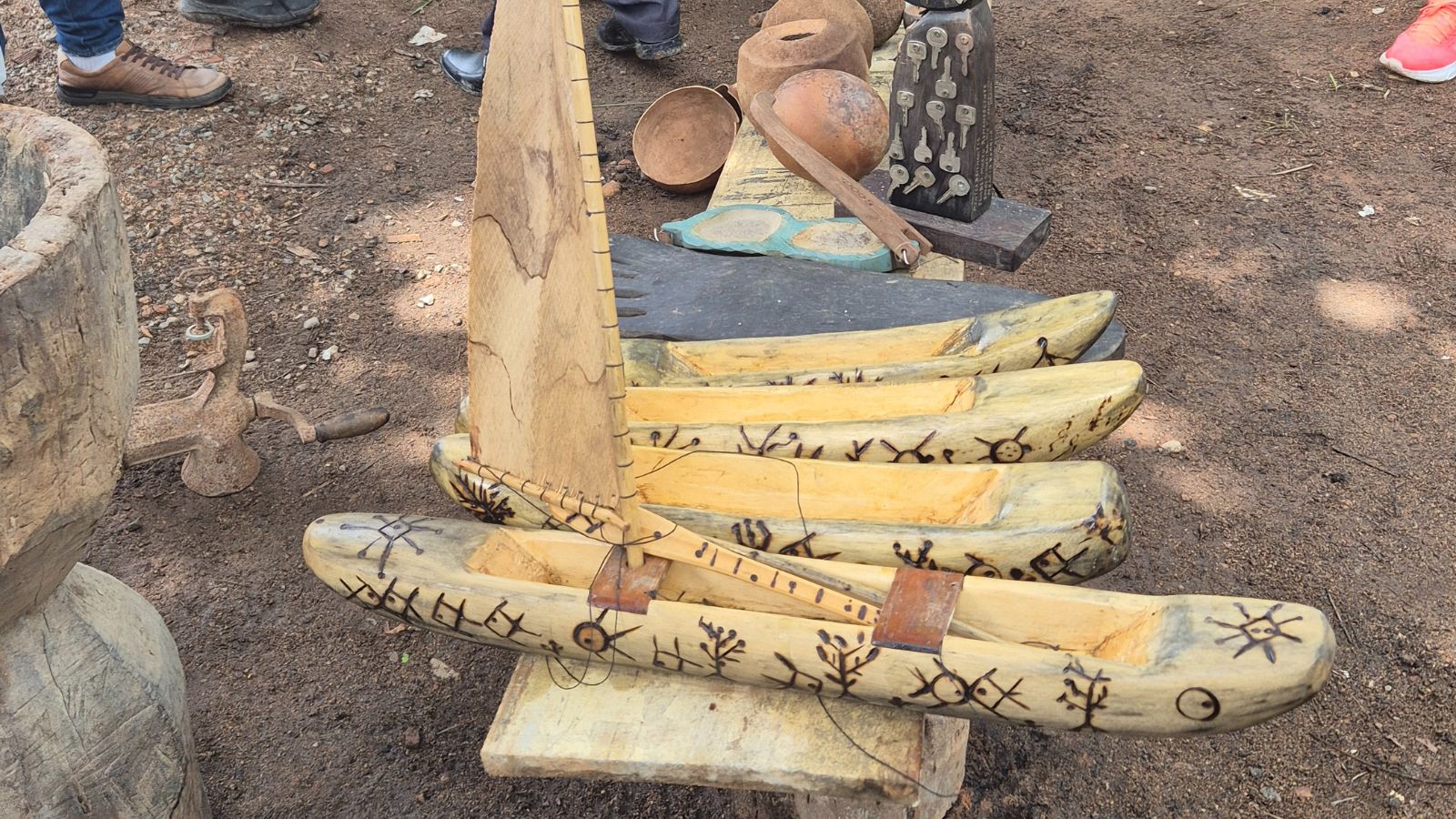
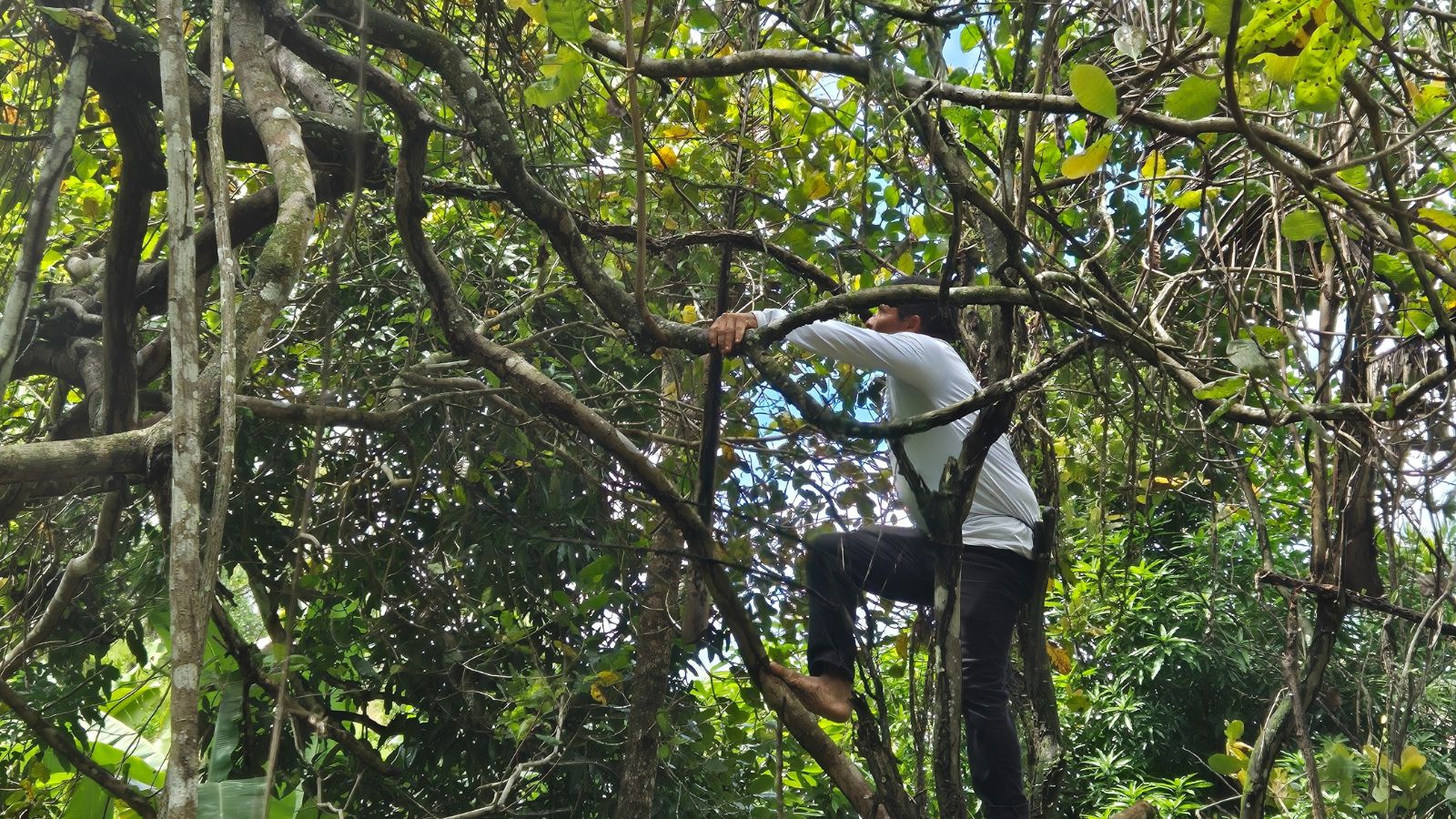
In Engenho Siqueira, CBA participants visited the Museu Jahbes, set up by a community member from his home. Community representatives described the medicinal properties of local plants and demonstrated how they climb trees to release fruit. They also showcased traditional culinary skills using the produce they grow on their land.
This visit offered delegates a powerful example of combining of traditional Afro-Brazilian knowledge, environmental restoration and community-led adaptation to climate change.
Women lead flood responses in the Vila Arraes floodplain

A mural on the wall outside Gris Solidarity Space Association (Photo: IIED)
Gris Espaço Solidário is a women- and Indigenous-led community organisation that works in a low-income area of Recife. CBA19 participants visited Gris and met with volunteers and community members.
Vila Arraes borders the Capibaribe River, which often floods. There are significant social inequalities and environmental pressures, including real estate speculation and unresolved ecological violations. Environmental challenges include raw sewage flowing into the river and oil contamination from bus companies, which has created an "oil alleyway".
Despite a lack of consistent support, Gris has become a vital first responder and risk manager for the local community, which consists of about 5,000 people across 800 households.
Led by Black and Indigenous women volunteers (with only two male members), Gris operates a community space and works on capacity building, health and education, as well as basic needs like food, supporting women who are heads of households.

Walking down an alley in Vila Arraes, where drainage gets blocked (Photo: IIED)
Community brigades to combat flooding
Flooding is a regular problem: a devastating flood in 2022 reached roof levels, resulting in at least one electrocution death. Because government aid is unreliable, Gris has developed its own flood protocols. Their community brigade, trained primarily by women, addresses the flooding caused by a sewage-filled branch of the river. They have also prototyped a river level monitoring device and sought to install a siren for alerts, but were denied permission.
The emotional and physical toll of Gris' work is significant, with women constantly monitoring the river during rainy seasons. They operate a crisis response system, including a health brigade. They also address the emotional impact of environmental racism through acts of care, such as providing thousands of nutritional meals and late-night snacks.
Environmental injustices are a significant concern for local people. Bus companies continue to dump oil, despite complaints. Gris is compiling a report on these and other environmental crimes.
Working with the university and local women, Gris has conducted community mapping to understand local needs. The organisation has a deep knowledge of its community - right down to individual medication needs, which are often forgotten in a crisis such as flooding.

The wall built alongside the community by the bus company, who continues to dump oil in the community (Photo: IIED)
Innovative communications
Gris disseminates information in various ways, including WhatsApp groups (also used for fact-checking against misinformation), posting notices in written local slang in markets, and issuing audio messages from local artists targeting youth and informal networks of women.
Gris aims to engage with the public, private, and university sectors to gain wider support. Discussions with the health secretariat led to changes to tetanus and hepatitis vaccination schedules and a planned vaccination campaign. Relationships with civil defence and enforcement/peripheral secretaries are developing.

Field visit participants and local people got together for a presentation and snacks provided by the community centre (Photo: IIED)
Funding is a constant struggle
Gris survives primarily on personal contributions, supplemented by occasional public funding, a monthly donation from a local company, university campaigns, sales, and donations. It recently secured a three-year climate change and housing project budget, but resources remain stretched.
Ultimately, Gris wants to see a new local governance model that is centred on communities, positioning itself as a "laboratory for fighting against environmental racism."
Welcome to Dia Alternativo!
The third day of the conference, ‘Dia Alternativo’, featured field visits to nearby projects and communities. This was a chance for participants to see locally-led action from partners in and around Recife.
The field trips covered:
- Climate solutions in dry areas
- Local flood mitigation activities
- Climate literacy around climate justice
- Urban agriculture, and
- Lots more.
In addition to these field visits, participants were invited to join lightning talks and out-of-the-box sessions. The day rounded off with a local arts and culture programme featuring poetry, dance, music and a marketplace with local crafts and produce.
Day 2
Housing justice and climate justice - exploring connections between adaptation and anti-discrimination in cities
This session explored the connections between housing justice, climate justice, racial justice and territorial justice. Co-host Alexandre Apsan Frediani of IIED opened the discussions by emphasising that the hosts were not there to give answers, but to facilitate conversations and 'connect the dots'.
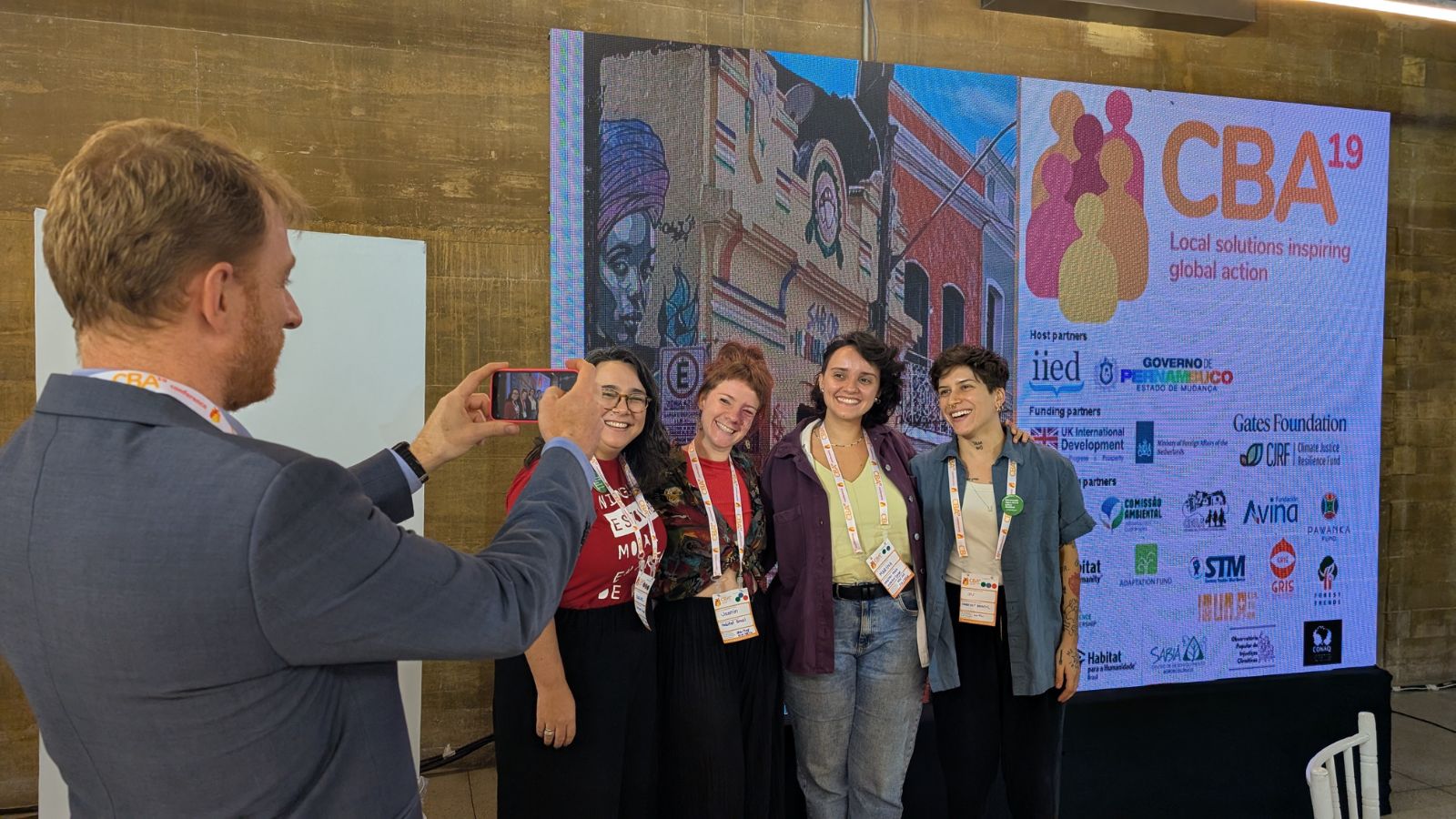
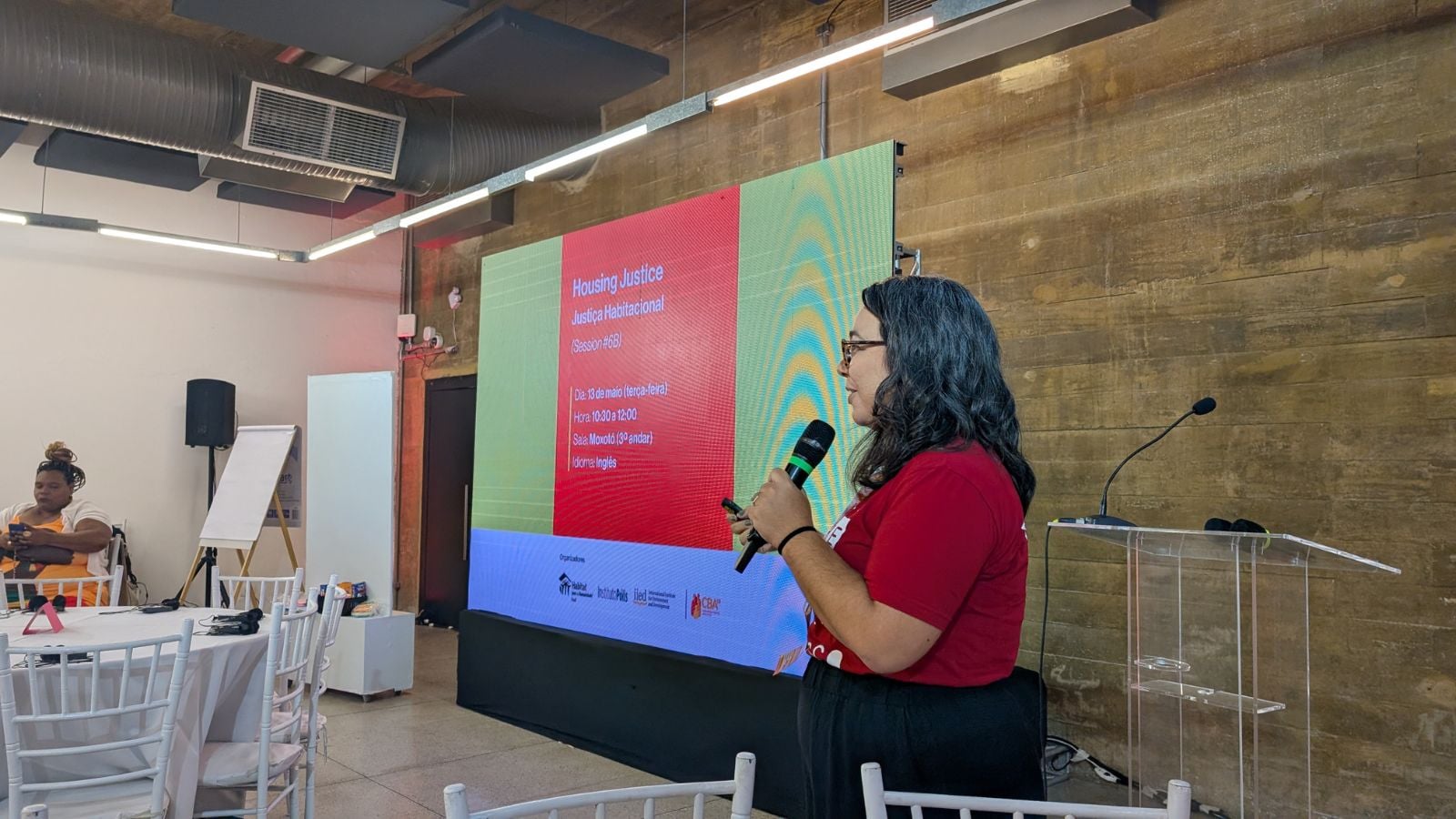
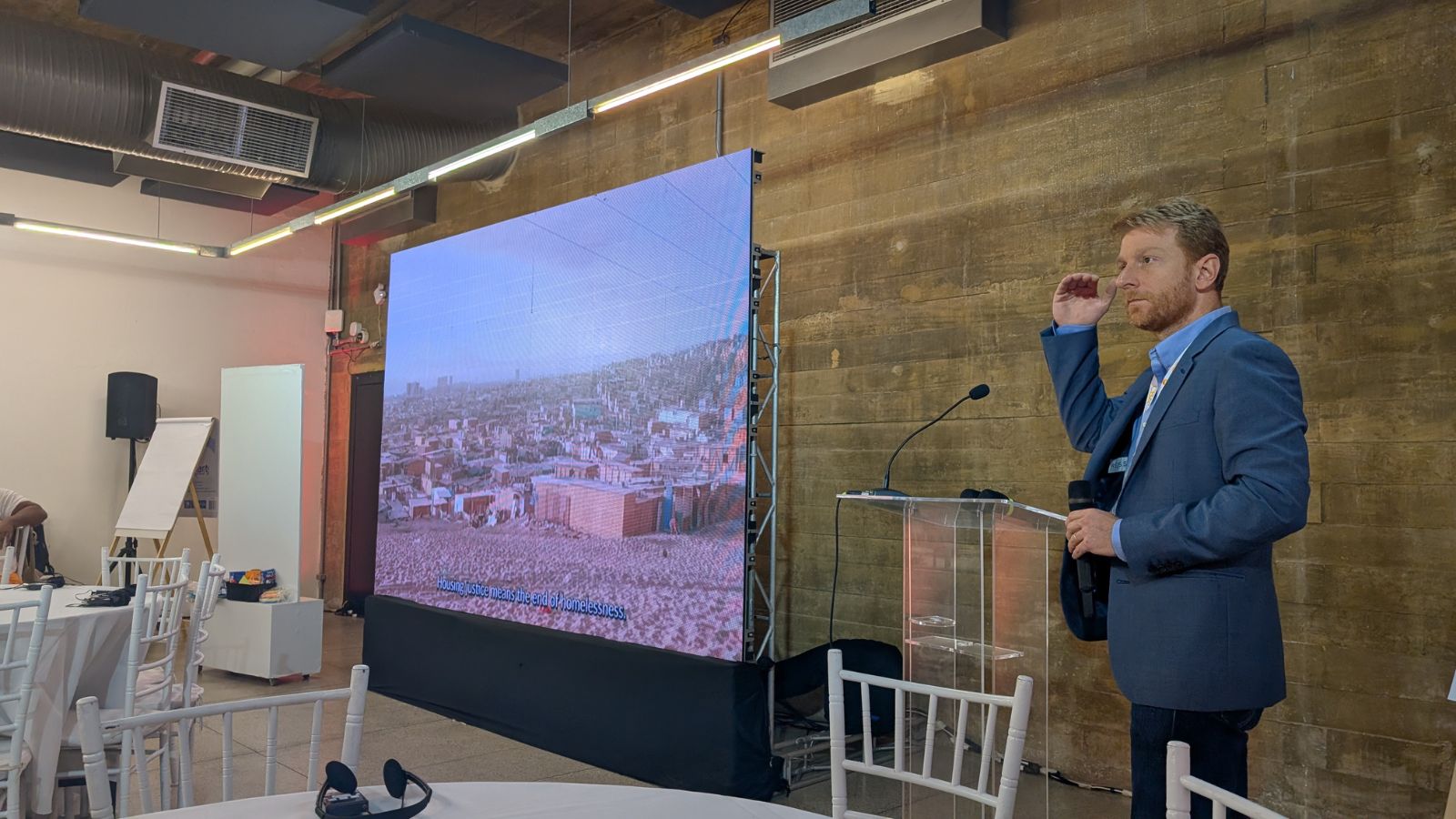
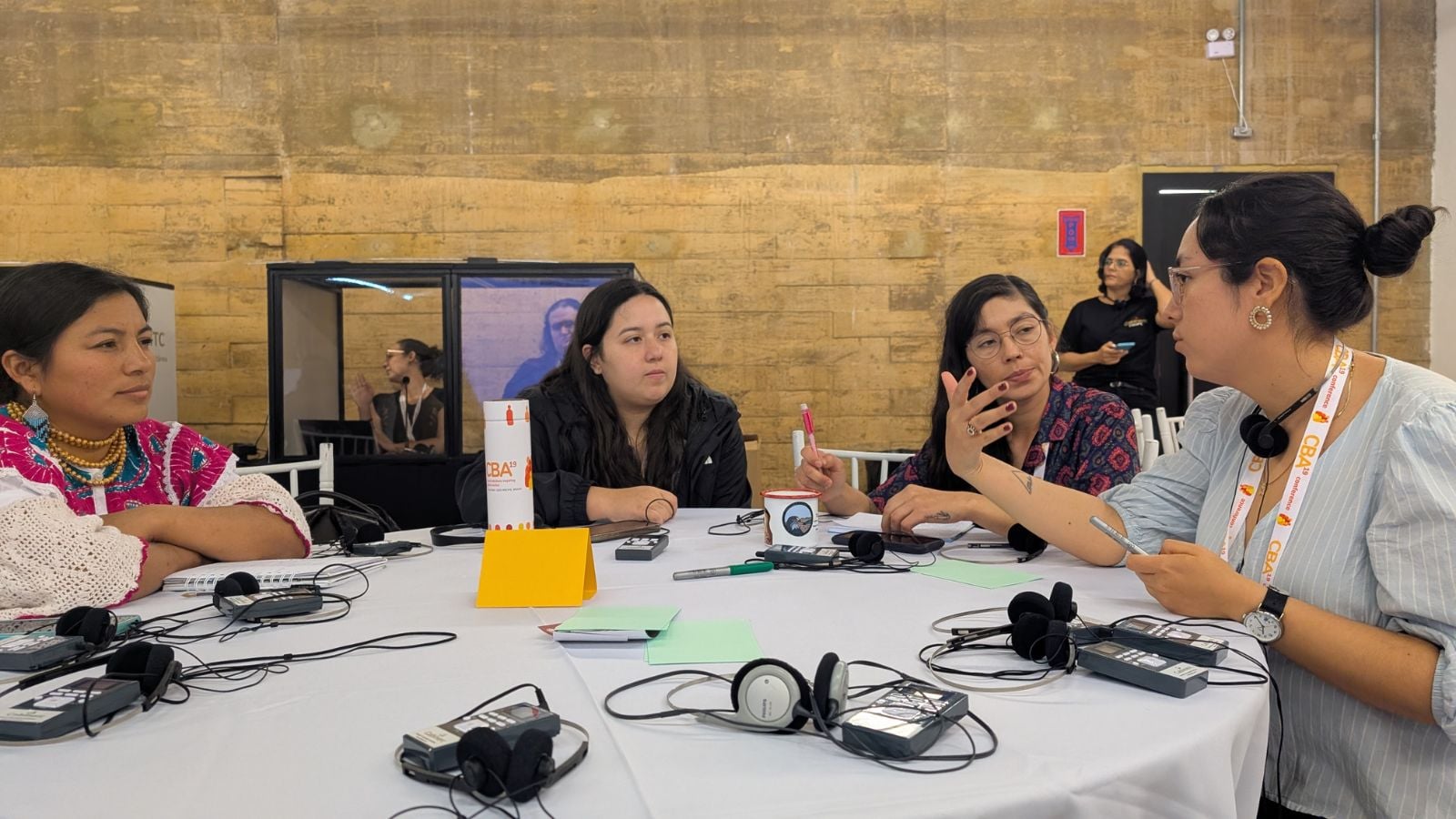
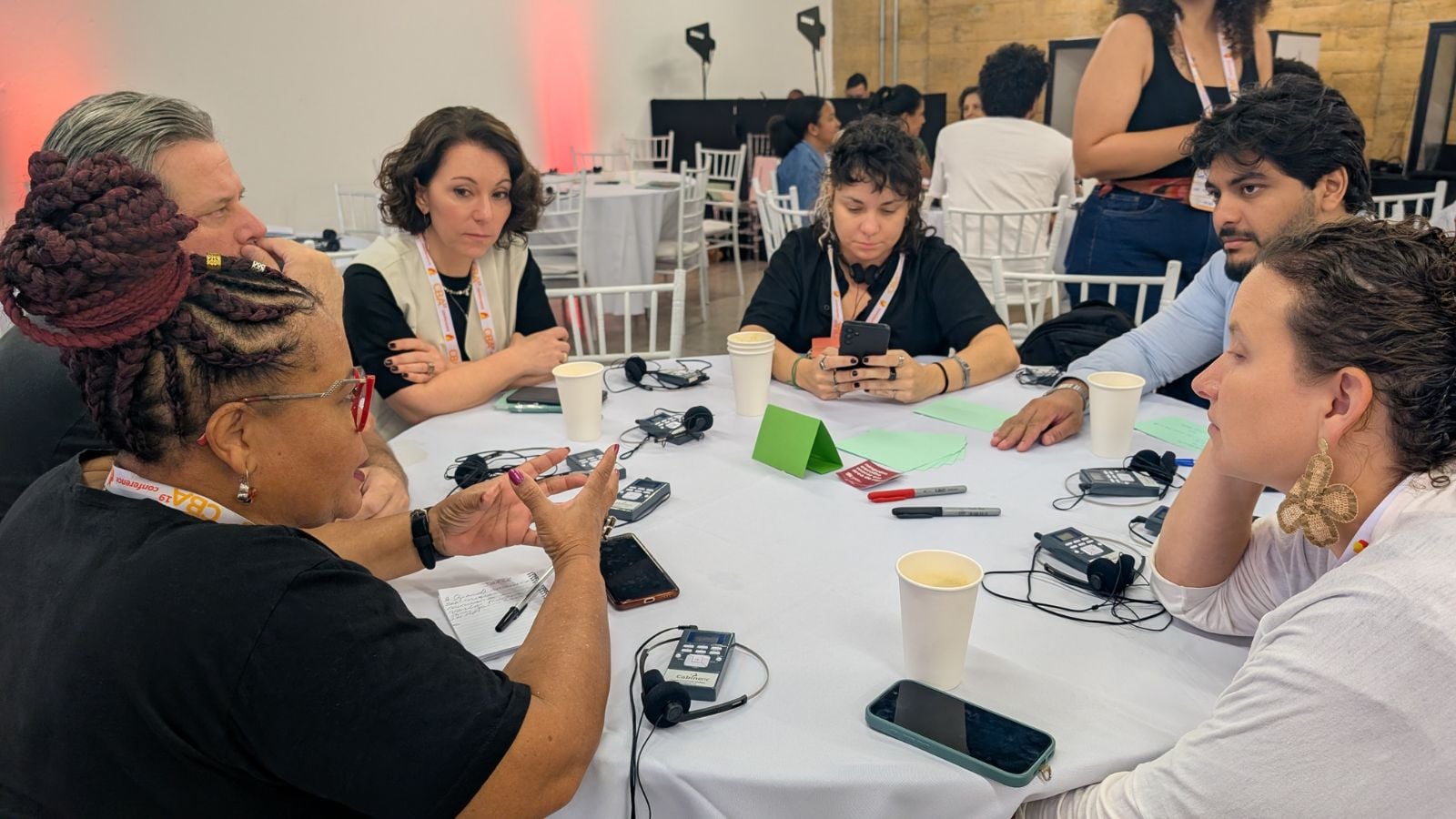
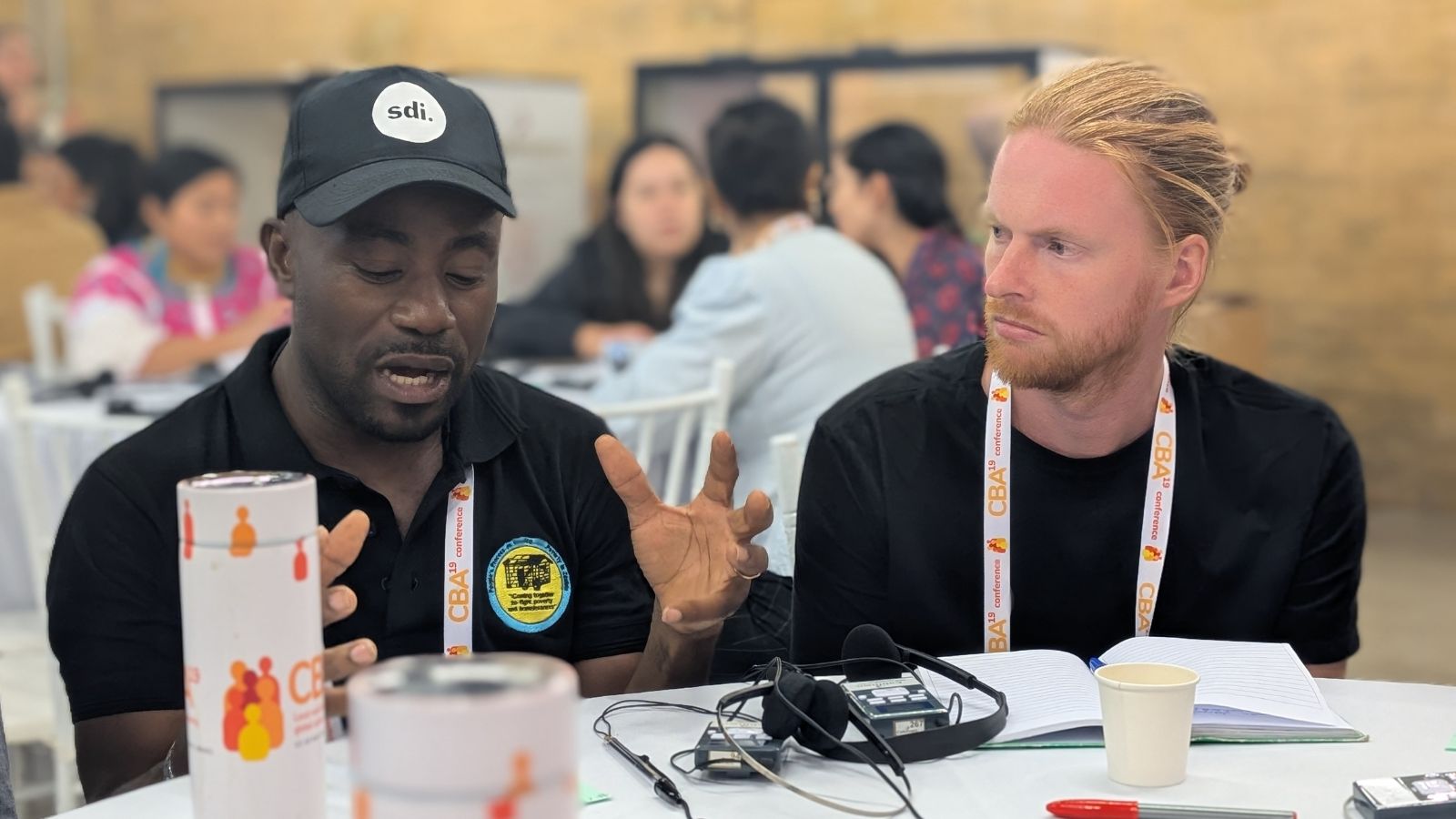
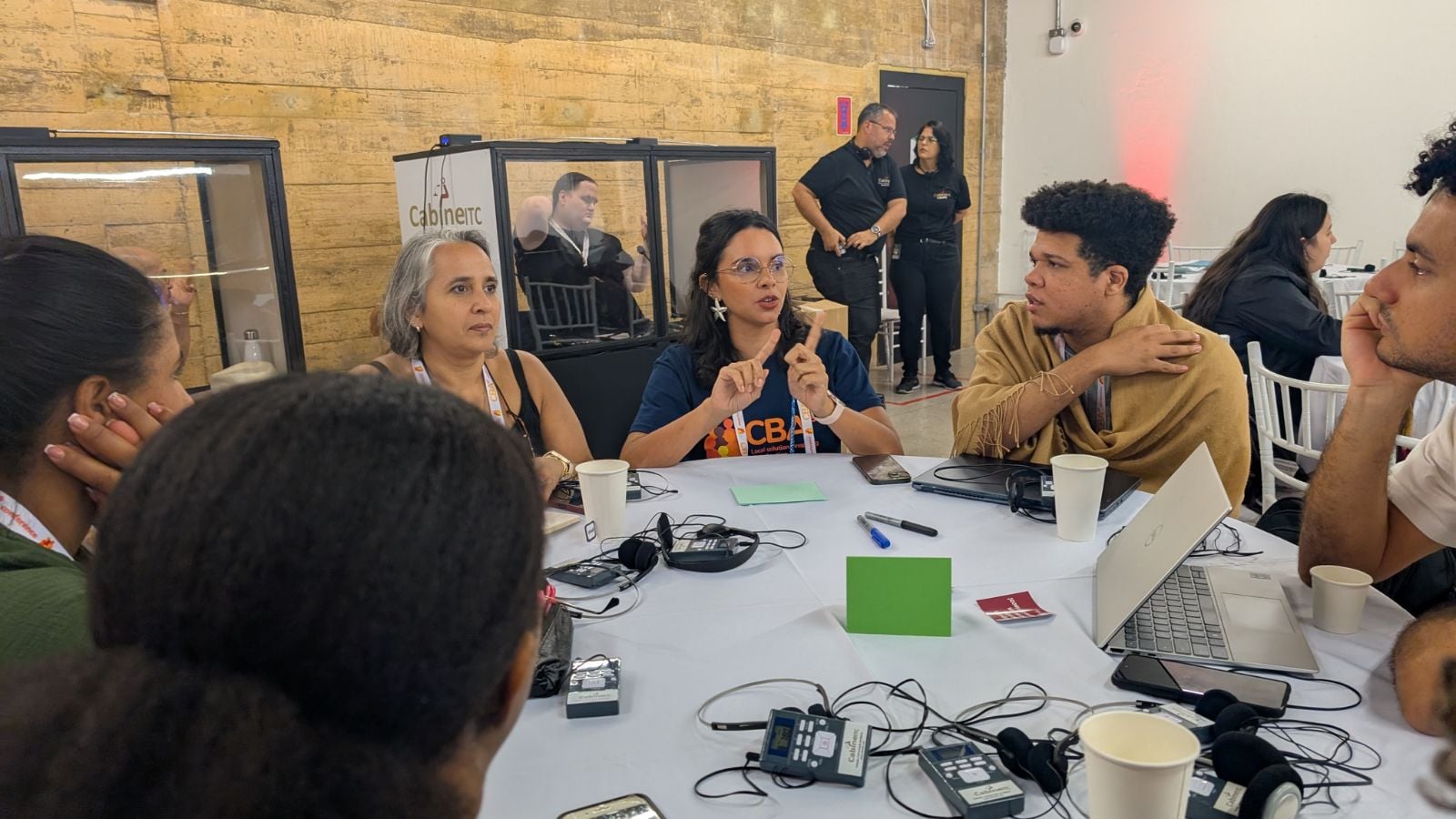
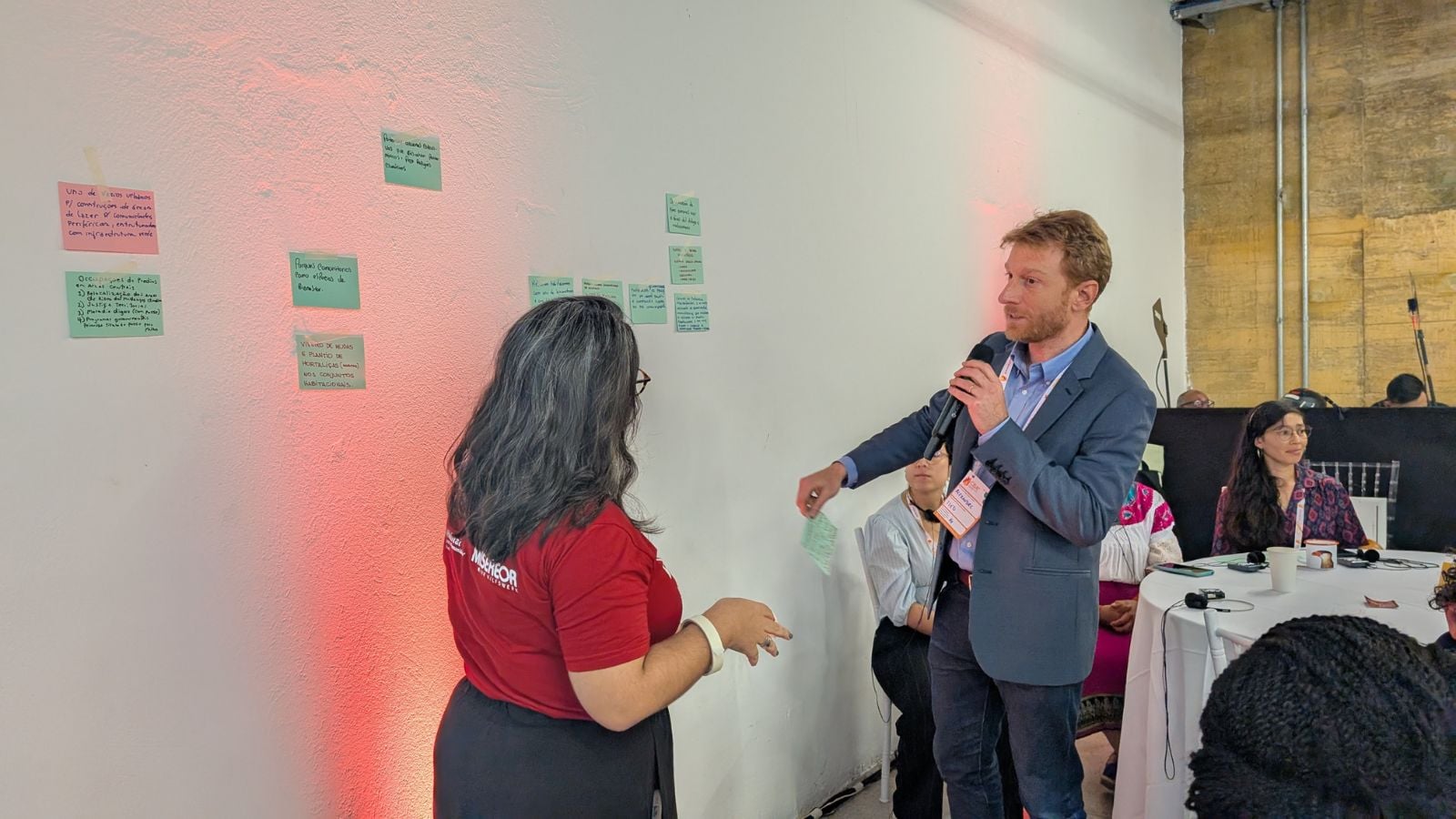
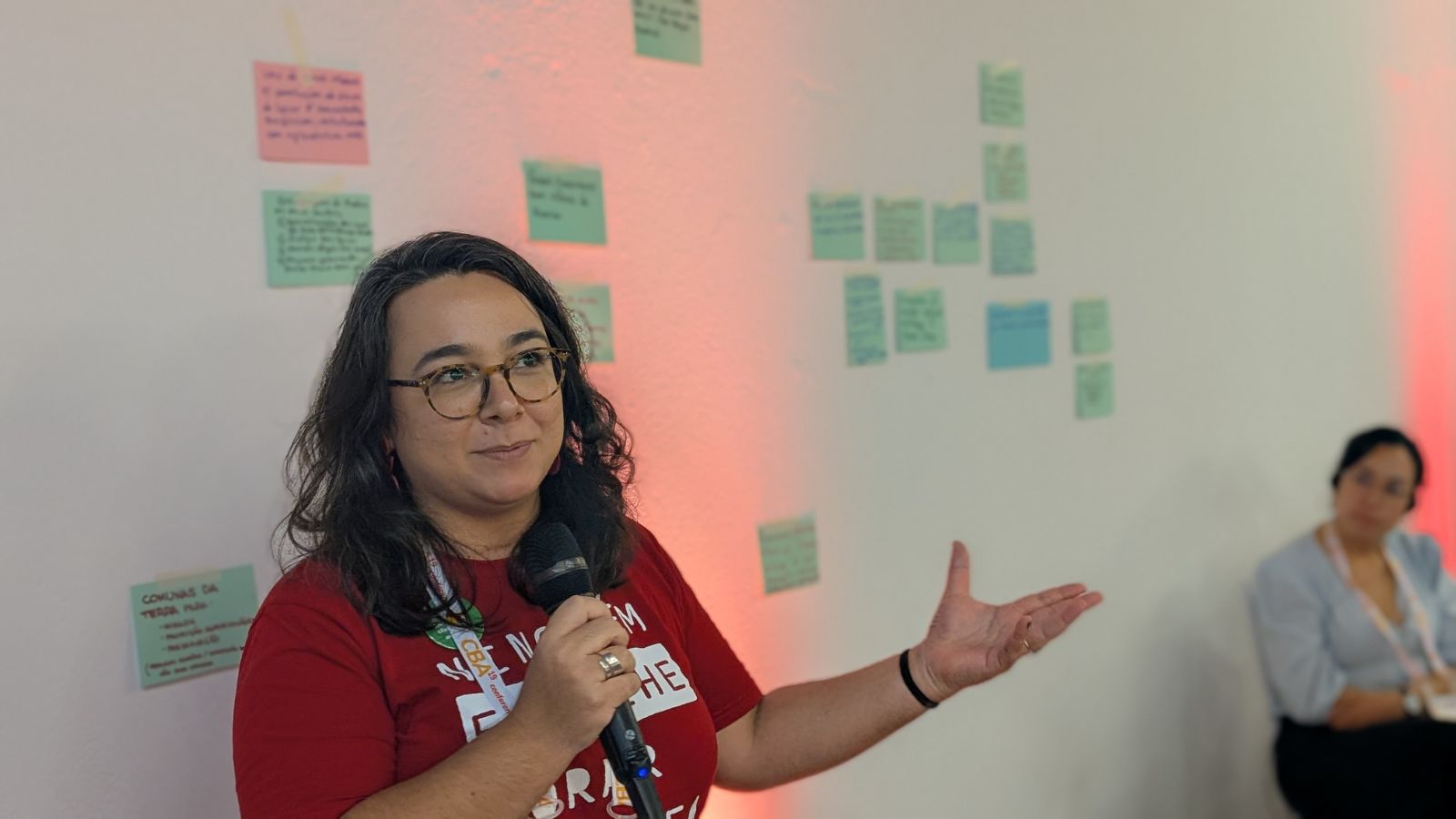
Session participants discussing and reflecting on ideas, guided by co-hosts Alexandre Apsan Frediani from IIED and Raquel Ludermir from Habitat Humanity Brazil (Photos: IIED)
Four pillars of housing justice
The session started with a short video and an introduction to the four pillars of housing justice. These are:
- Housing policies and practices must be anti-discriminatory
- Radically democratic forms of housing production
- Housing as an infrastructure for sustainable and fairer cities, and
- Housing policy and practice that broaden imaginations for housing futures.
Lara Cavalcante of Instituto Polis gave a short presentation about working with peripheral communities in Brazil. She said the proportion of Black people living in zones at risk of floods and landslides is higher than that of other communities. She emphasised how important it is to adapt strategies and policies to safeguard rights that take into account race and gender.
Environmental racism and inequalities
Joice Paixão of Gris Espaço Solidário in Recife talked about the environmental racism and inequalities her community experiences. She said only one kilometre separates the city's university area and an area where people had lost their entire homes to river flooding. She asked the room to think about people living in those areas, who had had everything destroyed.
She said people of colour and women are the ones most impacted by climate change, and challenged participants, saying: "How can you think about climate and housing justice without thinking about capitalism and structural racism?".
How can you think about climate and housing justice without thinking about capitalism and structural racism?
Joice Paixão, Gris Espaço Solidário
She added that we won't be able to create strategies that solve problems if we don't take into account the people who live in those territories and what they live through.
Breaking down work silos
Participants were then asked to move to the corner of the room that represented the subject they identify with most: housing justice, climate justice, racial justice or territorial justice. Then they were asked to move toward a corner that they'd like to engage with more.
Finally, they joined roundtable discussions about solutions and the links we can make between different topics. The participants wrote their ideas on cards, shared them with their groups and finally posted them on the wall in clusters of similar themes.
Sneak peek of the marketplace
The CBA19 marketplace offers participants to share tools, products, games or new approaches to locally led adaptation, as well as lessons and insights from your experience (failures and successes). It aims to collect and share good-practice narratives that showcase innovation and lived experience.
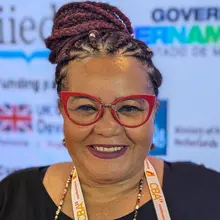
Interview with Graça Xavier, União Nacional por Moradia Popular
What brought you to CBA?
The União Nacional por Moradia Popular (National Union for Popular Housing) is part of various coalitions, and one of them is the Huairou Commission, and I’m here through that connection.
Why is it important that you are here today?
From the 1970s, the union has been working with families - poor families - especially those households led by women and living in precarious situations in the peripheries.
In addition to working on the issue of housing rights, the Union for Popular Housing has always worked at the intersection of housing with women's rights, with the rights of the poor and the excluded, and finding the connections between those social struggles.
But this is a climate change conference…
Through our work with, especially women living in the peripheries, we can see the kind of acute impact of climate change and how that is disproportionate and how it affects us.
A woman who's living, for example, in a shack that is at risk of flooding or a landslide, will leave her house to go to work, but her mind will be left at home thinking about her home and her family.
So, it's important to connect the two struggles so that women can participate in the creation of public policies that reduce the risk that they face living in the peripheries - and also build a dignified life in dignified housing.
Do you have one message for the other people at CBA?
Women and men must join forces to construct a society where climate justice is experienced by all: by all women and all men.
Welcome to day 2!
The second day of CBA19 began with a plenary discussion, looking at adaptation from urban and nature perspectives via two separate panels. The first was led by the Brazillian Ministry of Cities, discussing their support to urban communities to plan for and adapt to the impacts of climate change. The second was led by Indigenous Peoples and local community representatives from the Latin American region who shared perspectives on incorporating local and traditional knowledge in nature-based solutions.
Watch the recording of the plenary below!
Day 1
Locally led adaptation 101

LLA 101 - introduction to the locally led adaptation principles (Photo: IIED)
With such a packed agenda and so many people attending, we ran out of time in the day one plenary to deliver the planned ‘LLA 101’ introduction to the locally led adaptation principles.
So in true CBA form, we adapted!
LLA experts May Aung from IIED and Victoria Matusevich of Fundación Avina gave a whistlestop tour of the principles for locally led adaptation for a small but highly-engaged group over the lunch break.
LLA presents eight principles that have been developed as part of a social movement of people, and there is a strong advocacy campaign for them. More than 140 organisations have endorsed the principles, including national governments, international organisations, community-based organisations, NGOs and others.
LLA aims to ensure that systems at all levels support locally led approaches that advance justice and resilience for people, climate, and nature.
What’s the difference?
People asked about the difference between LLA and CBA, and the answer was clear: LLA is about scaling up community-based climate action to systemic and policy changes at national or international level, while CBA is more about community-based climate action; CBA focuses on what this movement is built around - the communities at the centre of climate action.
Does this mean that LLA came from CBA? Yes, but the eight LLA principles are designed to aid and guide us in implementing LLA in putting the community at the heart of the conversation.
We appreciated the translation help provided by our conference event managers Vinca during this session.
Are you at CBA19 but missed this session?
You are in luck: we’re going to repeat LLA101 on Tuesday and Thursday as a short midday session for anyone who wants to get caught up.
Bridging the gap between visionary ideas and real-world implementation
This session on locally led climate adaptation action and alternative financing mechanisms showcased funding models that put communities in the driver’s seat.
Five organisations co-hosted the session, alongside their global South partners. Each co-host showcased a unique funding model, all with the common thread of prioritising communities in the design. These included:
- Comuá Network from the CASA Fund,
- SouthSouthNorth’s Next Level Grants Facility (through Voice for Just Climate Action),
- Simavi’s Water Justice Fund supporting women-led initiatives,
- The Nature Conservancy Brazil’s Indigenous Fund of the Brazilian Amazon, and
The Netherlands Enterprise Agency’s Reversing the Flow (RtF) mechanism.

Fishbowl discussion at one of the parallel session on day 1 (Photo: Rojy Joshi)
Decision making and inclusion: communities as leaders
All the funding models have the central idea that funding flows directly to communities, with stronger processes for inclusion and decision making, and empowering communities to negotiate and act on their terms.
Rather than defining solutions for communities, facilitators should play a supporting role: helping with practical aspects like opening bank accounts, forming project steering committees, and creating space for local governments and communities to negotiate priorities and allocate funding.
Accountability and transparency: building trust
The session hosts emphasised that to make financial mechanisms truly accessible, it is vital to design processes that communities can understand and own. Organisations adapted grant applications to local contexts, with materials translated into local languages, and accepted verbal applications to overcome literacy and bureaucratic barriers.
Flexible funding mechanisms — such as provisions for emergency requests and simplified expense tracking — helped communities respond effectively to shifting priorities.
Speakers said accountability goes beyond systems — it is a process rooted in trust, and trust takes time to build. Challenges persist, such as the difficulties informal groups and collectives face when opening group bank accounts. Communities are establishing internal systems to boost trust, including appointing executive signatories, procurement sub-committees, and regular reporting to the wider community.
Participants agreed that supporting organisations must also demonstrate accountability via transparent engagement. In this model, accountability is not a fixed framework but an evolving process, rooted in trust and mutual learning.
Scaling up locally led climate finance: collaboration and strengthening what works
To achieve scaling up, speakers called for a collaborative, multi-actor approach linking community organisations, donors, intermediary facilitators, governments and the private sector.
They said their funding models demonstrate that community-led finance is effective and cost-efficient, with many initiatives achieving more with fewer resources. They challenged the notion that community-based approaches are inherently risky and urged donors to rethink risk tolerance and back locally led models with confidence.
The hosts also emphasised the importance of reinforcing strong systems at the local level. Networks can play a crucial role by helping spread innovations while strengthening core capacities across regions.
How Indigenous People and local communities are working on community empowerment
Monday’s session on financing for locally led nature based adaptation presented examples of how Indigenous Peoples in Brazil and Colombia and local communities in Kenya are developing financial strategies that empower their communities, and ensuring that the climate finance they receive aligns with their locally-defined adaptation priorities.
Izabela Santos from the Nature Conservancy in Brazil discussed how they used a monitoring tool and focus groups of leaders, women, teachers, young people, environmental agents, and members of associations of Indigenous Xavante people in Mato Grosso state to gather information on how they saw climate change impacting their territory. The project also asked participants to prioritise the impacts they identified, and how they think these impacts will affect their rituals and traditions.
Jair Salazar Jacanamijoy spoke about the impacts of mining and development projects on the Inga Indigenous People of Caquetá department in Colombia. Their territory is facing deforestation and encroachment from mines and the military, which has affected their ability to develop culturally and socially.

Jair Salazar Jacanamijoy speaking during one of the parallel sessions (Photo: IIED)
His organisation, the Asociación Tandachiridu Inganokuna de Caquetá, works with the Inga People, and he discussed the livelihood projects they have been working on for more than three decades. As a strategy to re-engage their young people with their traditions, they have set up livelihood projects making shampoo with local plants, beekeeping, and a native-plant nursery, which has achieved a sought-after national certification.
Maurine Nduati of Taita Taveta Wildlife Conservancies Association in Kenya reported on promoting social inclusion in discussions about finding solutions to climate change. She said that in the area of Kenya where they work, structural inequalities, especially related to women and young people, have been an issue. Their project is challenging the cultural norms that have led to exclusion.
Nduati said their work has demonstrated that men, women and youth can sit together to create solutions for climate change. She said everyone has a role to play because climate change affects everyone.
Following the presentations, breakout groups discussed key questions:
- What can we ask of donors and supporters?
- What should they do differently to get climate finance to the local level?
- What have participants seen that is working?
For more on that, make sure to check out the key messages that will emerge from our CBA19 discussions in a few days!
CBA19 opening plenary highlights opportunities to influence future climate action
At CBA19's opening plenary, the acting governor of the state of Pernambuco, Priscila Krause, announced plans to develop a 'state plan for climate adaptation and resilience'. She said the state plan will integrate and guide Pernambuco's actions to reduce the vulnerability of populations most exposed to climate risks, scientifically ensuring that public policies incorporate the challenges of both the present and the future.
Krause announced that Pernambuco state had signed an agreement with the Federal University of Pernambuco and the AdaptaBrasil System to develop the plan so that it will focus on territoriality, social equity and climate justice. The plan will also integrate artificial intelligence and participatory science.
She said the plan methodology will ensure the active participation of Indigenous Peoples, women and traditional communities across the 12 development regions of Pernambuco, aiming to ensure the plan is informed by the knowledge of those who have historically lived in harmony with nature.

The opening plenary for CBA19, featuring a speech from the acting governor of the state of Pernambuco, Priscila Krause (Photo: IIED)
A warm welcome
Krause's announcement was a welcome contribution to what is going to be a busy, exciting and fruitful conference. The conference is hosting nearly 400 participants from 70 countries, bringing together a vast assembly of international adaptation expertise.
Krause offered participants a warm welcome and gave a fascinating introduction to the many ways that the state of Pernambuco is innovating on adaptation, decarbonisation, resilience and food security.
She said: "Pernambuco is marked by impressive natural and cultural diversity, home to two major biomes – the Atlantic Forest and the Caatinga – and a rich social fabric that reveals itself in each region of our territory. This diversity is also reflected in the challenges we face regarding climate change. Our commitment is to build public policies that respond to these challenges, ensuring that no one is left behind."
Our commitment is to build public policies that respond to these challenges, ensuring that no one is left behind.
Priscila Krause, acting governor of the state of Pernambuco

Slide from plenary presentation, showing the diverse audience at CBA19 (Photo: slide by Paul Mitchell)
A "fabulous opportunity" to shape the focus of COP30
This CBA19 marks the first time a CBA conference has been held in Latin America. It is also the first time CBA is being held in the country that is hosting the UNFCCC climate COP in the same year.
IIED executive director Tom Mitchell said that Brazil has a long history of community action and collaborative solution-making, which is the core of locally led adaptation. He said CBA19 is a "fabulous opportunity" to shape the focus of the climate COP - and also of Brazil, as it takes forward implementation of the new national adaptation plan.
Graham Knight, counsellor for climate, nature & energy at the UK Embassy in Brazil, also highlighted the potential for influencing the COP30 talks later this year. He said having CBA19 in Brazil, in the same country as COP30, builds momentum for increased ambition on international cooperation for adaptation and highlights the key role of locally-led initiatives.
Knight noted that the COP30 presidency is putting adaptation at the forefront of the negotiation agenda, and said that CBA19 participants have the opportunity to provide recommendations that could shape this work from the ground up.
Knight said CBA19 is an opportunity for people to come together as governments, practitioners, international organisations and local communities, boost adaptation efforts and support locally-led measures that are at the forefront of climate action and leading the way into a resilient future.

IIED executive director Tom Mitchell speaking with the local media (Photo: IIED)
'Step carefully on this land'
Raquel Ludermir, political advocacy manager at Habitat for Humanity Brazil and member of the CBA19 local advisory committee, said it was important to celebrate visibility given to the urban theme at this year's conference. She said that in a region where over 80% of the population lives in urban areas, it is urgent that we understand that there will be no climate justice without urban reform and housing justice.
Ludermir also highlighted the importance of the local committee in helping connect these global dialogues with the national and local civil society environment. In Portuguese, this is what is called pisar nesse chão devagarinho, as in the samba song, or to step in this land carefully, smoothly.
Watch coverage of the start of CBA19 on local channel TV Pernambuco (in Portuguese)
Contact
If you have any questions about the conference, please email [email protected].