CBA19 agenda
CBA19 offered a packed agenda of different types of sessions, with the opportunity to connect with others and share experiences and knowledge – and also enjoy field trips to see locally-led projects in and around Recife. See the full programme below.

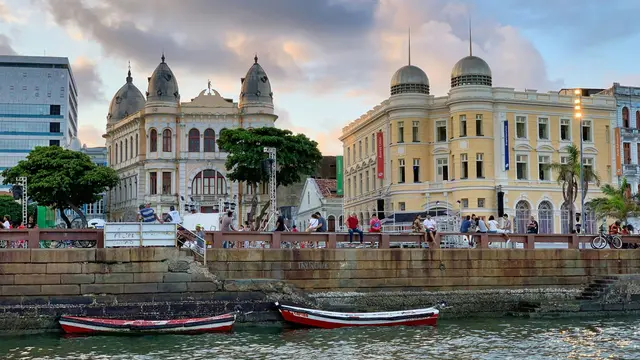
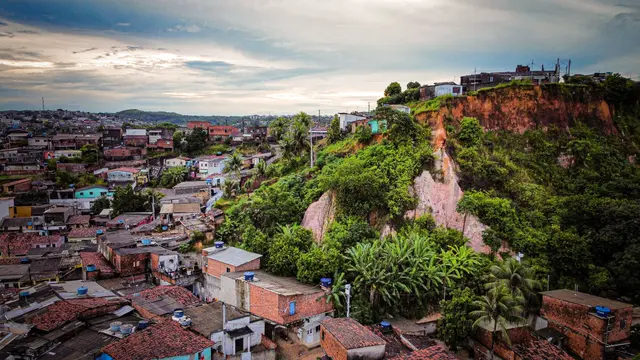
Recife, Brazil (Photo: thiago japyassu, via Unsplash)
- Last updated: 19 May
The 19th International Conference on Community-Based Adaptation to Climate Change (CBA19) in Recife, Brazil from 12-16 May 2025 hosted hundreds of people collectively seeking to enable community-driven climate action.
Three of the days of the conference featured parallel sessions under themes of 'Locally led adaptation action', 'urban' and 'nature'. There was also a ‘Dia Alternativo’ featuring field visits to nearby projects and communities. The final half day took the form of a forum, which brought key messages from each theme together to identify key actions and messages towards COP30 and beyond.
The conference ran in multiple languages – English, Portuguese and Spanish – with sessions featuring either simultaneous translation or other methods to reduce language barriers and encourage cross-fertilisation. See the full programme below:
Agenda quick links
Day one (Monday)
- Welcome and logistics
- Official opening
- Locally led adaptation 101
The CBA19 opening plenary officially opened the conference.
Keynote speakers included: the Governor of Pernambuco, the Pernambuco State Secretary for Environment, the UK Government, a representative from the CBA19 Local Advisory Committee, and IIED's Executive Director.
The formal opening was followed by a short 'LLA 101' session to kickstart the week's conversations.
Host organisations
International Institute for Environment and Development (IIED); state government of Pernambuco
10-10.30am: Mid-morning break
Click on a session title to reveal more details.
This session looked at concrete climate adaptation initiatives in the interior of Pernambuco, highlighting how collaboration between government and academia strengthens the resilience of rural and vulnerable communities.
Different departments, including the Secretariat of Water Resources, IPA, IPPE, SEMAS and UFPE, presented on cistern and well programmes, the Sertão Vivo initiative, and the energy efficiency actions in Pesqueira, the state's climate adaptation plan.
Host organisations
Secretaria de Meio Ambiente e Sustentabilidade de Pernambuco (SEMAS-PE)
The session included a presentation of Nosso JEITO (Our Journey of Empowerment and Integration between Territories and Organisations). It also spoke to how the Kapi'wara group (a group that realises the need to organise and promote actions to promote healthier, sustainable and resilient cities) came about and from what pretexts the methodology was developed.
We shared how it is being applied in the territories of the metropolitan region of Recife, where JEITO aims to stimulate the protagonism of individuals and organisations in the territories to build local collective solutions and actions to tackle social, economic and environmental inequalities.
The objectives of this session were also to present the association's initiatives to promote urban agriculture in the peripheries through agroecological environmental education, investigating the impact of these actions on reducing inequalities, tackling the climate emergency and promoting food security and community health.
Host organisations
Kapiwara Association
This session explored key principles and practices for innovative financing approaches for Nature-Based Solutions (NbS) to be able to center community leadership, equitable investment models, and locally-led adaptation. Drawing from experiences in Africa and Latin America, we examined how NGOs, private sector actors, and financial institutions can co-create inclusive financing mechanisms that address adaptation needs while ensuring fair benefit-sharing.
Through an interactive discussion, based on concrete cases from Brazil, Kenya and Colombia, we uncovered strategies that are based in the local communities' and Indigenous Peoples' concrete needs, aiming to align private and public investment, overcome financial exclusion, and ensure that Indigenous Peoples and local communities retain decision-making power.
Host organisations
The Nature Conservancy (TNC); Asociación Tandachiridu Inganikuna; Taita Taveta Wildlife Conservancies Association (TTWCA)
12:20-1.30pm: Lunch
Click on a session title to reveal more details.
This session brought together diverse experiences from women and traditional communities leading climate adaptation efforts across different landscapes. The impact of women-led and community-led climate solutions was shown through discussions about practical cases and experiences. Successful integration of traditional knowledge with adaptive practices was discussed, ensuring protection of forests, securing land rights and driving locally-led climate adaptation.
Participants heard from women, community leaders, and practitioners implementing Locally Led Adaptation (LLA) in different contexts. The discussion highlighted how these actors navigate systemic barriers, foster local governance, and drive economic transformations while enhancing climate resilience. There was a focus on the enabling conditions for women and communities to actively lead climate adaptation practices.
Host organisations
Avina Foundation; Tropenbos International; Huairou Commission; Slum Dwellers International (SDI)
The session presented two concrete actions carried out in the municipality of Recife, as well as opening up a space for participants to co-create good practices in urban resilience.
The following were highlighted: NUPDEC Women - an initiative proposed by the Catholic University of Pernambuco, the Executive Secretariat for Civil Defence, ProMorar Recife and the Recife Women's Secretariat - aimed at training women in disaster risk management and urban resilience; and the Community Plan for Contingency and Adaptation to the Effects of Rainfall in Vila Arraes.
The aim of the session was to address community resilience and adaptation to climate change in an integrated way, demonstrating how different community practices can strengthen climate adaptation and disaster risk management.
Host organisations
Catholic University of Pernambuco
This session explored equitable, inclusive climate adaptation strategies that strengthen food systems, particularly in arid regions. Co-led by Shadreck Gwari from Masvingo Province Zimbabwe and Indigenous Livelihood Innovation Organization Team (ILIOT), it highlighted community-driven initiatives that prioritise rural women, persons with disabilities, and Indigenous communities.
It showcased local, community-led models such as farmer groups, climate-resilient inputs, inclusive decision-making, vulnerability rankings to guide fair resource distribution, and the innovative lead farmer concept, reserving 50% of agricultural committee roles for women.
Through videos, testimonies and practical examples from Zimbabwe, participants were shown how lead farmer networks and learning centres support adaptation uptake. Drawing on CGIAR-funded research in Kenya, Guatemala and the Philippines, the session also explored embedding gender and social equity in adaptation programming.
Host organisations
Representatives from Masvingo Province Zimbabwe; Indigenous Livelihood Innovation Organisation team (ILIOT)
The Shark Tank sessions: where local climate solutions take flight!
The Shark Tank sessions were a chance for participants to take their locally-led climate solution to the next level. For anyone passionate about climate action and sustainability, there was the opportunity to gain hands-on support, connect with like-minded innovators, and collaborate on solutions that make an impact.
Led by experts from GRP, UNDP and Climate KIC, the sessions were packed with insights from professionals who have helped hundreds of innovators build scalable, sustainable solutions. These sessions focused on collaboration, networking, and knowledge-sharing.
Host organisations
Global Resilience Partnership; UNDP; Climate-KIC
3-3.30pm: Mid-afternoon break
Click on a session title to reveal more details.
As climate adaptation becomes an urgent priority, funding and financial mechanisms must scale to be more inclusive, flexible, and responsive to community needs. This session explored how organisations - alongside the communities they work with - are developing alternative financial models, mobilising diverse actors, and advocating for financial flows that prioritise locally-led climate solutions.
Using a fishbowl discussion format, co-hosts shared case studies and insights on how communities navigate financial challenges and help shape more adaptable financial models. The session then opened up to audience interaction, fostering collective brainstorming on how philanthropy can move beyond trends to support long-term, community-driven climate adaptation.
By bringing together diverse perspectives, this session aimed to spark actionable ideas for more just and effective climate financing.
Host organisations
Comua Network; SouthSouthNorth (SSN); Simavi; The Nature Conservancy Brazil (TNC)
Urban poor communities, particularly those in informal settlements, are disproportionately impacted by climate change. Women and children are at the forefront of leading small-scale adaptation initiatives. However, access to sustainable and flexible finance remains a major barrier. This session explored how community-led finance mechanisms can be integrated into urban adaptation policies to ensure equitable resilience-building, including:
- The potential for structuring micro-grants as revolving funds to sustain community initiatives
- How savings groups and community-led data collection support climate finance mechanisms, and
- Policy pathways for embedding community-led financing in urban governance to strengthen equity and sustainability.
This session showcased successful models where community-driven governance ensures transparent, accountable and impactful financial management, redefining climate finance to directly benefit the most vulnerable urban populations.
Host organisations
Center for Community Initiatives - CCI; Slum Dwellers International (SDI)
This session explored the integration of scientific and traditional knowledge in nature-based adaptation through bottom-up approaches in five different case studies, including climate change risk mapping in the Amazon basin, a Colombian case study on NBS implementation with local communities in the Colombian Amazon, Indigenous-led adaptation case studies from Bangladesh and Nicaragua, and traditional knowledge for territorial management and conservation.
Host organisations
The Nature Conservancy (TNC); International Centre for Climate Change and Development (ICCCAD); STINT; Centro para la Autonomía y Desarollo de los Pueblos Indígenas (CADPI)
The Shark Tank sessions: where local climate solutions take flight!
The Shark Tank sessions were a chance for participants to take their locally-led climate solution to the next level. For anyone passionate about climate action and sustainability, there was the opportunity to gain hands-on support, connect with like-minded innovators, and collaborate on solutions that make an impact.
Led by experts from GRP, UNDP and Climate KIC, the sessions were packed with insights from professionals who have helped hundreds of innovators build scalable, sustainable solutions. These sessions focused on collaboration, networking, and knowledge-sharing.
Host organisations
Global Resilience Partnership; UNDP; Climate-KIC
Day two (Tuesday)
- Panel 1: Urban adaptation in Brazil
- Panel 2: Local and traditional knowledge in nature based solutions
The day two plenary looked at adaptation from urban and nature perspectives. This took the form of two panels. The first was led by the Brazillian Ministry of Cities, discussing their support to urban communities to plan for and adapt to the impacts of climate change. The second was led by Indigenous Peoples and local community representatives from the Latin American region who shared perspectives on incorporating local and traditional knowledge in nature-based solutions.
Host organisations
Ministério das Cidades; Fundación Avina; Forest Trends
10-10.30am: Mid-morning break
Click on a session title to reveal more details.
This session explored concrete strategies for embedding LLA effectively within government systems while ensuring social accountability and meaningful community participation. It highlighted the role of governance and policy reforms, funding mechanisms, community-led investment planning and strengthening of capabilities to make adaptation interventions more effective, inclusive and responsive to the needs of communities.
The session examined different models for integrating LLA, drawing from real-world examples such as LIFE-AR and the Green Accountability Platform.
Host organisations
Huairou Commission; LIFE-AR; SouthSouthNorth
In urban areas, the most vulnerable to the impacts of climate change are those experiencing multiple forms of housing deprivations. Exclusionary and discriminatory housing systems exacerbate climate injustice, while socio-environmental disasters intensify the housing crisis. However, in the climate debate, housing is often approached as a technological issue rather than a systemic challenge (eg focusing on energy use rather than tenure security).
Housing-oriented adaptation efforts risk reproducing or deepening existing forms of marginalisation. An anti-discriminatory climate agenda calls for community-based adaptation approaches to recognise and address systemic forms of discrimination, moving from palliative to reparative actions. This workshop explored housing-oriented adaptation practices from an anti-discriminatory perspective, taking an exploratory approach, introducing and connecting key ideas and inviting participants to reflect on implications to community-based adaptation.
Host organisations
Habitat for Humanity (Brazil); Instituto Polis; IIED
Mangroves are essential ecosystems for the climate resilience of coastal zones, protecting communities against erosion and extreme events. Restoring mangroves is one of the best nature-based solutions to improve the climate adaptation capacities of coastal communities.
When initiatives are led by local communities, there are many additional benefits. These are the mangroves superpowers. For the first time at CBA, this interactive/collaborative/immersive session explored and compared various mangroves initiatives from four countries (Brazil, Bangladesh, Ghana, Indonesia), with an attempt to highlight similar benefits and challenges or context-specific differences such as local knowledge or practices.
Host organisations
Friendship; WALHI; Kaza Initiative Ghana; Museo do Cangrejo Vivo
12-1.30pm: Lunch
The CBA19 Marketplace offers participants to share tools, products, games or new approaches to locally led adaptation, as well as lessons and insights from your experience (failures and successes). It aims to collect and share good-practice narratives that showcase innovation and lived experience.
Subject: access to climate finance
Click on a session title to reveal more details.
This session explored gender responsive and socially inclusive approaches to community-led climate adaptation – from the forests of the Amazon to food systems in Kenya and crisis-affected regions in Southern Africa. Led by Tropenbos International, with World Renew and IISD, the session put a spotlight on locally embedded experts and their real-world experiences in applying participatory methods to drive change.
Through a dynamic world cafe format, we explored what deep participation looks like across different geographies and crises – highlighting tools, challenges and enabling conditions. The session surfaced key lessons on co-creation, trust-building, and bridging local knowledge with policy influence.
Host organisations
Tropenbos International; World Renew; IISD
The first part of this session, run by the Information Systems Research and others, discussed fair urban adaptation to climate change in vulnerable communities in Pernambuco. It addressed challenges such as informality, precarious infrastructure and impacts on health, economy and education, aggravated by extreme events – reflecting on best practices to ensure effective and accessible policies, strengthening urban resilience and promoting inclusion and sustainability.
The second part of this session, run by the Ministry of Cities, explored the types of climate risk adaptation actions that are compatible with the urban and social reality of Brazilian peripheries and truly promote socioenvironmental justice. It encouraged rethinking risk and disaster management as socially constructed and will integrate gender, antiracist and a decolonial lens, exploring the active participation of the community as a structural step in Plans for Risk Reduction and Climate Adaptation (PCRA).
Host organisations
Advanced Systems Analysis Group via Stochastic Modelling-PPGBEA-UFRPE; Ministério das Cidades
We discussed the impacts of coral bleaching, climate change and environmental disasters on fishing communities, with a special focus on women, who face work overload, loss of income and an increase in domestic violence.
Scientists, community leaders and activists presented data on environmental degradation, public policies, experience of recovering degraded areas (such as biocorals) and local adaptation strategies – including experience with the pioneering booklet on gender-based violence in fishing.
The main objective was to demonstrate that fisherwomen, as guardians of territories and holders of traditional knowledge, must be protagonists in the construction of fair climate policies. The session proposed a model of integrated action that combines science, community advocacy and nature-based solutions, aimed at marine conservation and social justice
Host organisations
Instituto GENi; Rede de Mulheres Pescadoras Costa dos Corais; Advanced Institute of Technology and Innovation (IATI)
Shark Tank session 2: the Shark Tank continued with a deeper dive into some more useful frameworks and exercises to refine idea and plans for execution. At the end of this session participants started to see the outlines of presentations.
Host organisations
Global Resilience Partnership; UNDP; Climate-KIC
3-3.30pm: Mid-afternoon break
Click on a session title to reveal more details.
This session explored innovative approaches that integrates technology, environmental justice and the centrality of communities in climate monitoring and the adaptation policymaking.
The session shared the experiences from different territories on how digital tools and social technologies can help address environmental and social inequalities, especially in slums and informal settlements. The session also discussed how decentralised strategies can strengthen community data on climate risks, ensuring that the local knowledge and experience informs decision-making.
Host organisations
Federal Institute of Pernambuco; NetHope Inc.; Ibura More Culture; IIED-Europe; IFPE; GRIS Solidario; Tropoclima - UFPE; INCITI-UFPE
This session showed how public policies are being used by the government of Pernambuco to promote social justice and climate resilience in vulnerable urban areas.
SEMAS introduced the integration of policies developed by the secretariat and the importance of co-operation. SEDUH presented its actions in Jardim Monte Verde, with emphasis on containment works, water supply and the Morar Bem PE programme, with a focus on social and gender inclusion.
The SRHS presented the Dams Programme, and the SECTI showed the Cientista Arretado and the coastal solutions and innovation projects by Desafios.Gov. SEMAS closed with the Beach Fattening Project in the RMR.
Host organisations
Secretariat of environment, sustainability and Fernando de Noronha, government of Pernambuco (SEMAS-PE); secretariat of urban development and housing (SEDUH); secretariat of water resources and sanitation (SRHS); secretariat of science and technology (SECTI)
This session explored innovations and lessons in addressing power asymmetries and decolonising processes to deliver just, climate- and nature-based adaptation solutions. It focused on Small Island Developing States (SIDS), which face unique vulnerabilities.
The session contributed to the Baku to Belem Roadmap and the Antigua and Barbuda Agenda for SIDS. Short ignite talks and videos amplified frontline voices, highlighting historical and current vulnerabilities, adaptation innovations, and challenges from Caribbean, African and South Pacific SIDS.
A world café discussion allowed smaller groups to identify additional opportunities and challenges. Finally, a commitment wall invited participants to pledge one action to advance locally-led, nature-based adaptation for just and equitable outcomes.
Host organisations
Caribbean Natural Resources Institute (CANARI); Save the Children
Shark Tank session 2: the Shark Tank continued with a deeper dive into some more useful frameworks and exercises to refine idea and plans for execution. At the end of this session participants started to see the outlines of presentations.
Host organisations
Global Resilience Partnership; UNDP; Climate-KIC
Day three (Wednesday)
Field visits
- Agroecological and socio-technological solutions in rural Brazil’s semi-arid region
- Roots of resilience: climate adaptation and Afro-Brazilian heritage in Pernambuco´s Atlantic Forest
- Women-led flood planning in the Vila Arraes Floodplain
- Architectural and behavioural adaptations to floods and landslides in Coqueiral
- Climate justice in Muribeca: culture as a catalyst for climate awareness in the Muribeca neighbourhood of Recife
- Digital technologies and artificial intelligence in implementing community adaptation solutions in the Ibura neighbourhood of Recife
- Green spaces for nutrition and climate mitigation in the Peixinhos neighborhood of Recife, and
- Community resilience in the heart of Recife.
Tours
- Recife Old City walking tour
- Cais do Sertão guided museum tour
Choose from a guided tour of The Cais do Sertão Cultural Center or a Recife walking tour including the old town and Marco Zero Square.
Tours are provided by the state government tourism department and are delivered in English, Portuguese and Spanish.
For both tours, meet at the Cais do Sertão Cultural Center main entrance.
- Recife Old City walking tour
- Cais do Sertão guided museum tour
Choose from a guided tour of The Cais do Sertão Cultural Center or a Recife walking tour including the old town and Marco Zero Square.
Tours are provided by the state government tourism department and are delivered in English, Portuguese and Spanish.
For both tours, meet at the Cais do Sertão Cultural Center main entrance.
Consultation sessions
Room: Sao Francisco
This session will build on work that IIED has been taking forward with a wide range of partners to develop a suite of indicators and metrics for LLA and the LLA principles.
The session will include a presentation of the work undertaken so far to develop indicators and metrics with recipients, intermediaries and donors, and then participants will help further develop and refine them via issue and principle-based working groups.
Host organisations
International Institute for Environment and Development (IIED)
10.15-10.45am: Mid-morning break
Level 2 & 3 lobby
Room: Sao Francisco
The Adaptation Fund is taking a leading role on LLA among climate funds. With three LLA-specific mechanisms approved at national, regional and global levels, the fund is working to scale up LLA approaches across it's portfolio.
In this session, participants will learn more about the Adaptation Fund's approach to LLA and identify opportunities to engage.
Host organisations
Adaptation Fund
12-1.30pm: Lunch
Level 2 & 3 lobby
Lightning talks
Room: Auditorium
This session will consist of a panel of four speakers, each presenting on the territorial alliance, a collective of seven organisations working in grassroots and community-based philanthropy.
It will discuss challenges in the field and the possible pathways to strengthen a philanthropy truly committed to territories and their struggles.
Host organisations
Instituto Procomum; Instituto Baixada; Casa Fluminense; FunBEA
Room: Auditorium
This session will discuss the different tools, systems and innovations that have been developed with communities to promote inclusive, transformative and locally-led climate change adaptation.
Speakers will highlight tools and technologies such as the Participatory Assessment of Climate Risk and Disasters (PACDR) tool and the socioenvironmental technologies developed, reflecting local knowledge systems and community needs.
The session will also highlight how communities lead needs assessments and implement community-led finance management systems.
Host organisations
Brot für die Welt (Bread for the World); Recife Agency for Innovation and Strategy (ARIES); JUSCLI; Centre for Domestic Violence Prevention
Room: Auditorium
In this session, speakers will highlight how the current production and economic systems impact the livelihoods of local and Indigenous communities.
Speakers will then highlight the various initiatives to ensure community participation in adaptation projects and how traditional knowledge can ensure climate justice and effective adaptation.
Host organisations
Climate Reality Project Brazil; EvalIndigenous; NOSSAS; Latin American Centre of Excellence in Climate Change and Health Research (Clima Center - Cayetano Heredia Peruvian University)
Room: Auditorium
Speakers will discuss effective ways to channel climate finance directly to local communities. Some speakers will highlight how the current funding practices produce inequalities and worsen climate risks.
Host organisations
PIPA initiative; Casa Socio-Environmental Fund; Senai Pernambuco; Friendship NGO
Out-of-the-box sessions
Room: Sao Francisco
This session will use forum theatre to explore bottlenecks in adaptation finance, linking to the Baku to Belem Roadmap and Climate and Development Ministerial Goal 2 - easing access to climate finance. As we work to scale annual climate finance, ensuring funds reach those most at risk remains a key challenge.
Through interactive theatre, participants will engage with real-world scenarios, exposing roadblocks in the climate finance system:
- The loan trap – a rural agricultural entrepreneur struggles with debt-based adaptation finance
- Swift cents and good sense: a local lending co-op that moves money fast but cannot match full funding needs
- The funding puzzle – large funders grapple with institutional and regulatory constraints while trying to meet urgent needs
- Tax breaks and heartaches – local governments struggle to balance incentives for climate adaptation with fiscal realities, and
- The high interest of being risk averse – a private bank offers only high-interest, short-term loans.
Host organisations
International Institute for Environment and Development (IIED); Caribbean Natural Resources Institute (CANARI); SouthSouthNorth (SSN)
Room: Moxotó
At CBA18, community participants shared locally-driven heat-adaptation solutions, highlighting the urgent need for solutions that address heat and health challenges. Building on these insights, we developed a Community-Driven Heat Adaptation Solutions Compendium, capturing practical, peer-recommended strategies for the broader adaptation community to use. This session brings the compendium back to the community, ensuring the solutions are not just documented but validated by those who shaped them.
Focusing on the heat-health nexus, participants will work with solutions they or their peers previously identified, assessing their effectiveness, relevance, and scalability. Through an interactive process, we will explore community-led approaches to evaluating adaptation success, challenging top-down assessment models and reinforcing locally defined impact measures in the heat-health nexus.
Host organisations
Adaptation Research Alliance (ARA); Transitions Research
Room: Pajeú
We will present Brazil’s climate adaptation agenda led by the Ministry of the Environment, focusing on the national strategy under the Plano Clima and the AdaptaCidades initiative, which supports subnational governments in reducing climate risks and strengthening resilience through data, institutional capacity, and planning tools.
Host organisations
Brazil Ministry of Environment and Climate Change
Room: Sao Francisco
Financing locally led adaptation (LLA) remains a challenge. While investors are eager to support climate solutions, they often struggle to find investable/investment ready adaptation projects and the so called 'pipeline', and practitioners struggle to speak the language of investment. This session will challenge both sides to a reality check through an interactive role-play game.
Practitioners will pitch their adaptation solutions, while investors and enablers respond, ask critical questions, and provide live feedback. This exercise will surface the key gaps and misalignments between LLA initiatives and investors and explore how we can make adaptation more investable.
Participants will leave with an understanding of how to bridge the divide between impact-driven projects and financial sustainability.
Host organisations
UNDP; Adaptation Fund; Climate-KIC; Latimpacto
Room: Moxotó
The session will start with an opening presentation about recent scientific findings on the intersections between health and climate change and successful community-based adaptation best practices
This will be followed by the “Collective History” activity, a participatory methodology applied in the “Health in a Climate of Care” project. In the exercise, participants - seated in a circle - will collaboratively construct the story of a character from their territory who navigates challenges related to health and climate change. Participants will then be encouraged to analyze the scenarios presented and develop adaptation strategies adapted to the challenges identified.
Host organisations
Saúde em Clima; Saúde Planetária Brasil
Room: Pajeú
Practitioners are immersed in the stories of the communities they serve. Over time, even extraordinary moments can start to feel like part of the everyday. This session offers a chance to pause, look back, and shape those moments into moving narratives.
We’ll explore an accessible, people-centered approach to creating impact stories while practicing the art of active listening. By the end of the session, each participant will walk away with the skeleton of an impact story from their organisation - one they can use to better communicate their work to the community, current donors and potential supporters.
Host organisations
Climate Justice Resilience Fund (CJRF)
Other
Level 2 & 3 lobby
The CBA19 Marketplace offers participants to share tools, products, games or new approaches to locally led adaptation, as well as lessons and insights from your experience (failures and successes). It aims to collect and share good-practice narratives that showcase innovation and lived experience.
Host organisations
CBA19 organising committee
Room: Technology & Innovation Centre
Join the Shark Tank session 3: the final session before a larger plenary presentation prepares you in more depth on your presentation.
This session recaps the previous sessions, and helps you develop an amazing presentation. We also practise that presentation, and give you suggestions for improving it. As with all the other sessions, there is lots of sharing, practice, discussions and, importantly, fun!
Host organisations
Global Resilience Partnership; UNDP; Climate-KIC
3.30-4pm: Mid-afternoon break
Level 2 & 3 lobby
Ground floor
The festival includes cultural presentations and local live music, a 'Speakers' Corner' for sharing ideas to save the world, a socio biodiversity and creative economy fair and exhibitions.
Key activities include performances by Cambinda Brasileira, Trio de Forró Regente, and Coco Raízes do Coque, and two rounds of 'Fala povo/Speakers’ corner' sessions.
Host organisations
CBA19 local advisory committee
Day four (Thursday)
12-1pm: Lunch
Level 2 & 3 lobby
Level 2 & 3 lobby
The CBA19 Marketplace offers participants to share tools, products, games or new approaches to locally led adaptation, as well as lessons and insights from your experience (failures and successes). It aims to collect and share good-practice narratives that showcase innovation and lived experience.
Room: Auditorium, Sao Fransisco
Dia Alternativo reflections
Host organisations
International Institute for Environment and Development (IIED); CBA19 local advisory committee
Participants will select from the sessions listed below. Click on a session title to reveal more details.
Room: Sao Francisco
This interactive workshop will explore the practicalities of developing and implementing LLA with the Adaptation Fund and GCF.
Experienced accredited entities and representatives from the funds will provide experiences and tips for what makes a successful LLA proposal.
Host organisations
Adaptation Fund; Fundación Avina; Green Climate Fund; Save the Children
Room: Moxotó
We invite CBA participants to discuss how collaborative approaches to climate action, such as urban labs and youth-led adaptation planning, can catalyse community leadership and align adaptation with local development priorities. How can climate planning and action deliver resilience and respond to local development needs? What planning and governing tools place at the centre the priorities and the knowledge of vulnerable or marginalised groups?
We will discuss lessons from real practices of multi-stakeholder collaborations in Brazil, Argentina, Mexico and Kenya; including interventions related to informal settlement upgrading, community vulnerability assessments and adaptation planning, local waste management and climate-resilient integrative urban planning.
Bring your own experience and knowledge to share. We will co-produce policy-relevant messages for national and global actors based on locally-led action and lessons from diverse geographies.
Host organisations
IIED; Shack Dwellers International Kenya; World Resources Institute; United Nations University
Room: Pajeú
An interactive exchange framed by local perspectives on what’s needed to advance locally-led and nature-based solutions for just and equitable adaptation. The session emphasises dialogues between local and global actors - across conservation, climate, humanitarian, development, policy, research and finance.
Ignite talks from Africa, Asia and the Americas guide discussions, featuring first-hand nature-based solutionsexperience. Age and gender will be core components, with examples across coastal, rural, urban contexts, refugee and host communities, and across approaches - including public-private partnerships and local governance. Participants identify key learnings at local, national and global levels to move the agenda forward, considering opportunities, challenges and gaps. Donor perspectives in the session will prompt thinking on local access to finance. Concrete next steps will be mapped to collaboratively advance and scale locally-led and nature-based solutions for just and equitable adaptation.
Host organisations
British Red Cross; Rainforest Alliance; International Institute of Tropical Agriculture (IITA)
Room: Technology & Innovation Centre
Join the Shark Tank session 4: at the final session you are pitching to the sharks.
You will be given the opportunity to pitch your ideas in a plenary format, with the full backing of the mentors that have supported you throughout the week. The sharks are made up of experienced investors, funders and entrepreneurs, and this gives you an opportunity to also receive structured feedback and network with many potential partners.
At the end of this session a shortlisted group of presentations will be picked for a large presentation in the large plenary, in front of all the CBA participants.
Host organisations
Global Resilience Partnership; UNDP; Climate-KIC
3-3.30pm: Mid-afternoon break
Level 2 & 3 lobby
Participants will select from the sessions listed below. Click on a session title to reveal more details.
Room: Sao Francisco
This session will explore and discuss the critical role of intermediary organisations in facilitating LLA solutions by connecting grassroots communities with national and global actors.
Sharing experiences from various organisations and the participants, the session will explore how intermediaries can ensure collaboration and that the most marginalised populations are empowered and included in climate adaptation.
Host organisations
SDI Kenya; The Nature Conservancy (TNC); Youth Unlimited Network (YUN); Taita Taveta Wildlife Conservancies Association (TTWCA); British Red Cross; Civil Society in Development (CISU)
Room: Moxotó
In this session, we present social technologies that can be replicated by leaders, residents and community organisations in favelas, with the aim of transforming local realities.
The first part will present methodologies and results. The RFS Climate Memories project (2022-2024) will show how it carried out 10 memory circles in Rio de Janeiro's favela organisations, each with its own specificities, guided by collectively constructed key questions - which resulted in valuable records for the urban debate on adaptation, identity, local memory and the connection between territories. The Instituto Caminhabilidade's Pedalando Juntas project offers free community bicycles in the Peinha favela (SP), promoting access to the linear park on the banks of the Pinheiros River, with a focus on women and children.
In the second part, participants will interact with the tools of each project, facilitating an understanding of how to replicate these methodologies in favelas and peripheries
Host organisations
Caranguejo Uçá; Observatorio Popular de Injustiças Climáticas
Room: Pajeú
This session will integrate transformative climate adaptation experiences, with an emphasis on local knowledge and women's protagonism. From the Brazilian Caatinga, initiatives will be presented that promote community networks, local governance and accessible social technologies to strengthen climate resilience and women's leadership.
Among the highlights are the conservation practices of the guardians of the springs in the Pajeú River basin; the valorisation of grey water reuse systems, such as SIRIEMA; and lessons learnt from more than 10 years of collaboration with more than 30 women's production groups.
Strategies for extending the reach of locally-led solutions will also be discussed, integrating different types of knowledge. Through interactive moments and debates, participants will be invited to co-create paths towards a more sustainable and inclusive future in the semi-arid region.
Host organisations
World-Transforming Technologies (WTT); Humana Povo para Povo Brasil; Gameleira Women's Association; Forest Trends
Room: Technology & Innovation Centre
Join the Shark Tank session 4: at the final session you are pitching the sharks. You will be given the opportunity to pitch your ideas in a plenary format, with the full backing of the mentors that have supported you throughout the week.
The sharks are made up of experienced investors, funders and entrepreneurs, and this gives you an opportunity to also receive structured feedback and network with many potential partners.
At the end of this session a shortlisted group of presentations will be picked for a large presentation in the large plenary, in front of all the CBA participants.
Host organisations
Global Resilience Partnership; UNDP; Climate-KIC
Fireside chat with COP30 Presidency
Day five (Friday)
Click on a session title to reveal more details.
Building on insights from the role-play session (10B-4), this thematic discussion explored how different stakeholders can navigate uncertainties in climate finance, ensuring adaptation efforts remain impactful and sustainable.
The session unpacked critical challenges, including the need to overcome funding barriers, craft resilient locally led adaptation narratives, deploy innovative financing models, balance locally led principles against investment readiness, build capacity, and enhance collaboration among stakeholders.
Host organisations
UK Foreign, Commonwealth and Development Office; Green Climate Fund; Adaptation Fund; UNDP; Climate-KIC
The Brazilian Semi-arid region, home to over 27 million people, is a living example of climate adaptation and resilience. Despite facing historic neglect, water scarcity, and increasing aridity, local communities – especially women, youth, and traditional populations – have developed powerful grassroots solutions rooted in agroecology, solidarity, and ancestral knowledge.
Among these climate solutions are rainwater harvesting cisterns, greywater reuse systems, and agroforestry practices that restore soils, ensure food sovereignty, and build resilience against extreme climate events.
This session brought voices from the territory to the international stage, sharing real-life experiences of adaptation, the political and technical advances achieved, and the ongoing setbacks and threats. More than stories of survival, these were stories of resistance, innovation, and the power of community-led climate action
Host organisations
Centro Sabiá
10.30-11am: Mid-morning break
- Shark Tank winning pitches
- Forum overview
- Key message pitches
The final morning plenary provided an introduction to the forum concept, including 'pitches' from participants of the synthesised key messages flowing from the conference.
Host organisations
International Institute for Environment and Development (IIED); Global Resilience Partnership (GRP); Adaptation Research Alliance (ARA)
12-1pm: Lunch
The CBA19 Forum is an innovative approach to distilling key messages and identifying the most important ones to take forward towards COP30 and beyond.
This was an active process where groups of participants listened to key message pitches, deliberated on them and ranked them in order of importance to their group. The key messages that 'float to the top' were then presented to the closing plenary panellists.
Host organisations
Adaptation Research Alliance (ARA); International Institute for Environment and Development (IIED)
- Shark Tank winners' pitches
- High-level segment - presentation of key messages
- Closing
The CBA19 closing plenary commenced with a presentation of the most critical key messages emerging from the forum process.
The top five messages were presented to a diverse panel who reflected on them in the context of COP30, the shrinking donor landscape, and increasing complexity in accessing resources at the local level. This was followed by the official closing of CBA19.
Host organisations
International Institute for Environment and Development (IIED)
2:45-3:30pm: Break and networking
Contact
If you have any questions about the conference, please email [email protected].
Host partners


Funding partners

Contributing partners