Interview: Why the community-based adaptation conference is more important than ever
As the 19th International Conference on Community-Based Adaptation to Climate Change approaches, advisor to the conference’s programming committee, Sushila Pandit, explains why the event is critical for supporting locally-driven climate action.
Each year, the community-based adaptation conference brings together practitioners, grassroots representatives, government planners, policymakers, researchers and donors to share lessons on locally-led approaches to climate adaptation and discuss ways to build a more resilient future.
Organised by IIED in partnership with the state government of Pernambuco and others, 2025’s conference (CBA19) takes place in Recife, Brazil, in May. Climate resilience specialist Sushila Pandit from Nepal – a policy leader fellow at the European University Institute’s School of Transnational Governance – explains why she’s excited about the forthcoming event.

Sushila Pandit is a climate resilience specialist and the CBA programming co-chair
Q: People tend to confuse the terms ‘community-based adaptation’ and ‘locally led adaptation’ (LLA). What is the difference?
SP: This is the most-asked question whenever I start talking about CBA or LLA.
Both CBA and LLA are about empowering communities, rather than involving communities. LLA grew out of CBA, thus you can say CBA is the foundation for LLA. Both concepts recognise that power lies at the local level.
The concept of CBA began in around 2000, when academics and development practitioners realised that communities themselves should own any climate action happening at local level. The CBA concept aims to correct situations where communities are involved in local work only as participants, with no decision-making power or role in financing, accountability and reporting.
LLA later emerged out of the belief that communities shouldn’t just be consulted or ‘worked on’, but they should lead, design and monitor the action, be accountable for it and also be decision makers when it comes to funding. This means less dependency on intermediaries and a better flow of money to local communities.
Essentially, CBA is more about community-based climate action, while LLA is about scaling this up to systemic and policy changes at national or international level. The eight principles of LLA developed by a partnership of peers (including IIED), recognises this.
CBA and LLA are two sides of the same coin. Together, they can enhance the work of communities, so that their efforts are sustainable in the long-term.
Q: What’s the difference between CBA the idea and CBA the event?
SP: CBA is a concept while the CBA conference brings together the community of practitioners who use this concept and approach, and who experience it in their local realities. So CBA conferences are a platform where we present examples of work in this area and learn from other community-based actors.
The event is very collaborative: we encourage discussions and debates around how to improve the implementation of CBA and the LLA principles on the ground. It’s a safe space for practitioners to gather with policymakers and local leaders, and discuss their hurdles, strengths and opportunities. The conferences also elevates the voices of local champions on the frontline of the work, who can share their first-hand experiences with a global audience.
Q: CBA19 takes place in Brazil, this May. What makes this event unique?
SP: Most conferences have hierarchy, panels of ‘expert’ speakers who talk and audience members who just listen. It can feel one-dimensional. At every CBA event, we want to flip that narrative.
CBA conferences are an open discussion, with no hierarchy (PDF). We’re committed to making them multidimensional by experimenting with different learning and sharing styles. That’s why CBA is an interactive event: every participant is an expert on their own terms and therefore, a speaker at the conference. Every participant brings their knowledge, experience, intersectional perspectives and observations on whatever they’ve learned from their time working on climate adaptation.
I love this about CBA, because although you might think it gets messy – with everyone talking – this is what real inclusion looks like. We want everybody to have their opinion heard: whether it’s local Indigenous communities, a UNFCCC focal point or a donor. Everybody has the same space to speak and express their thoughts, concerns and perspectives. That’s really the environment we want to create at CBA conferences, and what makes it so unique.
As CBA conferences always happens in the run-up to the COP climate summits, they’re also a forum for bringing a common message to COP from the CBA community of practice. It means we’re able to inform decision making at COP and articulate to a bigger audience why CBA and LLA are so needed, using the knowledge products or messages arising from our conference discussions.
Also this year, for the first time ever, the official CBA19 programme includes field trips. Through this ‘Dia Alternativo’ we’re enabling participants to visit locally-led projects in Recife and the region, and take part in interactive sessions such as lightning talks and ‘out of the box’ sessions, using creative ways of communication.

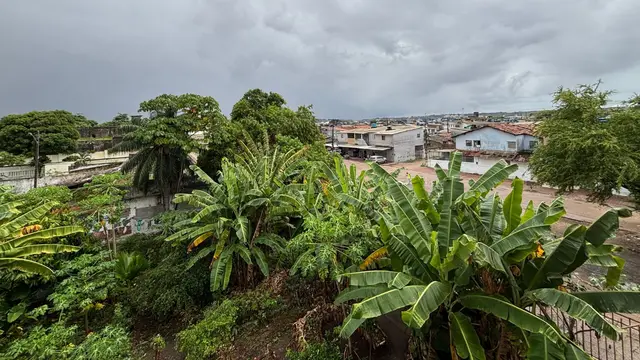
Aerial view of neighborhood in Recife, Brazil (Photo: Negritando Design)
Q: Climate summits can often feel like just another gathering. How do CBA conferences go beyond talk to action, to influence policies in favour of locally-driven adaptation?
SP: As I mentioned, through the CBA conferences we capture the voices of practitioners and take them to policymakers at COP and elsewhere. We’re currently expanding this approach further, by working to create a learning journey, not just a one-off event.
IIED and partners have been collectively reflecting on sharing learning around what is working, to promote LLA within an LLA community of practice. For this community, CBA conferences are one shared space, among others, in a learning journey that moves us towards using locally-led systemic change to tackle climate issues.
For instance, along with IIED Europe we’ve been working to support this learning journey by hosting events in Europe. Last year we ran a CBA ‘learning and sharing’ session in the Netherlands in the context of the European Week of Regions and Cities. This year we aim to share CBA19’s knowledge and messages with Europe’s climate adaptation audience – including, for example, at the European Climate Change Adaptation Conference.
By showcasing our messages to others, we can get new inputs and then build our messages again. This means CBA conferences can become circular events, making them more sustainable. That’s why I’d encourage anyone who wants to advocate for LLA to join the CBA conference.
Q: As governments worldwide cut aid budgets, the fear is that they focus funds on project delivery instead of knowledge sharing. What are your thoughts on this?
SP: There’s this idea that donors prefer to see physical infrastructure and tangible results for their investments. But through our work, we’ve seen that if you introduce something that the community doesn’t own, and if there’s no behavioural change connected to it, it won’t succeed. So it doesn’t make sense to invest in infrastructure if there’s no element of knowledge and capacity building to utilise and sustain it.
The concept of CBA is needed now more than ever, because it’s about using the power local people have. Climate action isn’t just about introducing resources, infrastructure and institutions. It's about people; it's about behavioural change in people, leadership in people, the accountability of people.
For example, at CBA conferences participants share their local and Indigenous practices, and their community-based solutions. This allows people from different communities worldwide to learn from others’ experiences, successes and challenges. This is really powerful. Donors also benefit greatly, because they don't have to reinvent the wheel. Any conference based on promoting knowledge sharing and knowledge co-creation is the way forward, in my view.
Q: What role does the CBA conference play in ensuring climate action is sustainable for future generations?
SP: People I’ve spoken to tell me that after attending CBA conferences, they become more motivated to work for the wider community and society.
When practitioners come together, they realise that although their own work might feel isolated or small-scale, lots of others elsewhere are working towards the same goal. This strengthens them and, in itself, creates a next generation of advocates.
Also, we always encourage young people to have a platform at the conference. This means people who have worked on climate adaptation for decades can engage and co-create with people new to this space. When you have this intergenerational knowledge exchanged in an informal, non-hierarchical context, it mobilises people to be advocates for LLA, both today and in the future.
Q: Any final words?
SP: By advocating for LLA, we’re really calling for finance to reach the lowest appropriate local level, instead of having intermediaries who dictate funding flows.
CBA19 is the best platform to make this argument: as practitioners, we need more local finance and local decision-making power, so that the small amount of funding we receive is properly utilised to build a more sustainable, climate-resilient world. That’s why I believe we need the CBA conference more than ever.