Transforming environmentally harmful subsidies for business and nature
Environmentally harmful subsidies damage nature and hold back sustainable business. IIED is working with partners to show how governments can repurpose this spending to benefit people, nature and the economy. Drawing on case studies from six countries, the project will identify lessons for reform and examine how businesses can advocate for change.

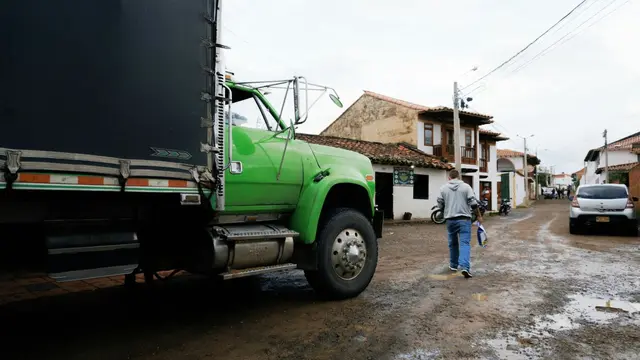
A tanker tops up fuel at a petrol station in Colombia, where the government's efforts to phase out fuel subsidies highlight the challenges of reducing public spending and fossil fuel dependence while protecting transport livelihoods and keeping costs affordable (Photo: EEIM, via Wikimedia Commons, CC BY-SA 4.0)
Environmentally harmful subsidies (EHS) encourage destructive business models and make it harder for sustainable businesses, small-scale producers and least developed countries to adopt more sustainable practices.
Often poorly targeted, these subsidies can harm the environment while undermining national goals of economic improvement and poverty reduction. Despite various international commitments to reform them, including Target 18 of the Kunming-Montreal Global Biodiversity Framework, progress has been slow.
However, reforming EHS offers an opportunity to repurpose government spending towards activities that benefit people, nature and economy. With many governments facing tight budgets, this could free up much-needed investment in climate and nature action.
EHS currently create unfair market conditions for enterprises with sustainability goals and increase the risks climate change and nature loss pose to business operations.
Subsidies often exist for a reason, so reform and repurposing requires careful consideration to why they were introduced, who benefits from them and the impact of any changes. Repurposing EHS for government programmes such as social protection, increases in minimum wage or tax incentives for businesses that support renewable energy or nature-positive companies, can benefit both the environment and the economy.
What is IIED doing?
With The B Team and Bankers without Boundaries, IIED is working to explore how governments have redirected EHS, identifying what has worked and the challenges that arise.
We have developed six case studies from Colombia, Mexico, Indonesia, Egypt, Nigeria and the UK that examine how governments and businesses can advance EHS reform amid geopolitical crisis, increasing trade barriers and the climate crisis.

We will focus in particular on developing a deeper understanding of how business can advocate for subsidies reform, including through networks such as The B Team.
Drawing on these findings, ahead of the CBD CO17 in Armenia we also produced a policy brief to support policymakers seeking to reform and repurpose EHS.
News and updates
Additional resources
Article: Making subsidy reform work for nature, climate and people (October 2026)
Enabling and incentivising coastal stewardship, Jeneen Hadj-Hammou, Peadar Brehony, Manuel Castiano, Anna Ducros, Emma Etchells, Simeão Lopes, Rodrigo Oyanedel, Ruth Pinto, Samiya Selim, Kokubanza Timanywa, Kate West and Annabelle Bladon (2026), WorldFish and IIED report
Repurposing harmful fisheries subsidies for nature and people (2026), World Bank brief
Press release: Reaction: WTO fisheries subsidies deal going into effect (September 2025)
Transforming nature finance for people, nature and climate: IIED’s nature finance strategy, 2025-2030 (2025), IIED project flyer
Blue social protection handbook: protecting people, fish and food, World Bank (2025)