Items tagged:
Social protection
-
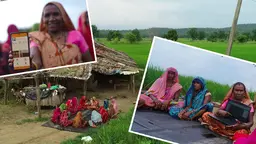
Planning ahead: how the CRISP-M tool advances early climate action
A new digital tool combining scientific climate risk information with local and traditional knowledge is helping communities in India manage climate risks more effectively
-
Launch of the CRISP-M tool
A new digital tool that combines scientific climate risk information with the traditional knowledge, practices and skills of communities to help Indian communities undertake climate risk management more effectively was launched at this online event on 13 October
-
Five pathways to deliver rapid support for a green and resilient COVID-19 recovery in the LDCs
Drawing on a recent situational analysis report, Ritu Bharadwaj describes transformative pathways for setting the Least Developed Countries on a path towards a just, equitable and green recovery
-
Integrating gender and intersectionality in social protection programmes
Reflecting on recent IIED research examining the impact of COVID-19 on women in India, Tracy Kajumba and Ritu Bharadwaj explain why gender and intersectionality must be embedded in social protection programmes
-
Drought management in India: hostage to climate information governance
While communities in India affected by climate change, and the agencies that support them, need access to short and long-term weather forecasts to plan their responses to increasingly erratic rainfall, the current climate information governance system stops this from happening. The system needs reworking
-
Reimagining solutions to India’s water challenge: the art of governance
Clare Shakya and Ritu Bharadwaj explain why India’s water security crisis demands a disruptive, locally led new approach to governance, and offers eight principles that could help shape one
-
Enhancing climate resilience impacts of India’s social protection programme
IIED is supporting the world’s largest works-based social protection scheme, the Mahatma Gandhi National Rural Employment Guarantee Act (MGNREGA), to deliver climate resilience impacts for vulnerable rural communities in India
-
Are India’s social protection schemes ‘future fit’?
COVID-19 has highlighted the value of India’s social protection schemes for the extreme poor. With some tweaking, these schemes can be true game changers
-
Why we need to plug the climate information gap in social protection schemes
Being prepared to respond to hazards can dramatically reduce risks of livelihood loss for India’s rural poor
-
Webinar report: Gender inequalities in social protection
How can social protection schemes incorporate climate-resilience objectives and respond to the different needs of women and men? That was the topic under discussion at an online meeting hosted by IIED on 2 April 2020
-
Webinar: Gender inequalities in social protection – people, households and climate adaptation
IIED hosted an online discussion on the role of social protection schemes and how they can incorporate climate-resilience objectives and respond to the different needs of women and men
-
'Just give money' or 'just give work' to the poor?
A previous blogpost on Due South discussed the potential for cash transfers to contribute to climate change adaptation. But 'just giving money to the poor' is not the only social policy programmes being implemented in the developing world. In India, a different approach is being tried: rather than guarantee the poor an income, the government guarantees them paid work, via the National Rural Employment Guarantee Act (NREGA), which came into being in 2005.