Items tagged:
Ghana
-
Civil society perspectives on the living income differential for cocoa producers
At an IIED webinar, civil society representatives discussed challenges and opportunities around design and implementation of the living income differential for cocoa producers
-
What role do local governance frameworks play in strengthening women’s voices in land governance?
Across East and West Africa, IIED and partners have been developing and testing approaches to strengthen women’s voices in local land governance. Philippine Sutz reflects on the role and impact of local governance frameworks as these approaches are implemented in different contexts
-
Connect: mainstreaming biodiversity information into the heart of government decision making
Biodiversity and ecosystem services are essential components of a healthy economy. To achieve truly sustainable development, governments must integrate information about biodiversity and ecosystems services into their decision-making processes.
-
Q&A: Achieving sustainable intensification of agriculture – decisions and trade-offs
How can African farmers intensify agricultural production in an environmentally and socially sustainable way? A recent project sought answers and insights for policymakers
-
Using dialogue to extract sustainable solutions for artisanal and small-scale mining
Fitsum Weldegiorgis shares challenges and successes from IIED's artisanal and small-scale mining (ASM) dialogues in Ghana, Madagascar and most recently in Tanzania
-
Shaping the future of forest and farm landscapes in Africa
As part of a new interdisciplinary partnership, IIED will be working with sector experts, scientists and practitioners to better understand and manage the growing competition for land in Sub-Saharan Africa, as governments seek to balance food production with forest conservation targets
-
IIED webinar: improving accountability in agribusiness investments
This webinar on 6 June 2017 discussed how rural people can increase the accountability in agribusiness investments, looking at examples from Cameroon, Ghana and Senegal
-
New voices: Ghanaian miners, students and civil society representatives talk about ASM
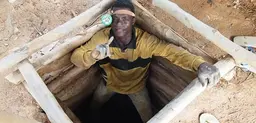
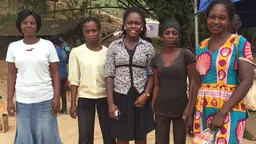
Participants at a dialogue event held in Ghana in early 2016 included mineworkers, small mine owners, students and other community members. They shared with IIED their thoughts about the event and what they had learned about the artisanal and small-scale mining (ASM) sector during the four days of the dialogue
-
ASM dialogue creates ambition for change in Ghana
A dialogue in Ghana presented a unique opportunity to bring stakeholders together and find solutions to realise the potential of small-scale mining
-
In pictures: a dialogue for action on mining in Ghana
This photo gallery documents the lively conversations about the future of Ghana's artisanal and small-scale mining sector at an "action dialogue" organised by IIED and partners
-
Ghana: on our way to participatory reform in the artisanal and small-scale mining sector
With an engaged government, private sector and multi-stakeholder engagements already in place with artisanal and small-scale mining (ASM) communities, Ghana provides an excellent opportunity for a dialogue that delivers solutions to the challenges facing the ASM sector
-
Can mining dig rural women out of poverty in Ghana?
An IIED dialogue with small-scale mining communities discovered women see mining as a source of hope – but that their dreams are seldom realised
-
Women pay heavier price for big dams
On International Women's Day, we look at how relocating to make way for big dams in West Africa has particular impacts on women
-
Voices from artisanal mining communities in Tarkwa-Nsuaem, Ghana
IIED and partners is organising a dialogue with people working in Ghana's artisanal and small-scale mining industry. This page features interviews with stakeholders in artisanal mining communities to set the scene
-
Talking mining in Ghana
Stakeholders from Ghana's artisanal mining communities will share their perspectives in discussions to identify how to improve the artisanal and small-scale mining sector in the country
-
Getting to the root of gender equal land governance
A workshop in Senegal revealed that issues over equal access to land for men and women may not be as simple as they at first seem
-
Communities stumped as government fails to make loggers pay
As the EU reviews timber import policies, a new report finds that incentives to harvest timber legally and sustainably from Ghana, one of Europe's key sources, are failing to deliver
-
Women's land rights and Africa's development conundrum – which way forward?
In many African countries women lose out from patriarchal legal and cultural traditions. How can these practices be changed to benefit everyone?
-
Legal and social accountability tools in agricultural investments in West Africa
In recent years, a wave of large-scale acquisitions of farmland for plantation agriculture has taken place in Africa, Asia and Latin America, fuelled by changing agricultural commodity prices, expectations of rising land values and public policies to promote long-term food and energy security. Developing tools to improve accountability is critical in ensuring that investment processes respond to local needs and aspirations
-
Helping parliamentarians drive national climate change policy
Members of parliament can help break the international stalemate on climate change action by ‘domesticating’ global decisions, using national legislation. But to do that they often need long-term capacity-building programmes to catalyse the process: programmes that have support within the government and across parliaments
-
Helping parliaments across the Southern African Customs Union region address climate change
Parliamentarians can play a key role in building climate resilience by bringing constituents' concerns into national forums, scrutinising how governments are responding to domestic and global climate change issues, and ensuring policy continuity
-
REDD+: What is needed to make it work for the poor?
While REDD+ is aimed at reducing emissions from forests, its effectiveness will depend on how much the benefits trickle down to those living closest to the forest.
-
How do we tell whether climate change adaptation is making headway?
IIED and its partners are developing tailored frameworks to help developing countries evaluate their climate adaptation investments.
-
New business models can spell success for African farmers
A major international project has provided insights into how small-scale farmers in Africa can improve their livelihoods by building sustainable trading relations with international businesses in the food industry.
-
MPs: the missing pieces to national action on climate change
While climate change is a global problem, many countries are forging ahead with their own national climate change plans – and MPs are important actors in this process.
-
Putting farmers first: Democratising and reshaping agricultural research in West Africa
UK parliamentarians and civil servants will this week join African farmers, international donors and scientists in a policy dialogue that aims to reshape agricultural research to serve development goals and the public good.
-
Ghana’s hidden forestry revealed in first study of its kind
Research in Ghana shows how small businesses that depend on forests employ more than a million people and produce many valuable products, but are left out of national statistics, with big social and environmental consequences