IIED is a leading independent policy and research organisation tackling climate change, nature loss and inequality
50+ years of change
Our mission is to build a fairer, more sustainable world, using evidence, action and influence in partnership with others

We connect local knowledge and priorities with national and global decisions. Through long-term partnerships with community organisations and governments, we develop research grounded in people’s lives and use it to shape policy, influence investment and strengthen rights

Connecting knowledge, people and action
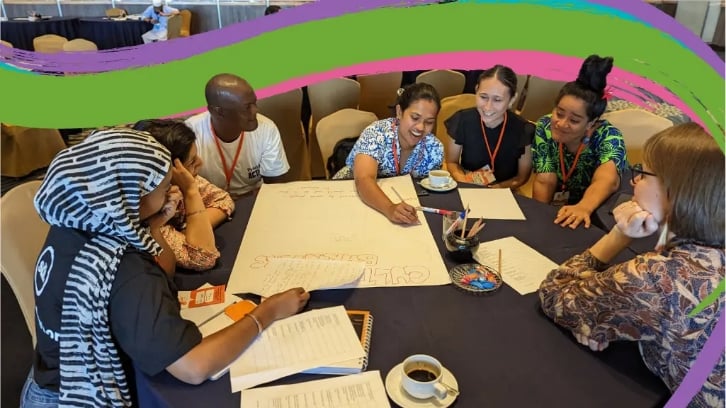
Guided by our values, we produce rigorous research, informed by specialist expertise and long-term partnerships. As a trusted convener, we bring together communities, policymakers and funders to develop practical solutions that put local knowledge and priorities at the heart of decision-making
What we’ve changed together
Explore how IIED and our partners have helped shape policies, strengthen rights and support locally led action. Visit our impact page to find more
Accountability
We are committed to putting our values into practice through how we work, how we use our resources and how we account for our decisions. Explore our policies and reporting on integrity, inclusion and responsible stewardship
IIED has a staff that is really committed to the values that inspired IIED from the beginning… where science and research and action happens together where we learn from the people, from the communities, from the local partners
 Rebeca Grynspan, secretary-general of UNCTAD

How we are governed
Where our money goes
Our history
Scroll through some of our key achievements over the years
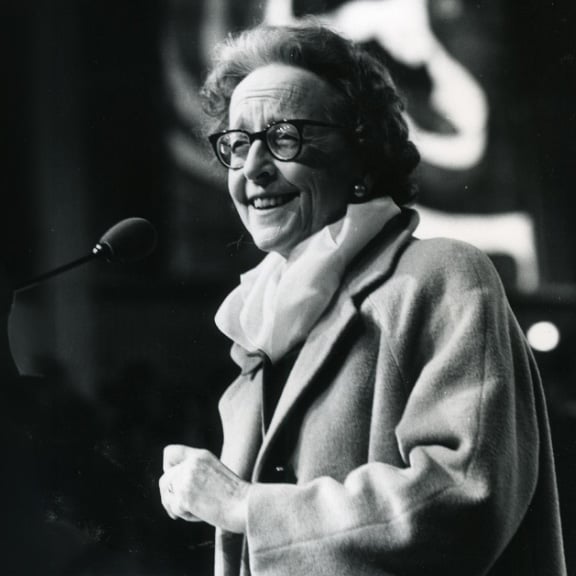
Working primarily in the global South, we have been applying original thinking to sustainable development issues – linking local priorities to global challenges – for more than half a century.
Our founder, Barbara Ward (pictured), was one of the first people to articulate the concept of sustainable development.
And in 1972, IIED brought the priorities of the global South to the world stage at the landmark UN Stockholm Conference on the Human Environment, showing environmental protection and human poverty reduction are inextricably linked.
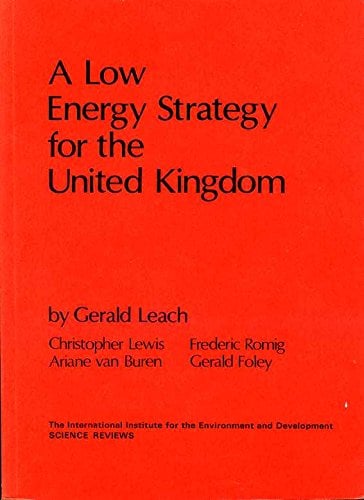
Later in the 1970s IIED turned European energy policy on its head by demonstrating that economic growth can be decoupled from rising energy consumption – mainly through smart conservation and technological improvements.
The publication of ‘A Low-Energy Strategy for the United Kingdom’ proved for the first time that modern industrial economies could continue expanding without increasing primary energy consumption.

In 1978, our 'Banking on the Biosphere' work sparked a global shift in international development assistance, prompting major aid agencies and development banks to embed environmental safeguards into their lending programmes.
Just over a decade later, in 1989, we helped to pave the way for the concept of a green economy by publishing ‘Blueprint for a Green Economy’.
As a member of the Green Economy Coalition, we’re still working to accelerate the transition to green and fair economies.
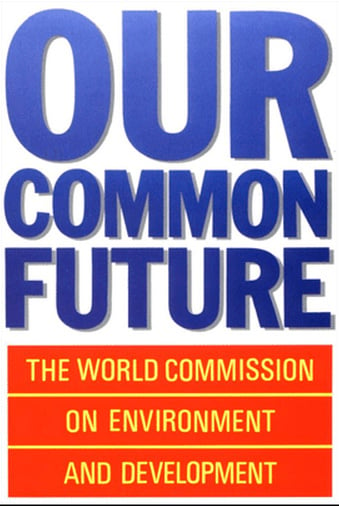
IIED provided the core research and framing for 1987’s Brundtland Report, for the World Commission on Environment and Development, embedding sustainable development into mainstream global governance.
Two years later IIED launched ‘Environment & Urbanization’, which continues to this day as one of the world's most cited academic journals dedicated to urban poverty and Southern researchers.
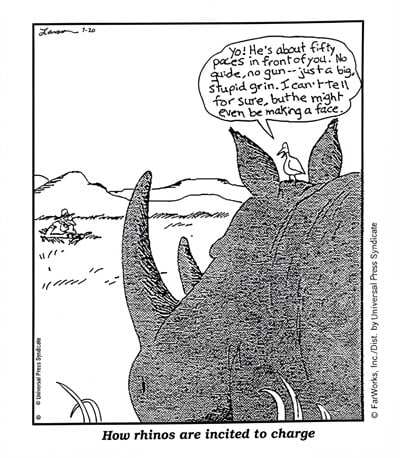
We transformed global conservation policy in 1994 by demonstrating that protecting biodiversity requires securing the land rights, livelihoods and active leadership of local communities.
‘Whose Eden?’ was a landmark report that challenged top-down, exclusionary "fortress conservation" models in Africa.
The 1990s also saw IIED democratise development planning by scaling participatory appraisal techniques across more than 120 countries, putting research tools directly into the hands of local communities.

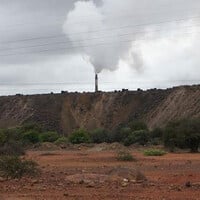
With the global Mining, Minerals and Sustainable Development (MMSD) project and the Sustainable Paper Cycle assessment around the turn of the century, we pioneered multi-stakeholder industry reviews that created foundational corporate social responsibility and sustainability benchmarks for global mining and forest supply chains.
Today, IIED applies those same principles to the global rush for the critical minerals needed for green energy, artificial intelligence and defence systems.
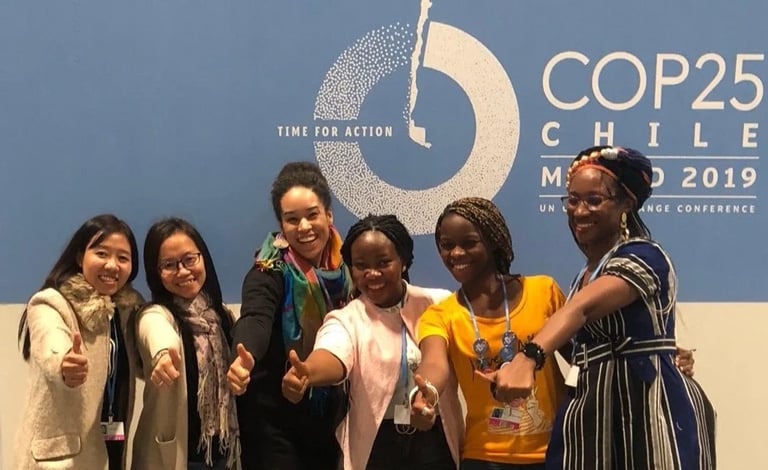
At the start of the century IIED encouraged the formation of the Least Developed Countries Group of the UNFCCC.
Since 2001 we have helped establish and build the negotiating capacity of the group and its negotiators, enabling climate-vulnerable nations to drive key global outcomes such as the 1.5°C target in 2015’s Paris Agreement.
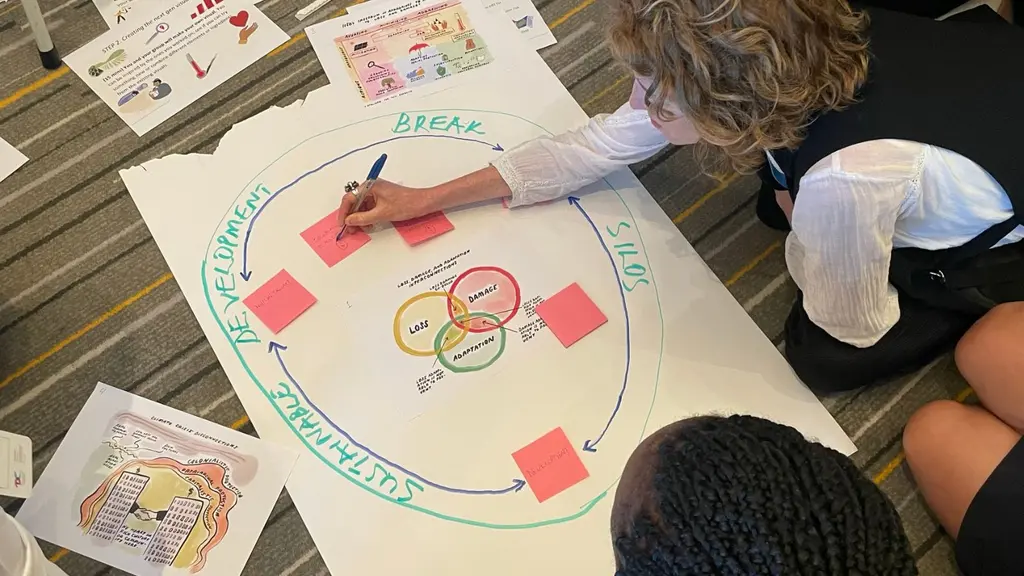
Since 2018 we have been leading global efforts to change traditional top-down climate funding models and ensure decisions are made by the local communities and institutions who need it the most.
The Least Developed Countries Initiative for Effective Adaptation and Resilience was followed by the principles for locally led adaptation.
In parallel, IIED pioneered debt-for-climate swaps to tackle nature loss and sovereign debt simultaneously.
We marked our 50th birthday in 2022/23 by reflecting on some of our biggest achievements – and looked forward to how we will continue to make a difference on the global stage.
Ahead of the Stockholm+50 conference we published research exploring the evolution of sustainable development since the early 1970s, highlighting our role in 10 key movements for change.
This was followed by our ‘Manifesto for a thriving world’ in 2024, setting out six key priorities as we tackle the climate, nature and inequality crises.
Jobs
We regularly look for new people to help us to make a difference in the world.
Work with us
Interested in working with IIED or using our research? We welcome enquiries from community organisations, researchers, policymakers, funders and others working towards a fairer, more sustainable world.
Get in touch to explore collaboration or find out more about our work.
+44 (0)20 3463 7399
UK: 44 Southampton Buildings, London, WC2A 1AP, England
UK: 1 Boroughloch Square, Edinburgh, EH8 9NJ, Scotland
Funding and partnership
Email [email protected] to discuss funding and partnerships.
General enquiries
Email [email protected]. We’ll do our best to put you in touch with the right person.
Media
The International Institute for Environment and Development (IIED) is a company limited by guarantee and incorporated in England (Reg. No 2188452. VAT Reg. No. GB 440 4948 50) and an independent charity registered in England (Charity No. 800066) and in Scotland (OSCR No. SC039864). IIED is recognised as an international organisation by the OECD Development Assistance Committee.