Strengthening urban resilience through collaboration: lessons from India, Kenya, Myanmar and the Philippines
IIED and partners spotlight urban community-driven solutions across four countries.

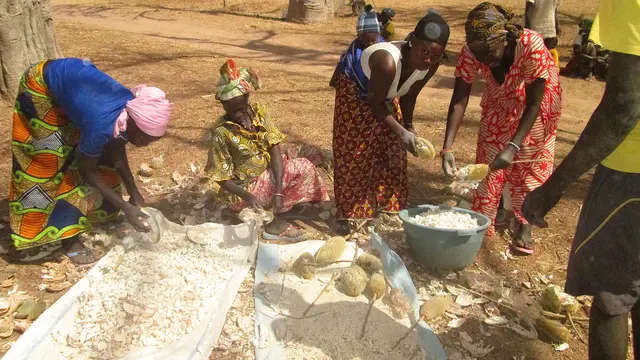
Communities in India are facing growing water insecurity (Photo: Screenshot from video, PRIA)
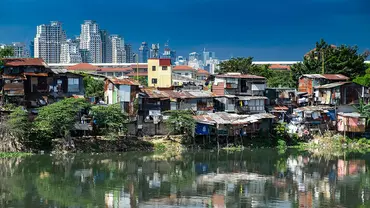
Cities in low- and middle-income countries are growing at unprecedented speed, and the greatest impact will fall on people living in informal settlements.
Rapid urban growth, weak governance and limited access to finance are straining water and land resources, increasing flood risks and leaving marginalised communities without the infrastructure they need to live.
Yet across Asia and Africa, local groups are pioneering powerful, practical solutions – and a new video series shows how urban resilience is being planned, financed and delivered in India, Kenya, Myanmar and the Philippines.
Urban living labs
IIED and partners are supporting urban living labs in Ajmer and Jodhpur (India), Dunga (Kenya), Yangon (Myanmar) and Iloilo (Philippines). These collaborative spaces enable communities, city authorities, researchers and civil society organisations to jointly design, test and scale new approaches to resilience.
The labs offer a space to develop nature-based solutions, community-generated data, participatory planning methods and platforms that strengthen dialogue between local groups and decision-makers.
Urban resilience across four countries
In India, Participatory Research in Asia (PRIA) is equipping women’s self-help groups, residents and local authorities to pilot nature-based strategies that improve water and green resource management.
The Kounkuey Design Initiative (KDI) is addressing pressures on wetlands and lake ecosystems in Kenya’s fast-growing secondary city of Kisumu, while empowering informal settlement residents to influence city-wide planning.
In Myanmar, Doh Eain is working with vulnerable communities to address flood risks and limited access to clean water.
And in the Philippines, TAMPEI Philippines, together with grassroots organisations, is strengthening homeowners’ associations to engage more effectively in local policy and decision-making, particularly in high-risk urban areas.
The work by IIED and partners places community leadership and collaboration at the centre of efforts to build cities that are inclusive, climate-resilient and rooted in local priorities.
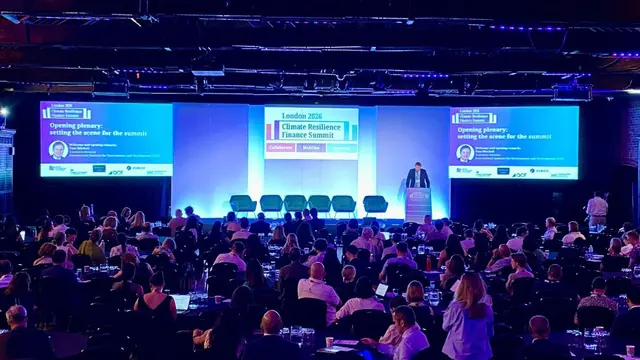
This will be showcased at a series of events at the Resilient Cities Forum, organised by The Conduit Club and the Resilient Cities Network, starting on 8 December. The events, designed as a networking space for funders, city governments, researchers, practitioners and private-sector organisations, aim to encourage collaborations.
The events will also host the second convening of the Urban Resilience Strategic Exchange (URSE). The URSE – convened by IIED and co-chaired by the UK FCDO’s CLimate Adaptation and REsilience (CLARE) programme and the Adaptation Research Alliance (ARA) – is a member-led platform that brings together funders, research institutions and city partners to align strategies and investment pathways for inclusive, locally-led urban resilience. The first convening took place during the 2025 Climate Week NYC.
The videos highlight how, across each country and context, locally-led adaptation and community expertise are central to building climate-resilient cities.
With the right support, marginalised groups – including women, informal settlement residents and ethnic minorities – can shape policies and investments that affect their lives.