Urban living labs for resilience: scaling impact through the SECURe framework
In the coming 25 years urban development in cities of low- and middle-income countries will determine the level of climate risk globally. IIED and partners are working to scale the impact of climate solutions in cities of India, Kenya, Myanmar and the Philippines using an approach to strengthen and enhance urban resilience.

Manila, Philippines: an urban contrast shows informal settlements framed by a skyline of modern, high-rise buildings in the distance (Photo: Conrad Rotor, via Pexels)
Cities in low- and middle-income countries are growing rapidly, and how this urbanisation unfolds will determine the level of climate risk worldwide. Informal settlements face the greatest exposure and vulnerability. Locally-led technical solutions can help, but without inclusive governance and finance, innovations to increase resilience to climate impacts often fail to scale.
This project builds on the Adaptation Research Alliance’s (ARA) microgrants programme and the SECURe (Strengthening and Enhancing Contextual Urban Resilience) framework.
It aims to scale up the impact of climate solutions, co-produced through the microgrants programme, by helping city actors to mobilise resources for implementation. The SECURe framework does this by helping to enhance the influence of marginalised groups over city governance and funding flows. This work aims to:
- Overcome blockages to inclusive governance and enhance the influence of marginalised groups over city governance
- Increase the flow of funding and resources to lower levels of governance, enabling the implementation of co-produced and risk-informed urban development plans and climate solutions, and
- Foster a Southern-led community of practice able to influence policy and planning at scale.
The Unlocking Resilience through Bottom-up Action-research and multi-scalar Networks (URBAN) project was developed to accomplish these objectives.
Supported by the Climate Adaptation and REsilience programme of the UK’s Foreign, Commonwealth & Development Office, URBAN is being implemented in partnership with SouthSouthNorth, Participatory Research in Asia (PRIA), KDI, Doh Eain and Tampei.
What is IIED doing?
Leading this consortium, IIED is supporting partners to strategically design and deploy urban living labs in Ajmer and Jodhpur (India), Dunga (Kenya), Yangon (Myanmar) and Iloilo (The Philippines), so they can influence municipal and corporate social responsibility (CSR) funding. Our approach includes:
- Understanding the political context: city partners investigate how political, institutional, economic and cultural factors shape the governance of public and CSR funding in their respective cities. These analyses are informed by the SECURe framework.
- Strategic design of urban labs: drawing on the analyses, each city team develops a strategic design for their respective urban lab, which is able to make funding accessible at local level. This includes brokering agreements between carefully selected city and national actors, legitimising the knowledge of civil society organisations, overcoming bureaucratic blockages to participation, aligning national and municipal policy, and encouraging behaviour change of institutional actors towards marginalised groups.
- Bridging across scales: collaborations are being brokered between our partners and other organisations working in the same country to leverage their interventions to influence policy and planning at national scales.
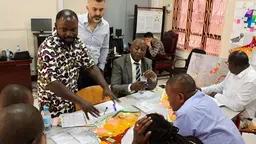
- Fostering co-learning: organisations across cities and regions are being brought together to share urban lab methodologies and generate insights on which approaches and strategies work in which governance and political-economy contexts. Through this process, we are fostering a Southern-led community of practice that is able to produce impact at scale.
- Connecting grounded research with global funding: IIED and partners are convening the Urban Resilience Strategic Exchange (URSE), a platform of global funders and research organisations committed to advancing urban resilience. URSE responds to the shared understanding that strategic alignment and partnership are essential to address the complexity of urban resilience, overcome thematic and geographic siloes, and deliver impact at scale.
Country partners and approaches
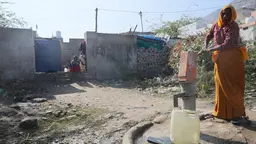
PRIA is focusing on the rejuvenation of traditional water bodies and the creation of green spaces in Ajmer and Jodhpur.
By building the capacity of self-help groups and embedding participatory methods into city and state planning, itaims to address groundwater recharge and heat stress.
The approach combines participatory research and policy dialogues across scales to mainstream nature-based solutions and unlock both public and CSR finance.
- Watch a video on community-led water-body rejuvenation and green-space development using SECURe framework in India
In Iloilo, TAMPEI is working to institutionalise homeowners’ associations as part of local decision-making. Their focus is on strengthening disaster risk reduction and climate planning in riverside and relocation communities, while co-producing neighbourhood upgrades such as improved drainage and ventilation.
The strategy links tenure security, savings mobilisation and policy influence, aiming to access barangay (ward) and city budgets, national housing finance and international investment.
KDI is embedding marginalised groups into biodiversity conservation and adaptation planning for the Dunga wetland.
Through community dialogues and counter-mapping, they are co-producing a community manifesto and plan that links people and nature priorities with official wetland management plans.
The aim is to secure formal commitments, influence county-level policy and connect with international funding programmes.
- Watch a video on harmonising adaptation, knowledge and inclusion in Kisumu County
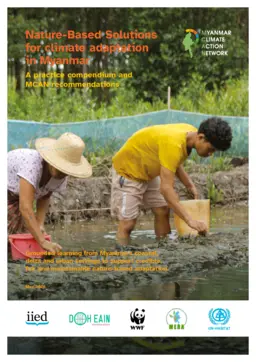
Doh Eain is scaling up community-led adaptation prototypes at ward level, with a focus on stronger nature-based principles and neighbourhood networks.
Their work includes climate risk assessments, capacity building on ecosystem-based adaptation and iterative co-design of solutions such as sustainable drainage, biosand filters and shaded hubs.
The ambition is to mobilise humanitarian, climate and CSR funds, while empowering communities to replicate and sustain adaptation practices.
- Watch a video on climate adaptation championship in Yangon, Myanmar
News and updates
Publications
Additional resources
Article: What works for urban resilience? Turning local evidence into action in 5 cities, Global Research and Technology Development (August 2026)
Video: Unlocking resilience through bottom-up research-action (December 2025)
Video: Community-led water-body rejuvenation and green-space development using SECURe framework in India, PRIA (November 2025)
Video: Harmonising adaptation, knowledge and inclusion in Kisumu County, Kenya, KDI (November 2025)
Video: Climate adaptation championship in Yangon, Myanmar, Doh Eain (November 2025)
Video: Locally led initiatives for harmonised urban governance in Iloilo City, Philippines, Homeless Peoples’ Federation Philippines Inc, TAMPEI (November 2025)
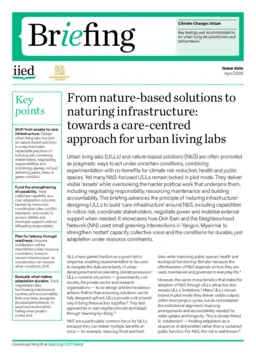
Strengthening urban resilience in informal settlements: the SECURe framework in practice, Alice Grogan, Giorgia Grist, Alejandro Barcena (2025), IIED briefing
Strengthening and Enhancing Contextual Urban Resilience (SECURe) toolkit, Jennifer Steeves, Nina Schoonman, Anshuman Karol, Shruti Priya, Rabi Raj, Alejandro Barcena (2025), IIED toolkit
The SECURe framework: an approach to thinking about power and politics when using co-production interventions for urban resilience, Alejandro Barcena, Aditya Bahadur (2024), IIED research report