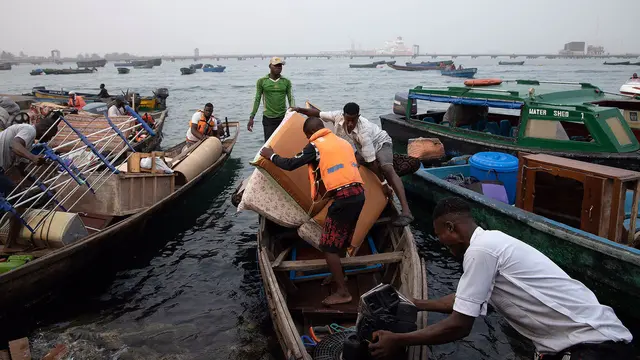
Living with urban drought: Make Change Happen podcast episode 39 full transcript
[Music]
Host [00:01] You’re listening to Make Change Happen, the podcast from IIED that offers insights on issues affecting the path towards a fairer, more sustainable world.
Deena Dajani [0:15] Hello, and welcome to this new episode of IIED's Make Change Happen. My name is Deena Dajani. I'm a senior researcher at IIED. In this episode, we're going to be looking at drought in cities.
Now, the World Health Organization estimates that up to 55 million people are affected by drought each year. Up to 40% of the world's population are experiencing water shortages due to drought.
We often hear about drought's impacts on crops, food security, and the attention is usually on farmers and farming communities that depend on rainfall, mostly in rural areas.
We don't tend to talk as much about drought in cities. But actually, our world is increasingly an urban world. Cities today are home to the majority of the world's population. So how do city residents experience drought? And how do these everyday urban experiences lead to new understandings of drought and how we adapt to it?
We're joined by experts from Jordan and Zambia to answer those questions. Welcome to Ayah Hammad from UN Habitat in Jordan, Gilbert Siame from the University of Zambia, and Melanie Chirwa from the People's Process for Housing and Poverty in Zambia, the SDI affiliate. Welcome!
So Gilbert, I think I'll start off with you. The 2024 El Niño drought in Zambia was the worst the country experienced in over four decades. Immense devastation was recorded: maize, livestock, farmer livelihoods destroyed.
What was perhaps less documented, and tends to be generally the case when talking about drought, is the impact on urban areas, which you alongside Melanie have examined. In particular in informal settlements. Can you please tell us more about that, please?
Gilbert Siame [2:02] Thank you so much, Dina. You are right. When you look at the statistics, you look at the evidence, there is a lot of analysis of the impact of drought.
However, what is and what has been the tendency is that areas that are home to a much-concentrated number of people in terms of population, cities, and in these cities, informal settlements, these areas tend to be forgotten in bringing out the impact of a phenomenon like the 2024 drought on Zambia.
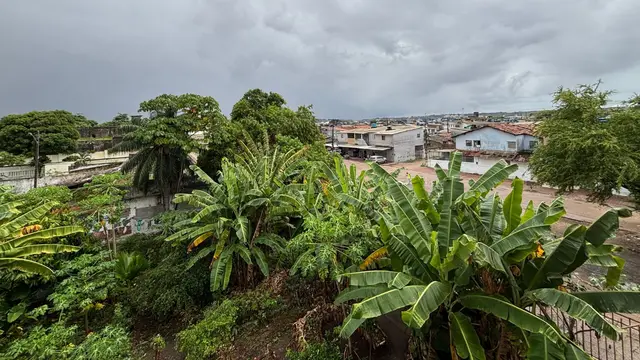
What we did is to study the impacts of drought in one of the fastest growing communities in Lusaka called Mazyopa, an informal settlement, home to over 5,000 residents, with a lot of them being young people, being women, and lot of them being recently sectorised in that community, having moved from other areas.
We documented very clear evidence on how drought impacts livelihoods in the informal communities, how drought impacts the way of life, how drought impacted safety, access to water, and so on.
We have very high statistics, as high as 82% of the residents that we surveyed in Mazyopa, indicating having no reliable access to water during the drought time.
In a community that has two boreholes, and these boreholes were affected by lack of access to electricity to pump the water, but also water table and water quality.
Deena Dajani [3:42] And if I can come in, Gilbert, here to ask, so what happens, those residents who, when the boreholes dry up or and they cannot access them, the water quality, the water tables diminishes, what do the residents do? How do they access water?
Gilbert Siame [3:59] Yeah, great point. When 82% of 5,000 people have no access to reliable water, they tend [towards] very unconventional means to survive.
And what we found is that one, the biggest proportion tend to walk very long distances to access water points that were still functional.
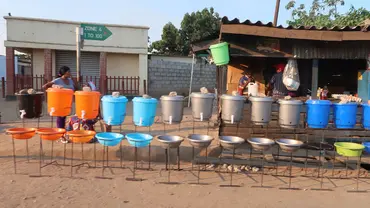
We are looking at people walking up to five kilometres per day to fetch water. Now think of this neighbourhood with a very young population, a lot of them going to school and school classes starting at 6, 7 [in the morning]. Dangerous circumstances that the drought can lead to.
Second, people derived to nearby neighbourhoods, the wealthier neighbourhoods. People crossing dangerous drainage systems and infrastructures because there's no road to connect to these communities. They had to walk sometimes at night in difficult places to access water in much richer neighbourhoods, where sometimes some kind people just leave a tap running outside the yards so that people can get some water.
Third, we saw situations where people tend to unsafe water sources, like accessing water from the Bombay drainage. That is one of the major drainage infrastructures where people wash, garbage dump, and so on. But that becomes this survival line, the survival option.
Melanie Chirwa [5:20] And if I can come in, yes. It was very clear from this study that the residents of Mazyopa were affected more by the drought than the better off communities or neighbourhoods due to the lack of water and sanitation infrastructure.
And as Gilbert's mentioned, even within Mazyopa itself, we could see that different groups were affected differently and in particular women and young people, particularly the young girls, because they spent most of their times collecting water.
And over 60% of the residents said that drought led to increased violence in the home. But this was also recorded outside of the home as they collected water. So, in the home, when women would go out to collect water, they would have to spend more hours on the queue walking to the places where they needed to get the water. So sometimes their husbands would think that they've gone off to see other men. Why are they taking so long to get to where they need to be?
And for the young girls, they were hurled, insulted, and the women too. Sometimes they were physically and sexually harassed. So the drought did bring out a lot of gender-based violence.
On another level, we can look at issues to do with menstrual management. For many women and young girls, it was very difficult for them to manage their menses because water had to be rationed.
So you had to make a choice to clean your home, to cook, or to ensure that you're clean.
[Music]
Deena Dajani [7:13] That's really insightful to see how drought is not just impacting sectors of the economy, for example, but really shaping the everyday life and even intimate lives of city residents. I'm interested to see if this resonates with Jordan. But first, Ayah, I understand that Jordan experiences a different type of drought to Zambia. Is that correct?
Ayah Hammad [7:36] Thank you, Deena. So to answer your question, yes, in Jordan, drought is not an emergency like El Niño, but it's more a chronic condition.
Jordan's main freshwater resources are rainfall and groundwater aquifers. And rainfall has been in steep decline for years, and the fresh water from aquifers is being withdrawn beyond sustainable rechargeable capacity. So accordingly, this is creating a condition of chronic ongoing hydrological drought. Even with rainfall, there are still water shortages.
The most widely used indicator for water security globally identifies that anything less than 500 cubic meters per person is considered absolute water scarcity. And can you imagine that in Jordan, it's estimated the water availability per person is 61 cubic meter per person. So well below the absolute water scarcity threshold.
Deena Dajani [8:34] That is quite severe. And what impact does this chronic drought have on Jordan's urban population then?
Ayah Hammad [8:40] So what we did is that we studied a migrant hosting neighbourhood in Mafraq city called Dahiyat Al-Malik Abdullah II. So, this neighbourhood is a low-income and highly vulnerable neighbourhood. The majority of residents earn below the living wage, and educational attainment is relevantly low.
And while most of the neighbourhood is connected to the water network, water is rationed and residents only receive water once a week for a limited number of hours. So even during those water supply hours, the water is not that reliable.
Accordingly, our study showed that residents are unable to fill up their water tanks before the water supply is cut off on most weeks. Residents have to have water tanks, definitely, to store water to carry them from one week to another when water is supplied again. And one of the things we found was that refugee residents in the neighbourhood had much less tanks or water storage capacity in their homes compared to the Jordanian nationals.
So this also made refugees less adaptable to drought.
Deena Dajani [9:46] That's really interesting because it sort of resonates with what Gilbert and Melanie you were speaking about, how drought is impacting some neighbourhoods within a city more than others, and then it's impacting some groups within those neighbourhoods more than others. So rather than like a homogenous climatic condition, looking at it through the lives of everyday city residents seem to suggest it's a highly uneven condition.
[Music]
And I think this opens up another question. So how to respond to drought in cities, given its variable impacts on different neighbourhoods and different groups? And Gilbert, I'll turn first to you to answer this question.
Gilbert Siame [10:25] What you ask truly is an interesting question. And reflecting on Jordan's experience, I draw a few parallels and similarities. The first one is that informal settlements, with or without drought, already are in a water stress situation. They are in a water crisis on a daily basis.
The second similarity is that for Zambia, drought is now becoming a regular phenomenon. We had 2024, 2025 droughts in living memory for many of us. In 2026, 2027 focus, it clearly shows that we may experience worse drought situation. So even before communities like Mazyopa bounce back, a new crisis is coming.
So what I think really is the way and the solution to these problems is that, while Jordan and Zambia may be different, it is important to invest in long-term adaptation mechanisms.
To hardwire the solutions in the policies, in the investment processes, and avoid emergency kind of response. If emergency happens, there's a system that functions.
For example, when we look at the Lusaka Integrated Development Plan, which is a plan for that has been formulated in 2025-26. Are we able to find drought response mechanisms as a priority in terms of strategies, in terms of investment, in terms of urban management?
If we do not have them as a priority interventions, then we risk falling back into emergency mode when drought happens.
Deena Dajani [12:10] And Ayah, does this resonate in terms of long-term solutions instead of emergency driven approaches?
Ayah Hammad [12:17] Yes, I totally agree. We need to move away from fragmented and reactive approaches to drought towards integrated long-term solutions.
Al-Dahia is an interesting example of this because of the high number of refugee residents who live there. We often see this trend of refugees moving into neighbourhoods where basic service provision is more limited. But what this does is create neighbourhoods where vulnerabilities intersect.
For example, in Al-Dahia, it's similar to Mazyopa in that parts of it are not included in the city's development plans and is therefore considered unorganised or unregulated.
So really, we have two main challenges, which are drought and displacement in these same neighbourhoods that are treated as emergencies, but at the same time, they're treated separately.
So definitely a different approach is needed. We need to look at them together. Working with urban planners and city governments, stakeholders, as well as utility providers is key.
Deena Dajani [13:15] And can I ask about any political conditions that amplify these experiences of drought for residents in those neighbourhoods?
Ayah Hammad [13:23] I'll start with saying that it was very clear in Al-Dahia [that] these political conditions impact the residents experiencing droughts because there are a high number of refugees in this neighbourhood. And our study found that when the water supply is cut or does not arrive during the ration hours that it's supposed to be, the vast majority of Jordanian residents simply call up the water utility company and make a complaint.
While on the other side, the refugees do not do so. It's only a minor portion of them who call the utility. This is lack of awareness of the availability to actually call the utility company to serve them and support them. And there is a clear lack of empowerment in claiming water access.
So all those challenges are interlinked, and they so amplify the exposure to drought from refugees' side.
[Music]
Deena Dajani [14:18] Melanie, any similar experiences in Mazyopa at all?
Melanie Chirwa [14:22] Yes, in Mazyopa, there was political apathy when we started the study. These are populations who are really marginalised economically and politically. Residents did not want to engage with the research because they thought nothing would come of it.
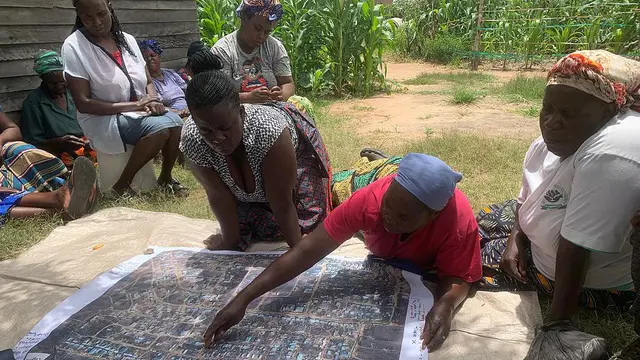
Through the study, we were able to help communities to mobilise, to organise, and to get empowered and raise their voices on issues that affect their community. They went through social accountability training and were able to demand their rights, understanding that there is a responsibility on their side, but being able to hold their leaders accountable.
They had an opportunity to sit in a full council meeting and raise issues, particularly around tenure.
Drought exacerbated their challenges and this study brought the issues to light. And so it gave them an opportunity to present their case. So the community is now open and they're able to now hold their local authority accountable to put them into the development planning processes.
Deena Dajani [15:47] And that's really fascinating. So the research in a way became a sort of platform for public engagement between the community and their local government.
Melanie Chirwa [15:56] Indeed it did, and we're very excited because what happened when we had our community feedback sessions, the community developed a community manifesto calling on the local authorities and the leaders to take urgent action on the challenges that they face around water, sanitation, tenure, livelihoods, gender inequality.
It gave them confidence to speak up and it was an inclusive process in that it looked at the residents of Mazyopa in their totality, the women, the young people, displaced people, they were all part of the process and they were able to add their voice to this manifesto, urging the authorities to ensure that they are a part of the city development plans.
[Music]
Deeena Dajani [16:56] So on that hopeful note, at the end of each episode of Make Change Happen, we like to bring the conversation round to that word, change. And we invite each guest to share their one big thing. So what's the one big thing you would like to see? Gilbert, Ayah, then Melanie.
Gilbert Siame [17:13] I think we need to prioritise drought and drought impacts in city planning and informal settlement documents, approaches and financing. So we need to centre and prioritise drought and drought impacts.
Deena Dajani [17:29] Great! Ayah?
Ayah Hammad [17:30] So one of the most transformative shifts we can make is moving from reactive responses to proactive planning. It's key, it's essential for building resilient, sustainable futures.
Deena Dajani [17:45] And Melanie?
Melanie Chirwa [17:46] It is important that communities are at the centre of this action and collaboration should be at the heart of our work.
Deena Dajani [17:57] Thank you to our guests for such an insightful discussion, to our listeners for listening so far. Thank you everyone and goodbye.
[Music]
Host [18:05] If you’d like to send us your thoughts and feedback on the discussion, email us at [email protected]. That’s [email protected].
You can find out more information about this podcast and our guests, and learn more about IIED’s research around the issues covered in today’s episode, at iied.org/podcast, where you can also listen to previous episodes and browse the rest of our website for more information about IIED and our work.
[Music]
 Soundcloud
 TuneIn
 Spotify
 iTunes