New five-year strategy to reform broken nature finance system
IIED has launched a new five-year nature finance strategy designed to tackle the deep flaws in the way global finance interacts with nature and people.


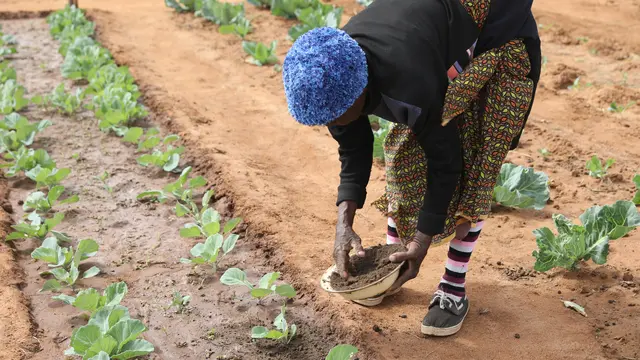
Local communities in Nepal are developing climate-resilient livelihoods through alternative farming techniques and efficient water use (Photo: UNDP Climate, via Flickr, CC BY-NC 4.0)
An ambitious agenda to transform the nature finance system so that finance genuinely supports biodiversity, climate and local communities has been announced by IIED.
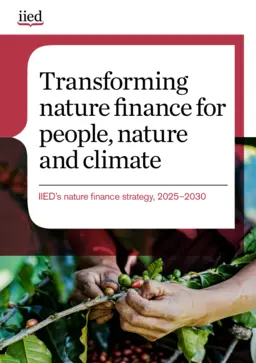
The strategy, 'Transforming nature finance for people, nature and climate, 2025–2030', has been shaped by decades of IIED’s work and built with partners around the world.
Why nature finance matters
At its core, the strategy addresses two types of finance: resources that are pro-nature and people, and those that actively harm them. The challenge is stark.
Globally, far more money flows into activities that destroy ecosystems than into efforts to conserve them. The United Nations Environment Programme estimates around US$7 trillion a year supports nature-negative activities such as deforestation, industrial agriculture and resource extraction. According to the OECD, harmful spending is up to six times higher (PDF) than global biodiversity finance.
Meanwhile, the gap between what is needed and what is provided continues to grow. There is currently a biodiversity finance shortfall of $700 billion, yet only $163 million has so far been pledged to support the Kunming-Montreal Global Biodiversity Framework agreed in 2022.
Indigenous Peoples and local communities – the frontline stewards of nature – remain marginalised within this broken system. They struggle to access adequate funding, are excluded from decision-making and often see their governance models undermined by colonial economic approaches.
A broken system
IIED’s new strategy argues that reforming nature finance is essential to reversing biodiversity loss.
For centuries, Indigenous Peoples and pre-colonial communities have conserved nature without external support. But today, global markets, extractive industries and climate change are eroding their ability to continue traditional conservation practices.
While some communities seek finance to sustain livelihoods and protect ecosystems, many are opposed to market-driven mechanisms that commodify nature and clash with cultural or spiritual values. The strategy recognises these tensions and stresses that solutions must respect rights, priorities and local knowledge.
Launching the strategy, IIED stressed that reversing biodiversity loss cannot be achieved by solely mobilising more money – it also requires rethinking who controls finance, how it is allocated, and whose voices are heard in shaping priorities.
“Protecting nature and supporting people must go hand-in-hand,” said IIED researcher Nicola Sorsby. “That means reforming a broken system but also daring to reimagine a new one – one that addresses colonial legacies, shifts power to local communities, and ensures that finance truly works for nature, climate and people.”
A bold vision
IIED’s long-term vision, which supports the institute’s wider ‘Manifesto for a thriving world’, centres on a transformation of the global nature finance system.
This involves not only reforming current mechanisms but also reimagining what a new, decolonised financial architecture could look like – one that dismantles entrenched inequalities and puts local communities at the centre.
Five outcomes for change
To deliver this vision, the strategy, which will be delivered in collaboration with partners, sets out five interconnected outcomes:
- More money for nature and for Indigenous Peoples and local communities – advocating for larger financial flows from public, private and philanthropic sources, with direct access for communities who seek it.
- Less finance harming nature and people – identifying and reducing destructive financial flows, while redirecting investments toward activities that benefit ecosystems and communities.
- More self-generated, locally-controlled finance – showcasing and supporting self-generated and locally-controlled financial models, and self-sustaining economies that strengthen rights and stewardship.
- Better quality nature finance supporting Indigenous Peoples and local communities – ensuring funds are accessible, transparent and aligned with the needs and priorities of local communities.
- Building blocks for a reimagined system – generating the knowledge and partnerships needed to design a fairer global architecture for nature finance.
A critical window for action
The strategy arrives at a pivotal moment in the global effort to protect biodiversity. One of the core themes of the IUCN World Conservation Congress this October (9-12) is ‘transitioning to nature-positive economies and societies’, emphasising that financial systems must align with nature's intrinsic value while delivering equitable outcomes for communities vulnerable to nature loss, climate change and inequality.
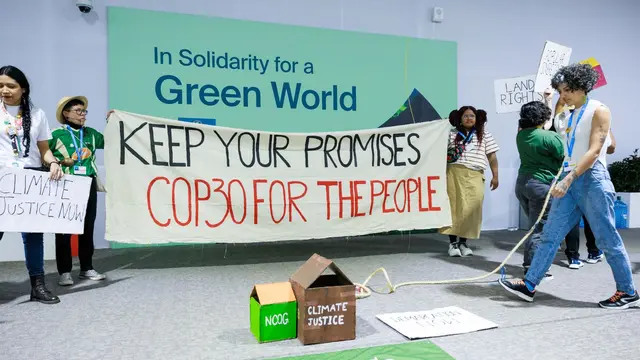
At UNFCCC COP30 in Belém, Brazil next month (10-21 November), discussions are expected to tackle the urgent challenges of mobilising private investment, closing the nature finance gap and aligning financial markets with climate and biodiversity goals – particularly crucial given the Amazon rainforest.
But the defining moment comes at CBD COP17 in Armenia in 2026. This gathering represents the critical juncture where ambition must translate into implementation.
Countries will determine how to mobilise the required $200 billion annually by 2030 under the global biodiversity framework, and – perhaps most importantly – establish the institutional mechanisms to channel these funds where they're needed most: the global South.
The question is no longer whether we need to redirect finance toward nature. It's whether we can move fast enough, and fairly enough, to make a difference. IIED's strategy is designed to help answer that question with action.