How Ekiti State is advancing transition-ready investment decision making
Attracting investment is crucial to developing Nigeria’s resources in a just and sustainable way, but uncoordinated decision making and inefficient land allocation can repel investors and harm communities. Kayode Adeniyi reports on how the Ekiti State Development and Investment Promotion Agency is working to transform this.


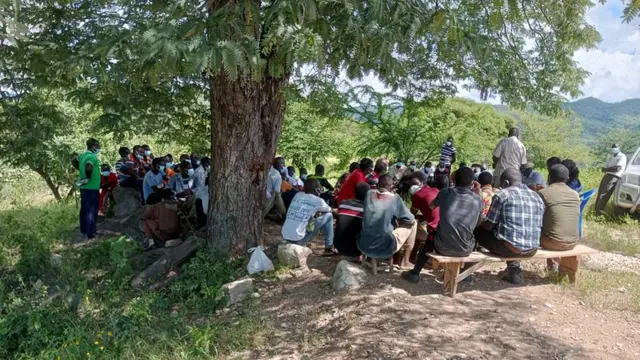
Ekiti State Development and Investment Promotion Agency convened people from across ministries and agencies to collaborate on improving investment decision making processes (Photo: EKIDIPA)
Ekiti State in southwestern Nigeria, like many sub-national spheres of government, is working to balance increasingly complex issues: sustainable economic growth, efficient land identification and allocation, as well as citizen priorities, environmental protection and climate impacts.
Attracting and retaining responsible investment is critical. Recognising this, the Ekiti State Development and Investment Promotion Agency (EKIDIPA) has taken action to transform the ways in which investments happen and ensure a streamlined process that can better balance all the competing considerations.
Ekiti State, which derives its name from the Yoruba word for hill, is endowed with rich land, natural resources and beauty. Agriculture is the backbone of the economy. Cash crops include cocoa, palm oil and timber, while subsistence food crops include cassava, yam and rice. Supporting climate-responsive smallholder livelihoods as well as ambitious large-scale investments is vital.
Ensuring strong cross-ministerial collaboration in investment decision making is therefore a pressing priority. To meet this challenge, EKDIPA initiated a cross-ministerial project to build a more equitable and streamlined land allocation and decision making system. This initiative has garnered national and international support, putting Ekiti State on a promising path toward becoming an attractive hub for businesses and investors.
What were the challenges?
Faced with a lack of transparency, overlapping processes and planning misalignments in decision-making processes, EKDIPA conducted a comprehensive review of existing land-based investment systems. Our assessment revealed several bottlenecks that hindered development, including poor coordination between government agencies, insufficient stakeholder consultation during land acquisition processes, and a lack of clear guidelines for land use decision making.
These challenges slowed development, complicated investment processes and frustrated both investors and landholders. They also weakened the integration of climate and just transition considerations.
Stakeholders often found themselves grappling with bureaucratic complexities and opaque procedures, discouraging them from engaging in long-term projects and causing conflict between stakeholders and gaps in investment decision making processes.
To resolve these problems, EKDIPA sought technical support from the co-implemented Advancing Land-Based Investment and Governance (ALIGN) Technical Support Facility. We sought to develop a framework that followed international good practice but remained responsive to Ekiti State’s unique context. Our aim was to create a transparent, efficient, investor-friendly and transition-responsive land-based investment system that would foster growth.
A collaborative approach
We designed the reform process to be collaborative and inclusive, engaging ministries, departments and agencies (MDAs) across the state government. We arranged surveys to gather insights into the roles, challenges and expectations of each agency involved in developing land-based investments. This inclusive approach ensured that all stakeholders were invested in the reform process, working together toward a common goal of improving land-based investment governance.
The survey information informed a detailed workplan that set out the steps needed to reduce bureaucratic barriers, improve inter-agency cooperation, and enhance the overall efficiency of integrated investment decision making processes. Our workplan also extended beyond the ALIGN technical support timeframe and outlined the long-term actions needed to achieve sustainable change over longer time horizons.
Three steps were key to the work’s success:
- Key public sector stakeholders were brought together. The state government came together to discuss strategies for enhancing coordination between agencies and to agree on a way forward. Regular bi-weekly meetings with designated technical officers from stakeholders ensured that emerging challenges could be addressed, and progress could be monitored. They also facilitated ownership, and embedding the processes eventually developed, meaning the end result was a functioning system and not a paper tiger.
- EKDIPA did a legal analysis of MDA mandates to identify institutional gaps or overlaps. This helped clarify institutional roles and responsibilities and improve coordination across the various MDAs. The process also helped align the different agencies’ practices with international good practice.
- The team ensured that the work had the backing of department and agency heads and the governor of Ekiti State. This helped build political will to facilitate progress and find effective resolutions for bottlenecks.
In addition, the work started ahead of the implementation of the World Bank-supported Framework for Responsible and Inclusive Land Investments in Agriculture (FRILIA) (PDF), an initiative that draws on the Voluntary Guidelines on the Responsible Tenure of Land, Fisheries and Forests (PDF) to ensure good practice in land-based investments.
This provided additional momentum for the EKDIPA-led process and allowed the team to leverage ALIGN network experts and lay the groundwork for the streamlined and joined-up implementation of FRILIA.
Resolving roadblocks
There have been challenges, particularly relating to disputes over roles and responsibilities. These disagreements have highlighted the need for clearer coordination and communication, as well as a pragmatic understanding of what is provided for in the law and what happens in practice. The challenges were not unexpected, and the collaborative structure of the work has allowed for ongoing dialogue and problem-solving between agencies.
Like many states in Nigeria and across the globe, Ekiti State is grappling with how to effectively coordinate government institutions to ensure decision making processes that support sustainable and climate-resilient development, balancing social, environmental and economic priorities.
As the realities of climate change and the need for a just transition become more pressing, the complexity of decision making is also increasing. The need for strong coordination and effective collaboration is becoming all the more pressing.
Ekiti State has started taking the steps needed to achieve better coordination, and our approach has enabled us to bring fragmented and sectorally-driven processes into a more coherent system supporting more integrated decision making.
Our efforts are setting the stage for long-term economic prosperity and unlocking new opportunities for development and growth across the state. The future looks bright for Ekiti State, as it embraces forward-looking developments that improve livelihoods and safeguard our future.
A vision for the future
Developing a new decision-making framework for land-based investments is a major step forward for Ekiti State. By addressing misalignments and increasing transparency, Ekiti is positioning itself as a more attractive destination for investors, thereby safeguarding livelihoods and local economic development, and promoting just transition-aligned decision making as we move towards a low-carbon economy.
The updated system will make it easier for businesses to invest and help the government attract long-term development projects that advance national climate and food security ambitions.
With thanks to Nathaniah Jacobs and Ayo Aribidara for contributing to the development of this insight.
About the author