The cost of crisis: loss and damage from climate, conflict and socioeconomic vulnerabilities in Mali
This event presented key findings from a new working paper on loss and damage in Mali.

Women gathered outside Sominé Dolo regional hospital in Mopti, Mali (Photo: Mary Newcombe, via Flickr, CC BY-NC-ND 2.0)
Mali is facing a deepening crisis at the intersection of climate change, conflict and chronic development deficits. The Mopti region – one of the country’s most fragile areas – has witnessed compounding crises due to impacts of climate change and conflict, leaving communities trapped in cycles of poverty, debt and food insecurity, while also eroding social cohesion and cultural heritage.
A new working paper on loss and damage in Mali provides evidence on how these multiple stressors interact – quantifying the economic losses such as loss of crops, livestock, employment and productive assets; and non-economic losses such as psychological distress, loss of cultural identity, modern slavery, food crisis and weakened community ties.
The study systematically assesses how different household groups – non-migrants, migrants and displaced populations, experience loss and damage at varying scales.
This launch event presented key findings from the study, focusing on:
- The scale of economic and non-economic loss and damage suffered by communities in Mopti
- How climate change and conflict act as stress multipliers, leading to increased displacement and migration
- The failure of current social protection and climate finance mechanisms to address loss and damage in fragile and conflict-affected settings, and
- The urgent need for better integration of climate finance, humanitarian response, and resilience-building efforts to protect vulnerable populations.
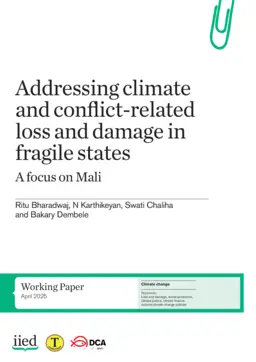
The event also explored practical solutions, emphasising what is needed at national and international levels to enhance resilience, expand social protection, and deliver more effective and context specific support to communities affected by compounding climate and conflict risks.
The discussion was particularly relevant for the Fund for responding to Loss and Damage (FRLD) board, providing evidence-based insights into how loss and damage is experienced by communities on the ground and how financing mechanisms can better respond to these realities.
Agenda
- 11am: welcome and opening remarks (Mattias Söderberg, global climate lead, DanChurchAid)
- 11.05am: presentation of research findings (Ritu Bharadwaj, director of climate resilience and loss and damage, ALL ACT/IIED)
- 11.35am: panel discussion – bridging global and local action
- 12.05pm: interactive question-and-answer session and audience discussion
- 12.25pm: closing and next steps
Event coverage
You can watch a recording of the event below or on IIED's YouTube channel, where individual links to the start of each speaker's contribution are also provided.
IIED events newsletter
Sign up to our mailing list for updates and invitations to events throughout the year, including webinars, critical themes and debriefs.
Contact
Anne Schulthess ([email protected]), marketing manager, IIED's Communications Group