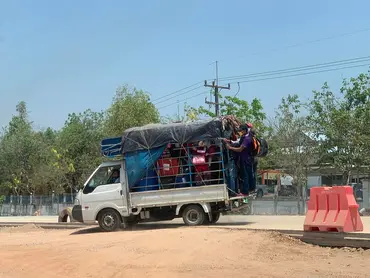
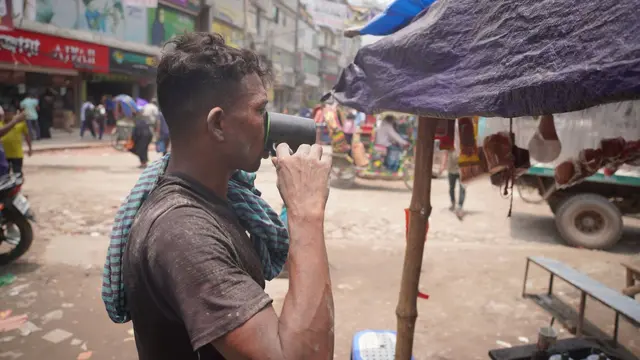
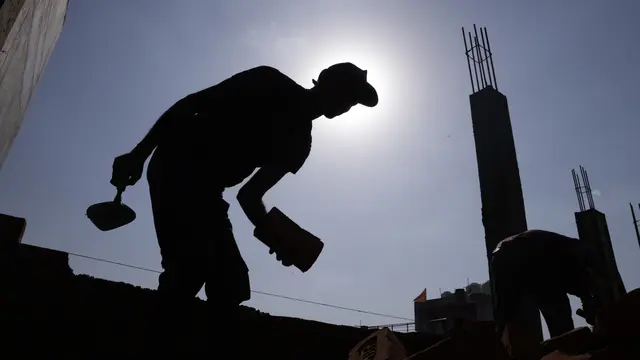
Climate change leaving Bangladesh migrant workers vulnerable to modern slavery
Situation worst for those travelling internationally to support their families.
Almost every person who migrated abroad from climate-vulnerable regions of Bangladesh surveyed by IIED suffered at least one form of modern slavery while working, a new study reveals.
Additionally, 81% of the 648 households questioned in Pirojpur and Sylhet reported experiencing more than five types of slavery during periods when they had travelled outside Bangladesh for work. These can include the withholding of wages, physical violence, restricted movement and debt bondage.
Key statistics
- Natural disaster events have increased in Bangladesh from an average of four per year between 1960 and 1990, to seven per year between 1991 and 2022
- Households with higher climate risks were 161% more likely to migrate within Bangladesh and 214% more likely to migrate internationally
- Households reported reduced harvests (52%) and fish production (66%), crop losses (42%) and livestock losses (48%)
- Of internal migrants surveyed, 92% said they experienced at least one form of modern slavery, and 52% experienced three or more. Agricultural, garment and construction workers were among the worst affected, and
- Of international migrants, 99.48% reported at least one form of modern slavery and 81% said they suffered five or more. Non-farm manual labourers and cleaners were among the most exploited workers.
Participants who moved internationally went predominantly to Gulf countries such as Saudi Arabia and the United Arab Emirates. Some who were still working abroad at the time of responding to the survey were interviewed remotely.
Researchers also found that problems related to climate change, such as more frequent cyclones and crop or livestock loss, have spurred a rise in both international and internal migration, exposing workers to slavery-like conditions.
IIED is now calling for a range of interventions, including: investment of climate finance in early warning systems and more resilient crop varieties to lessen the impact of environmental change; and regulation of recruitment agencies as part of a plan to make migration safer.
Ritu Bharadwaj, an IIED principal researcher and co-author of the paper, said: “People in the areas we surveyed are suffering irreversible losses and damages from the increasing frequency and intensity of climate-related events like flash floods.
“For households with little money and only weak social safety nets as back-up, their livelihoods and long-term resilience are at serious risk. Many are forced to sell what they have and move away from home as a last resort to support their families.
“However, there are systems that can soften the blow, like the rural employment guarantee scheme used in neighbouring India. As a low-income country Bangladesh may need international help to institute something similar, but a work programme that focuses on creating disaster-resilient infrastructure could be a huge boost for the people most affected by the warming climate.
“It could also help protect them from exploitative employers who prey on desperate economic migrants. These disturbing statistics show how important it is to tackle modern slavery.”
IIED’s new paper includes interviews with some of the survey respondents. One, from Mathbaria in Pirojpur, told our researchers in 2024: “We used to follow the traditional calendar for cultivation. But now it is not possible to follow the calendar, as we do not know when the rain comes and what will be the temperature. Last year, the rain started in June, but this year it started in November.”
Another, a 40-year-old man with six children who paid more than $3,000 and sold livestock so he could migrate for work, said: “A relative living abroad offered me a chance for a better life in Oman. I saw it as a ray of hope in the darkness. [My hosts] attacked me physically, biting me inhumanely, leaving me injured and sick. Despite the severity of my condition, they callously ignored my pleas for medical attention. Before Eid, without any treatment, without any notice and salary, they sent me back to Bangladesh.”
- A panel of climate and migration experts discussed policy gaps, protection needs and financing mechanisms for safer migration and resilience-building at an online event on 18 February
Notes to editors
- Previous IIED research in Bangladesh has found that households spend nearly US$2bn every year repairing climate-related damage and on preventative measures
For more information or to request an interview, contact Jon Sharman:
+44 7407 727 886, or [email protected]