Accelerating climate action for people and the planet through multilateralism
Can urban accelerators and multilateralism give city governments a route to reducing carbon emissions and providing decent, resilient housing for their residents?


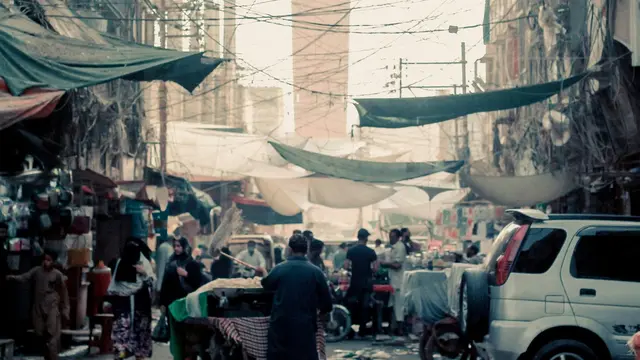
Transportation system along one of the main roads in Malindi town, Kenya (Photo: UN-Habitat/Julius Mwelu)
There are now so many case studies of cities showing innovation in response to climate change, especially since 2005. There is a renewed interest in the role of local governments, non-profits and grassroots organisations in climate action. This shows that change is possible.
But the question remains. Can we accelerate this work to achieve greater impact and develop the planning, financial and institutional framework needed to do so? This insight outlines thinking about urban accelerators and multilateralism that can offer guidance to city governments on how urban planning can reduce carbon emissions and achieve city-wide impact.
The impact of climate change is increasingly urbanised, with cities bearing the brunt of rising temperatures, floods and other climate risks. According to UN-Habitat’s World Cities report 2024, 92% of people settled in low-elevation coastal zones live in urban areas and are exposed to rising sea levels. Since 1975, exposure to riverine flooding has grown 3.5 times more in cities than in rural areas. By 2030, 36% of the global urban population could experience mean annual temperatures of 29°C or above.
However, data shows that climate change does not affect all urban residents equally. Low-income communities and 1.1 billion people living in informal settlements are the most vulnerable and the worst hit when disasters strike.
A recent report by the Internal Displacement Monitoring Centre points out that the number of internally displaced people in Africa due to natural disasters and conflicts has tripled to 35 million over the past 15 years, with 60% seeking refuge in already strained urban areas.
This is a wake-up call to act. To do so, it is important to realise that cities are not just the source of challenges. They offer solutions, too.
The key lies in rethinking urban policies, social and ecological functions of land, legislation, and financing to prioritise housing and basic services as catalysts for climate action. How we think and act on urban development now has enormous consequences for what cities become, and the future of humanity.
Funding to drive resilience
A major barrier to urban climate action has been insufficient financing and a lack of an integrated planning framework. Cities receive less than 20% of the finance required for climate action, according to the World Cities report 2024. Yet they need an estimated US$4.5-5.4 trillion annually until 2030 for climate-resilient infrastructure.
Global funding for climate action must prioritise urban development as a major driver of resilience. This includes support for community-driven initiatives that are demonstrating their relevance, especially in the context of climate change.
For example, the Jakarta Urban Poor Network and its partners secured tenure and upgraded homes for almost 1,000 families in flood-prone areas, using land tools and planning approaches that reduce displacement and strengthen resilience.
In Senegal, the work of UrbaSEN and the Senegalese Federation of Inhabitants supported over 8,500 households across 130 neighbourhoods to develop climate-adaptive infrastructure, including sanitation, drainage and green public spaces, while strengthening resilience and local governance.
What is even more impressive, both initiatives were financed primarily through community-managed revolving funds and savings schemes. These cases show us that climate action can be locally-led, cost-effective and grounded in addressing housing adequacy gaps.
Inextricably linked
The housing and climate crises are inseparable. Inadequate housing puts millions at risk of disasters, while unsustainable construction fuels environmental degradation. Low-carbon and climate-resilient housing can offer significant benefits, particularly in low- and middle-income countries where much of the future housing stock is yet to be built.
Supporting traditional and informal housing solutions, which are often low-carbon and adaptive, as well as decarbonising existing homes, is essential. And more important than ever is the need to improve the plight of 1.1 billion people living in informal settlements and slums.
Given the scope of these global challenges, no one can respond to them alone. We need collaboration across all levels of government, sectors, countries and regions. Multilateralism is our platform for collective action, enabling us to pool resources, share knowledge and coordinate efforts on a global scale.
The importance of multilateral work was recognised by 193 UN member states in the Pact for the Future adopted in September 2024. This approach was echoed by the Cairo Call to Action after the 12th session of the World Urban Forum in November 2024. Multilateral cooperation is a cornerstone to scale up efforts and achieve greater impact through climate action.
This is why UN-Habitat is also working with the international financial institutions to develop financial architecture and leverage financial flows to urban physical and social infrastructure, and unlock subnational lending to enhance the financial and fiscal autonomy of local and regional governments.
Joining forces to transform urban planning
What is needed is not only more funding for cities and urban communities, but also integrated planning and institutional frameworks to ensure that the funding lands well in cities and communities.
To address this, we support the development of ‘high-impact accelerators’. They can provide frameworks to help cities and human settlements implement ambitious climate change policies while creating more equitable and resilient communities. Accelerators have been developed for clean air and construction, good food cities and divesting fossil fuels.
To advance this, UN-Habitat and C40 (a global network of city mayors) are joining forces to set up an 'urban planning accelerator'. This initiative will focus on prioritising compact regenerative cities over urban sprawl, aligned with the new urban agenda and Sustainable Development Goal 11.
The urban planning accelerator will focus on:
- Encouraging mixed-use and connecting neighbourhoods to reduce car dependency and create vibrant urban communities
- Regulating construction in climate-risk urban areas and preserving natural ecosystems to protect against extreme weather events
- Exploring innovative approaches to ensure affordable and suitable housing solutions, and
- The transformation of informal settlements through fostering technical assistance and data to improve public policies in informal settlements.
International cooperation can facilitate global partnerships and exchange best practices that drive urban transformation. By providing cities with the tools, expertise and technical guidance, we can promote safe, inclusive, healthy, resilient and sustainable urban environments.
We should take care of the people, and the people will be able to take care of the planet and human settlements. Effective climate action needs all of us. Together, we can do it.