Scramble for critical minerals sees uneven protections for nature and human rights
IIED review also finds half of deals are kept secret.
Human rights and the environment risk being sidelined in a rush by wealthy nations to secure access to mineral wealth held by lower-income countries, a review by IIED has found.
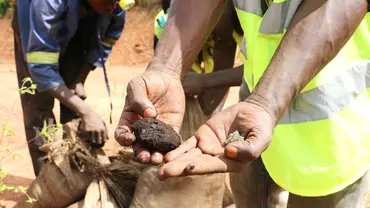
These sought-after resources like lithium, copper and cobalt are used in fast-growing sectors such as green technology, artificial intelligence and military hardware.
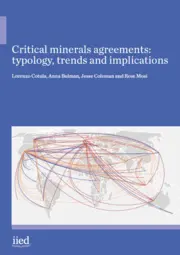
Researchers examined 114 agreements relating to critical minerals that states are known to have signed between August 2021 and July 2026. Though many are non-binding they can still influence government behaviour and the organisation of supply chains, and steer investment. Importantly, only about half are in the public domain.
The pace of dealmaking ramped up in 2025 and this surge was dominated by bilateral agreements, creating a fragmented picture in which individual producing nations, including least developed countries, bargain with large economies that wield far greater diplomatic and economic power.
Closer examination of a subset of documents agreed between large economies and lower-income nations revealed that protections for communities and nature were patchy, as were commitments on value addition and technology transfer. There were 66 of these deals, but only 29 publicly available to scrutinise.
Key points
- Researchers found 114 critical minerals agreements concluded between 1 August 2021 and 31 July 2026, of which just 60 have been published; of these, 47 were non-binding. Sixty-six were concluded between one or more mineral-rich low- or middle-income countries and one or more large economies, but only 29 of these were published. These 29 were then examined in more detail
- Most of the 29 involved the United States or European Union. EU deals tended to include more general language on facilitating foreign investment and some explicitly ruled out preferential treatment. However, some US agreements stipulated directly the partner nation must facilitate or even prioritise American investment, including fast-tracking permits
- Some bilateral partners appeared to get better deals than others. Provision for local value addition varied significantly from merely acknowledging an ambition, to framing it as a “right” to which the parties were committed – but usually involved few specifics. Specificity also fluctuated but was often lacking when it came to technology transfer and up-skilling, and cooperation on innovation or development
- When addressing the environment, climate change or social impacts, a common approach was to include general language on environmental, social and governance (ESG) standards and responsible or sustainable business practices, without necessarily mentioning specifics. Some topics were rarely or never mentioned: minimising negative impacts on communities; land tenure rights and Indigenous Peoples’ rights; protections for nature; water use; and mine safety standards.
Questions about rights must not become secondary concerns
Lorenzo Cotula, an IIED principal researcher, said: “Large economies are deploying a wide range of approaches in a scramble for the minerals held by lower-income countries. This array of soft infrastructure and negotiating tactics is unfolding in the context of significant power imbalances.
“The prevalence of one-on-one deals, each different from the next, makes it difficult to address common, systemic problems. It also makes it harder for mineral-rich low- and middle-income countries to act collectively and strengthen their negotiating power.
“These new partnerships interact with existing trade and investment treaties, adding another layer of complexity. The public interest would be better served if these deals were developed more transparently and parliaments had the chance to properly scrutinise them.
Cotula added: “Minerals like copper, lithium, cobalt and nickel are deemed economically ‘critical’ by the countries trying to secure a ready supply. But questions about the rights of communities affected by mining, its impacts on the environment, and opportunities for economic transformation in lower-income countries are also critical. They must not become secondary concerns in international negotiations.”
Notes to editors
- This study was conducted by IIED researchers in collaboration with consultants from the Change Collective
- Read a briefing on the question of who benefits from critical minerals exploitation
For more information or to request an interview, contact Jon Sharman:
+44 7407 727 886, or [email protected]