Rewiring climate finance: new insight series asks, how can multilateral climate funds deliver for the poorest and most vulnerable people?
In a new series of insights, IIED takes a deep dive into the world’s multilateral climate funds. IIED researchers and expert guest voices will examine how to unlock finance from these funds, and get innovative and sustainable adaptation projects off the ground in countries hit hardest by climate change.

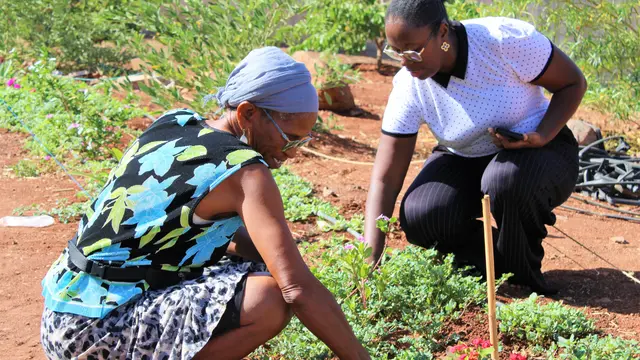
Women farmers in Senegal are working with different networks to better adapt to climate change and adopt better farming practices (Photo: UN Women Africa, via Flickr, CC BY-NC-ND 2.0)
IIED is launching a series of insights that will examine the multilateral climate finance landscape through a systems change lens – exploring how coordinated interventions at key leverage points can fundamentally transform how funding reaches the people and communities that need it most.
With public finance flows receding rapidly, multilateral financing is more important than ever.
Multilateral climate funds such as the Green Climate Fund and Adaptation Fund were designed to help achieve the Paris Agreement’s climate finance goal – US$300 billion annually for developing countries by 2035, channelling resources to climate-vulnerable countries to deliver innovative, sustainable adaptation projects.
While these funds have been delivering well, and have been introducing positive changes to improve access for developing nations, they are still falling short in both pace and volume. Climate-vulnerable countries – particularly least developed countries (LDCs) and Small Island Developing States (SIDS) – are receiving very little funding channelled through national institutions.
“This isn’t about tweaking one part of the system, it’s about understanding how the climate finance ecosystem needs to evolve,” said IIED senior researcher Sejal Patel.
“Each insight in this series will address a different leverage point from delivery challenges and accreditation and preparatory fund barriers, to financial instruments for locally led adaption and fund coherence. Together these create a road map for transforming climate funds.”
This series is essential reading for policymakers shaping climate-finance architecture, fund managers designing access mechanisms, development practitioners working in vulnerable communities, and anyone committed to ensuring climate finance delivers climate justice.
The insights will explore emerging trends and persistent gaps, and will spotlight the critical issues that require urgent attention from funds and their stakeholders – all through the lens of how coordinated change across multiple points can unlock the transformation we desperately need.
The first insight in the series addresses how far the multilateral climate funds are delivering for the LDCs and SIDS. We’ll review progress on access and put forward recommendations around what needs to change to get more money from multilateral climate funds to flow to these countries.