How LDCs and SIDS are building finance tools to take adaptation projects to scale
Despite complexities and blockages in the adaptation finance architecture, a series of case studies show how least developed countries and Small Island Developing States are innovating to develop financial mechanisms that get funding to where it matters most.



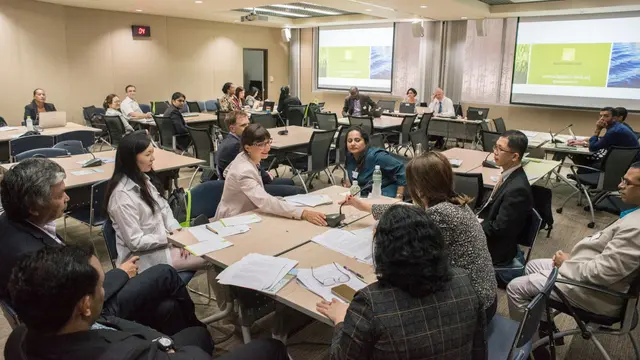
Communities in Cabo Verde are implementing new climate information systems which is helping to track the implementation of its NDC, making it more attractive for climate finance (Photo: UNDP Climate, via Flickr, CC BY-NC 4.0)
The gap between the costs of adapting to climate change and what is being delivered is huge. UNEP estimates that developing countries, including least developed countries (LDCs) and Small Island Developing States (SIDS), need US$310-365 billion per year by 2035 in adaptation finance.
In 2023, international public finance adaptation flows to all developing countries fell to around $26 billion. Developing countries are receiving roughly 12-14 times less than what they need to adapt; for the LDCs and SIDS, the gap is even wider.
This dramatic shortfall means every dollar counts: funding must be used in the most effective way possible.
Maximum efficiency is about achieving scale: moving away from funding small projects on a project-to-project basis to supporting those that can be replicated and scaled up. This allows funding to be delivered more widely, and in greater volumes.
This calls for leadership from governments and both national and subnational actors to be clear and prescriptive about how funding is designed and structured. And it calls for funders to drop assumptions about a one-size-fits-all approach and to work alongside countries to develop financing structures that are suitable for their specific contexts.
Innovation is already happening
A series of four case studies from across LDCs and SIDS and published by the Climate and Development Ministerial (of which IIED and E3G are the secretariat) showcase stories of success that are delivering innovative, flexible and context-specific finance mechanisms.
- Barbados restructured nearly $600 million in debt through a syndicated loan to invest in water security – including wastewater recycling for irrigation, groundwater recharge, upgraded water networks to reduce leaks and rainwater harvesting. The deal also included natural disaster and pandemic clauses, allowing debt repayments to be paused for up to two years after a major shock, strengthening the country’s fiscal resilience.
- In Tanzania, the Tanga Water Infrastructure Green Bond successfully raised 17.8 million euros in 2024 to modernise the city’s water supply system. Led by Tanga UWASA water authority with support from UN Capital Development Fund, it was East Africa’s first public-sector-led green bond issued without a sovereign guarantee – showing how local institutions can effectively mobilise finance while concurrently building their own financial capacity.
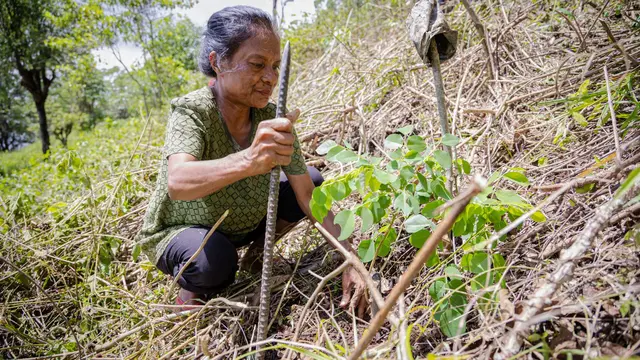
- Rwanda, Belize and Micronesia demonstrated another model: putting communities in charge. Through the Adaptation Fund’s Locally Led Adaptation window, decision-making power and funding are devolved directly to communities using simplified procedures and flexible criteria, ensuring projects respond to local priorities.
- In Africa, the Agriculture and Climate Risk Enterprise (ACRE), a for-profit social enterprise, provides climate risk management and insurance solutions to small-scale farmers. This initiative improves the resilience of farmers across the value chains by expanding financial access through innovative, locally driven partnerships, exemplified by the village champion model – a peer-to-peer knowledge transfer system.
Blocks and bottlenecks
While these case studies showcase innovation and leadership, they also expose persistent and systemic challenges:
- Time and complexity: even with strong political leadership, transactions such as debt-for-climate swaps require months of intensive negotiation and technical work. The involvement of multiple partners – including multilateral banks, the Green Climate Fund and private sector actors – brought major complexities due to differing institutional rules, for example, around procurement or safeguarding procedures.
- Resource and capacity strain: government agencies face severe human-resource constraints and often do not have enough people to effectively manage funds. This is particularly the case for innovative funding mechanisms that require constant, high-intensity involvement and specialised knowledge and capacity. Similarly, local civil society organisations that receive funding often lack the capacity or resources to sustain administrative and technical staff.
- Invisible logistics, hidden costs: the geographic characteristics of SIDS in particular bring hidden costs from project implementation and oversight. In island countries such as Micronesia, project delivery and effective monitoring require regular travel across dispersed and remote islands, which is time-consuming and costly.
- Mind the gap – project maintenance and sustainability: proposed deliverables of new projects can seem attractive to donors, and funding may be forthcoming. But long-term costs of operation, maintenance and accountability are often overlooked. Project milestones and performance indicators can extend for well over a decade. This ongoing project work is rarely budgeted for properly.
Reforming adaptation finance: five priorities for donors and funders
- From project-by-project funding towards programmatic funding mechanisms: funding that is delivered on a project-by-project basis fragments national efforts and strains already limited capacity. Programmatic mechanisms – such as country platforms – bring together sources of finance, financial instruments and different actors. They enable countries to plan over longer horizons, sequence investments, and align finance with their own national priorities rather than donor-driven cycles.
- Simplify financial instruments: complex financial structures create administrative overload and remain a major bottleneck for national institutions. Simplicity, flexibility and coherence across instruments can help countries focus on delivery that is context-specific and reduce administrative burdens.
- Be patient, allow time for change: transformational shifts in climate and development finance do not happen overnight. LDCs and SIDS are operating with limited institutional and human capacity across ministries and civil society. Building stronger public financial systems, adapting to complex and innovative financing mechanisms, and coordinating across government, private actors and communities all take time. Donors must pair ambition with patience – offering flexible, long-term support that allows trust to develop, institutions to strengthen and reforms to take root.
- Offer support that is implementation-led: the case studies reinforce emerging evidence from IIED’s work examining direct access to adaptation funding – too often, countries are asked to complete long ‘readiness’ processes before they can access climate finance. But capacity is built by doing. Institutions grow stronger when they are trusted with resources and supported during project implementation. Climate funds already provide readiness support. The priority now is to make it more flexible and demand-driven, and to back implementation-led approaches that build capacity in practice.
- Make funding flexible, trust local expertise: the case studies show local communities and national institutions repeatedly calling for flexibility in project design, giving them scope to refine project priorities throughout implementation – rather than being locked into rigid, pre-defined activities. Making adjustments along the way also requires trusting local expertise to decide how the funds should be spent for the best possible outcome.
From pilots to scale
Demands for reform of international financial architecture are getting louder. But LDCs and SIDS are not prepared to wait and instead show what’s possible by reshaping the system from within their own countries.
These case studies show that adaptation finance works when grounded in country leadership and local priorities.
By reforming international finance architecture to support – rather than hinder – country-led innovation, adaptation finance can reach the people and places where it matters most.
With thanks to the contribution by IIED associate researcher Pia Treichel