A shrinking pot: how can the LDC climate fund keep up with targets?
The Least Developed Countries Fund is based on voluntary contributions and there is no formal process for replenishing it. Two decades since the fund was established, this model is not delivering the level of finance needed, contributing to a growing adaptation finance gap − expected to reach US$310-365 billion annually by 2035.


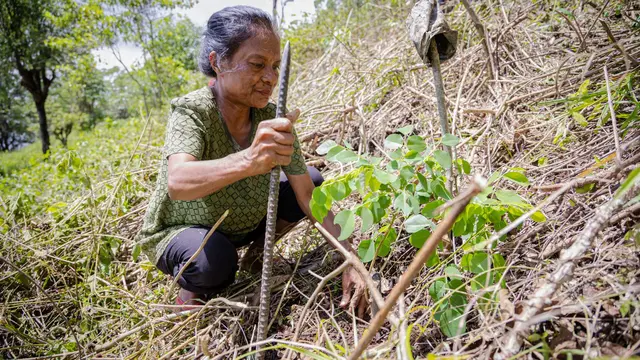
In Timor-Leste, part of the LDCs, local communities are planting mangroves as a way to fight climate change effects (Photo: UNDP Climate, via Flickr, CC BY-NC 2.0)
At the 2024 UN climate negotiations held in Baku (COP29) parties set a new climate finance goal − the New Collective Quantified Goal (NCQG) (PDF). This goal sets the target to mobilise finance for climate action from a new floor of $300 billion to $1.3 trillion per year by 2035.
A key operational element of the NCQG decision is paragraph 16, which calls for at least tripling (by 2030, relative to 2022 levels) annual outflows from multilateral climate funds established under the UNFCCC.
One of the funds expected to deliver on that promise is the Least Developed Countries Fund (LDCF). It is the only UN-backed climate fund dedicated entirely to supporting the 44 least developed countries (LDCs) adapt to the effects of climate change.
The fund is managed by the Global Environment Facility (GEF), which oversees how the voluntary financial contributions for LDCF are programmed and disbursed.
The LDCF is currently in its 8th funding cycle – known as GEF-8 – which runs until June 2026. During this four-year cycle, the fund was expected to raise around $1 billion. So, using GEF-8 as a reference point, the LDCs made an urgent call ahead of COP30 to triple that amount in the next cycle (GEF-9) and to reach $3 billion for the LDCF by 2030.
This was not just about asking for a bigger number. It was an appeal from the world’s most climate-vulnerable countries. The LDCs put forward a clear signal in Belém on what it would take to turn high-level ambitions into real, predictable support for them. It was a reminder that adaptation finance must rise to meet the scale of need.
But the final text from COP30 (PDF) fell short. It merely reiterated the NCQG decision and left out the call from LDCs.
This silence in response to the LDCs’ appeal is a major concern. With little time left to meet the 2030 target, the omission is not only political but carries real consequences for how and when resources are delivered.
Time is of the essence for the LDCs. For outflows to be tripled by 2030, the fund needs contributions to increase now.
The GEF’s next programmatic cycle runs from 2026 to 2030 and is therefore the final delivery window for meeting the 2030 target. Given the time needed for programming and disbursement, front-loading contributions is crucial. Contributions are needed now – if they arrive only towards the end of the cycle, there may not be enough time to programme and deliver them effectively.
And since contributions to the LDCF are voluntary they may not arrive at all, putting the NCQG target at serious risk of being unmet.
Voluntary and off-budget: structural fragility in plain sight
The GEF’s structured four-year replenishment model secures predictable funding through scheduled donor pledges. The LDCF does not however benefit from a formal replenishment model. Instead, it sits off-budget and depends on ad hoc pledges.
After a high-water mark of $413 million at COP26 (see the graph below), donor contributions have declined sharply, reaching a low of $34 million at COP29. By the end of COP30, pledges from Germany, Belgium, Ireland and Sweden brought total contributions for 2025 to around $45 million.
Sources: NRDC, based on pledges for LDCF from COP21 to COP30; GEF (2025) Status Report for the LDCF (GEF/LDCF.SCCF.39/Inf.02); GEF (2025) IISD coverage on 39 LDCF/Special Climate Change Fund (SCCF) Council Meeting on 18 December; cumulative figures up to December 2025 compiled by the author.
Note: The round-up may vary due to conversion of national currencies to US$ equivalent.
This drop in pledges has led to resource restraints. With contributions dwindling, the 39th LDCF/SCCCF Council meeting in December 2025 was able to approve only four of 11 projects that passed technical clearance.
Between now and June when the 8th GEF cycle will end, more than $316 million is needed to meet even the lower-ambition scenario totalling $1 billion as set out in the GEF-8 strategy [work programme for LDCF (PDF)].
Of this, over $270 million must be secured to ensure each LDC can access its $20 million initial access allocation for the soon-to-end GEF-8 cycle.
As it stands, this shrinking pot will not be able meet these demands. This demonstrates the limitations of the LDCF’s funding model in delivering a predictable and adequate supply of finance for the upcoming GEF-9 period.
US withdrawal: what it means for the LDCF
The recent decision by the United States to withdraw from the UNFCCC causes further concern. The US has contributed $183 million since 2001, placing it among the fund’s top five donors (see the graph below) − although recent contributions have steadily declined, putting the onus on others to scale up support in line with the NCQG tripling mandate.
The above graph shows the LDCF total pledges and contributions by donors from inception in 2001 through to the 39th LDCF council in December 2025.
Sources: GEF (2025) Status Report for the LDCF (GEF/LDCF.SCCF.39/Inf.02); GEF (2025) IISD Coverage on 39 LDCF/SCCF Council Meeting on 18 December; Cumulative figures to December 2025 compiled by the author.
Notes: The round-up may vary due to conversion of national currencies to US$ equivalent. For visualisation purposes, the figure only includes pledges and contributions from the major donors above $10 million.
What’s next: from political signals to structural reset
Although the LDCF does not follow a replenishment model, the third GEF-9 replenishment meeting in January 2026 can still serve as a platform for pledges. This meeting provides an opportunity to bridge the gap between promises made in Baku and the level of funding that is currently reaching countries experiencing the biggest effects of climate change.
Donors must use the January meeting to announce substantial new and increased contributions to the LDCF, sending a clear signal that adaptation finance for the LDCs is a top priority and cannot be delayed.
January is only the beginning of the four-year crunch period for the LDCF. The GEF-9 pledging session in April, followed by the 40th LDCF/SCCF Council, the 71st GEF Council and the 8th GEF Assembly in June, will provide further opportunities to shape how much the LDCF carries into the GEF-9 cycle from July 2026.
There is hope that countries will step up with contributions, but there is also deep uncertainty. And this uncertainty will remain for as long as the fund relies on voluntary contributions.
The question for the months ahead is whether this operating model is fit for purpose and enough to support the scale of funding required of the LDCF − or if a new fundraising strategy is needed.
With thanks to Camilla More, Pia Treichel and Elaine Harty for their contributions to this insight.