Rethinking electricity access in informal settlements
Access to electricity remains a major challenge for millions living in informal settlements. A new approach is needed, built around understanding the complex social and economic realities in play and putting communities at the centre of planning and implementation.



Electric wires going above and around an informal settlement in Mumbai (Photo: We Like Sharing/Rohan Varma, via Flickr, CC BY-NC-SA 2.0)
After a decade of efforts to deliver affordable, reliable, sustainable and modern energy for all (UN Sustainable Development Goal 7), progress remains elusive – particularly in sub-Saharan Africa.
In informal settlements, home to over one billion people worldwide, daily lives are shaped by persistent and systemic barriers to accessing essential services, including electricity. In sub-Saharan Africa alone, more than half the population lives in these settings.
The overlooked frontier for energy access
Global initiatives such as the World Bank and African Development Bank’s Mission 300 (M300) aspire to close the energy access gap. Yet they continue to overlook these underserved millions. None of the M300 country energy compacts include targeted energy access programmes for informal settlements.
One reason is that current efforts focus on energy infrastructure and technology rather than local socio-economic dynamics. Interventions differentiate only between urban and rural areas, overlooking critical intra-urban disparities. Marginalised communities in informal settlements experience energy poverty comparable to rural populations, but compounded by complex dynamics specific to urban settings.
Understanding the energy landscape
To successfully deliver energy access for all, it is important to recognise the realities of life for informal settlement residents. Each community has distinct social structures, power dynamics and economic realities shaping household energy access, use and payment.
Beyond affordability: unpacking socio-economic inequalities
Electricity costs are unaffordable for most households, but this is only part of the story. Although affordability is crucial, energy prices should not be considered in isolation.
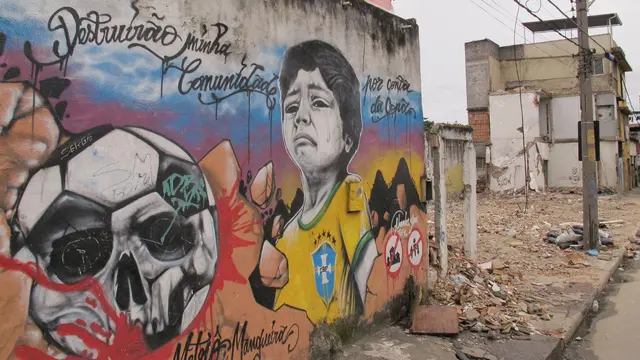
A study conducted in Rio de Janeiro’s favelas found over half the residents earn only the national minimum wage. Nearly 30% live under the energy poverty line and 70% choose to spend any extra income on food over energy. Viewing energy prices through the lens of broader socio-economic inequalities is needed.
Informal connections in the face of structural inequalities
For many households, informal connections are the only way to access electricity given connection fees, strict documentation requirements, punitive legal frameworks and mistrust of utilities or government.
In Ghana, electricity connections are often treated as proof of formal land occupancy. Households without ownership papers or rental contracts are denied access. Distrust and discontent with utilities is another problem.
Some residents turn to informal connections after waiting long periods for formal approval, while others fear formalising their connection could expose them to fines or even prosecution. The Rio de Janeiro study shows that lower-income households were also more likely to use informal connections due to financial constraints.
Easing connectivity requirements, reforming punitive legal frameworks and fostering community-based approaches to build trust in utilities and a sense of ownership can ensure successful energy access delivery.
Unreliable electricity infrastructure and safety concerns
Reliable electricity can improve wellbeing and foster livelihood opportunities. For example, street lighting can make neighbourhoods safer, particularly for women. However informal settlements experience more frequent and prolonged power outages than other urban settings.
In Kibera, Nairobi, households face an average of 630 hours of outages per year, compared to the national average of 81 hours. Unreliable supply also undermines livelihoods, limits small business activity and forces households to use more expensive and polluting energy.
Densely-built environments and limited space for infrastructure further constrain energy access. Where the electricity grid is the sole or primary option, many residents remain unconnected because it cannot be extended to narrower streets. Safety concerns also often prevent the placement of poles and lines.
These challenges call for a context-specific energy architecture integrated into a broader housing justice agenda that guarantees equitable access to safe, secure and dignified living conditions.
Social and power dynamics
Energy access in informal settlements is deeply influenced by micro-politics and local power structures. Landlords and unlicensed electricity providers often act as intermediaries, controlling access to the grid – determining who receives power, under what conditions and at what cost.
Shared connections, intended to ease access, frequently become tools of control, fuelling tensions between neighbours and undermining social trust. The result is many residents have no control over their electricity supply, reinforcing asymmetrical dependencies.
When I first moved to this compound, each household would collect 50,000 shillings (US$ 14) for electricity every month, but it wouldn’t last the month… some people would secretly cook on electricity in their houses, others had TVs, sound systems, fridges, cookers that they had not declared, and all those appliances use a lot of electricity. But for us, we didn’t have a lot of appliances in our house and yet we were all expected to pay the same amount.
Meanwhile, the utility companies are largely absent, seen as unresponsive or even indifferent to residents’ needs. They also struggle to cover the costs of grid operation in informal settlements, as these are seen as areas with low consumption. More responsive design and delivery of services could enhance demand and grow inclusive and sustainable energy markets.
Energy access interventions must engage with the realities of power politics at the community level to ensure they improve equitable access and give households control over their energy use.
Seeing beyond the blind spot – effective ways forward
Our research recommends three key changes:
- Recognise community-led energy initiatives as legitimate: when communities are genuine partners, interventions are far more likely to succeed. Inclusive, locally-driven approaches to energy planning can help pave the way, such as in the IIED and STEER Centre’s energy delivery models (EDM) approach. This proposes energy access solutions that reflect and respond to the needs of residents.
- Focus on energy access in informal settlements in initiatives such as M300: targeted finance and support within global, regional, national and local energy access programmes would allow governments and other partners to set clear targets, allocate resources and design appropriate interventions.
- Embed energy into broader urban justice efforts: linking energy planning to wider urban housing justice and sustainable development agendas is essential. Energy services should be integrated with investments in infrastructure, social protection and slum upgrading programmes.
Energy access interventions in informal settlements must move beyond generic urban energy strategies to make a real difference to residents’ lives.
Additional resources
Electricity and informal settlements: towards achieving SDG 7 in developing countries, James Mensah (2022), Energy Research & Social Science, journal
Sustainable and socially resilient minigrid franchise model for an urban informal settlement in Kenya, Isa Ferrall-Wolf, Byrones Khaingad, Daniel Kammen (2022), Economics of Energy & Environmental Policy, journal
Power and prejudice: the micropolitics of electricity access in Uganda’s urban informal settlements, Penlope Yaguma (2025), International journal of urban and regional research, article