Reflections from frontline settlements: connecting urban communities with climate scientists
For cities to become climate-resilient and equitable for all, climate science must reflect the lived realities of urban communities. Joe Muturi and Nina Schoonman recount how a recent IPCC field visit to an informal settlement in Kenya provided a vital example of how to document the ‘what’ and ‘how’ of urban climate risk and response.



Low-gauge mabati (tin) roofs frame the view out to sea, highlighting the settlement’s waterfront location. Mabati provide little protection against the heat, meaning that residents need to use insulation to keep cool (Photo: copyright KYC TV Kenya)
The Intergovernmental Panel on Climate Change (IPCC) is currently developing its first-ever Special Report on Climate Change and Cities. This signifies a growing recognition that the climate battle will be won or lost in the world’s cities.
It is also the first IPCC report to engage with the implications of exceeding the 1.5°C target enshrined in the Paris Agreement. At its centre, it must put the voices and experiences of frontline urban communities: those most at risk, yet who are also first to respond.
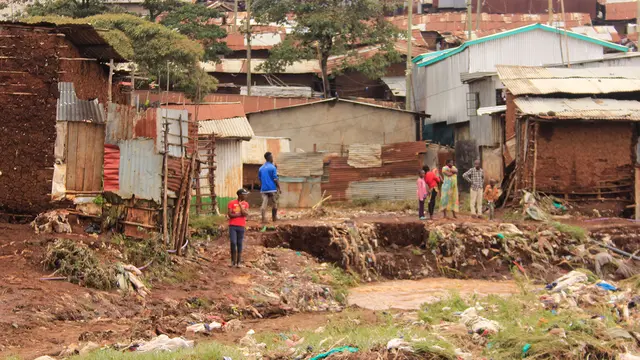
The report will highlight global South cities, where most urbanisation is happening and where development needs are greatest. The world’s one billion people living in informal settlements (three billion by 2050) are building “cities within cities” because dominant development pathways do not meet their needs. Here, climate change is both a threat and an entry point to rethink cities and resilient development; bending the curve not only on emissions but also on poverty, vulnerability and inequity.
How can urban climate science better speak to lived realities?
It is crucial that the science resonates with the everyday lived experiences of urban residents. As IPCC working group II co-chair Bart van den Hurk put it, “the IPCC special report on climate change and cities will have to be based on evidence that speaks to the reality of cities worldwide”.
However, the IPCC has been criticised for privileging specific forms of scientific knowledge based on Western traditions of peer-reviewed journal articles. Expert discussions and drafting processes are far removed from lived realities, shaped by power imbalances that determine whose voices are heard and whose knowledge is documented and amplified.
In response, there has been a growing call for IPCC processes to be more accessible and inclusive – engaging with local forms of knowledge to better inform reports, and communicating findings in ways that ensure uptake. Authors of the special report have repeatedly voiced their intention to make the report actionable and relevant to practitioners and communities.
Showcasing community-led urban climate action in Kenya
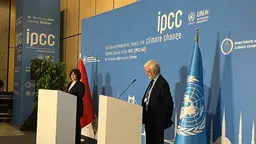
The second lead authors’ meeting in Mombasa (21-25 July 2025) provided an opportunity to strengthen these ambitions through an official IPCC site visit to Tudor Muoroto, a waterfront informal settlement, co-organised by Slum Dwellers Internationa (SDI), SDI Kenya, the Muungano wa Wanavijiji Federation, the Cities Alliance and IIED, with the invaluable support of the Kenyan government and IPCC focal point.
The authors were able to talk to community members and witness the intersecting fault lines of vulnerability that shape climate risks – such as sea-level rise, flooding and extreme heat – but also the innovation and adaptation emerging in response.
Established in the late 1980s on reclaimed coastal land, residents of Tudor Muoroto have long grappled with insecure tenure, inadequate infrastructure and services, and exposure to climate hazards. Yet they are building strong systems of organisation and leveraging partnerships with local governments to achieve change.
The visit showcased resilience in action: from community disaster-management committees to women-led mangrove nurseries, reclaiming coastlines using tyres and sand, plans for a resilience hub for early warning, public health and emergency response, and community-led research on intersecting climate and health risks.
Why community-led urban climate action needs more support
Many communities across the SDI network are already leading climate action, often unrecognised by local and national governments. They face challenges similar to those in Tudor Muoroto, yet each has its own stories, strategies and constraints. Housing types, land tenure, density and local governance all shape what works where.
From climate-readiness mapping in Sierra Leone and Liberia and early warning systems in East Africa, to women-led housing upgrades in Dakar and community-led financing mechanisms in Namibia and Zimbabwe, communities are driving climate action.
This diversity is a strength – offering opportunities for learning, exchange, replication and scaling – while reminding us that solutions must be tailored to context.

A women-led mangrove nursery illustrates efforts to grow resilience through nature-based solutions (Photo: copyright KYC TV Kenya)
However, transformation cannot be left to communities alone. The Tudor Muoroto visit also revealed challenges to scaling local successes into systemic, citywide transformation. In Tudor Muoroto, a mural titled Mti wa Mabadiliko – the Tree of Transformation – offered a powerful image of what communities are striving for: resilience rooted in collective action.
But without recognition and integration into urban planning systems, without secure land rights and without climate finance that reaches the ground, these grassroots solutions remain disconnected from the levers of long-term change. As one of the IPCC report’s lead authors Debra Roberts reflected, the visit was “a telling reminder that science can only get us part of the way there in tackling the climate change challenge”.
Field visits are not just symbolic: this type of immersive engagement helps to shift and deepen understanding, revealing unrecorded innovations, building empathy, challenging assumptions and grounding climate change in ways no dataset alone can achieve.
In the words of Angel Hsu, another of the report’s lead authors, “It was a powerful reminder that climate resilience isn’t just solely about emissions or technology — it has to be first about poverty reduction, economic development and social inclusion. It’s also about dignity, survival, and justice for those most vulnerable.”
Like the workshop we attended the week before – where UN-Habitat and the Global Covenant of Mayors for Climate and Energy convened 60 IPCC authors with urban practitioners to bridge the gap between science and practice, including a field visit to Nairobi’s Korogocho and Kibera settlements – the Tudor Muoroto visit illustrated the value of ‘seeing for yourself’ and centring different voices in writing the global narratives that shape climate action.
Samuel Onesmas, a community member from Muoroto Paradise, expressed his hope that “the report highlights our challenges and helps improve the standard of living for our community members. Despite the community’s resilience, the challenges are real, and this report can address them.”
These types of engagements present a pathway to ensuring that IPCC science reflects and shapes real-world action towards more equitable, climate-resilient cities.
IIED, SDI and Cities Alliance will continue this engagement – walking alongside and listening to communities, learning in place, and helping turn local insights into lasting change – so that lived realities are reflected in the data, decisions and narratives that drive climate action. We invite others to do the same.
With thanks to Joseph Kimani, Sarah Ouma, Kilion Nyambuga and Bessie Sarowiwa (SDI Kenya); Rashid Mutua (Muungano wa Wanavijiji) and all members of Muungano wa Wanavijiji Tudor; Mwaka Babu (chief of Muoroto location); Esley Philander and Joseph Maniragena (SDI secretariat); Julie Greenwalt and Noah Weichgrebe (Cities Alliance); Tucker Landesman, Obed Ogega, Anna Walnycki and Jodie Frosdick (IIED); and Patricia Nying’uro (government of Kenya/IPCC focal point) for contributing to the development of this insight.
Additional resources
Slum upgrading is climate action (2025), Cities Alliance, report
Learning from informality: urban innovations for just and sustainable cities (2025), Cities Alliance, report
Community-led solutions for building resilience in informal settlements (2025), Cities Alliance, report
Climate finance for the urban poor: a review of global climate funds (2024), Cities Alliance, report
Strategies to improve the impact of the IPCC Special Report on Climate Change and Cities, William Solecki, Debra Roberts, Karen C. Seto (2024), nature climate change journal, vol 14