Are international financial institutions becoming disconnected from reality?
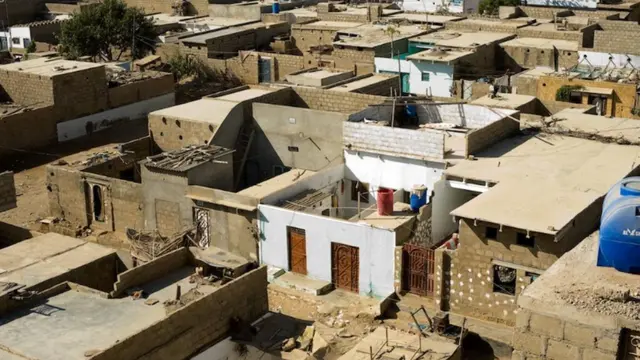
What exactly is the role of international financial institutions in the cities of the global South, and how far removed are their employees from the realities of life for those facing eviction in an informal settlement?

I have written this series of three insights responding to the question: “what have I Iearned from my work over the last five decades?”. The first of these focused on national issues, the second on local (Karachi) issues and this third one looks at the international agencies.
Over the last 50-plus years, international financial institutions (IFIs) such as the World Bank and the Asian Development Bank have sought my assistance. In the course of the various projects, I have learned that most have a very strong anti-poor bias, and are primarily concerned with the basics of ‘bricks and mortar’.
Prejudices fuel a cycle of dependency
IFIs have a major say in Pakistan’s development model. They are typified by air-conditioned offices in a city centre, far away from the homes of low-income groups, with a fleet of expensive cars, constant trips abroad, workshops in five-star hotels and huge salaries. It is not uncommon to hear people say “they are becoming rich on our problems”.
As far as academia is concerned, almost all teachers and supervisors bring their class prejudices in which the poor are portrayed as helpless and incapable of taking decisions about their own lives. This becomes part of the ‘truth’ for other students, consultants – and IFI employees – to follow. The poor are almost never asked for their own definition of poverty.
In addition, studies by IFIs have an interest in portraying conditions to be much worse than they really are, thereby increasing their loan packages for the project or policy under consideration. And many of the loans Pakistan takes on are used to pay off previous loans – something seldom taken into consideration by the authors of the plans.
The rationale behind ‘capacity-building’
Every loan from an IFI has an element of capacity-building for the government and specialist staff hired for the project. This usually consists of workshops for government staff and visits to foreign countries to see how projects in those countries were designed and how they function.
This capacity-building component is normally around 12% of the project cost which means that millions of dollars have been invested. But the problem is we keep building the same capacity again and again, and the departments for whom capacity is built revert back to their previous organisational culture and manner of functioning when each project ends.
The old traditions of professionals and their support staff visiting settlements for long periods to spend time with the so-called ‘affectees’ of evictions is gone. And where and when it does takes place it is like ‘development tourism’ with no real experience of the place or people.
As a result, there is little empathy between the different actors involved in development planning and the opinion of the affectees is usually missing – except for a paragraph or two of summaries from a visit or survey.
In addition, previously informal settlement inhabitants/affectees formed committees which allowed them to stand up for themselves, and negotiate or demonstrate with their representatives and other influential persons. Today, there is no lack of NGOs to support them or to initiate their struggle on their behalf. But this weakens their position when compared to before, as NGOs’ positions are usually more understanding and supportive of government decisions than these committees.
Final thoughts
If things don’t change streets will flood more often, additional katchi abadis (informal settlements) will be created, transport will not improve because it will not be maintained and managed, traffic will become more unbearable in the absence of management and, worst of all, women’s development will take place in an environment full of conflicts because the state will not support it.
The situation is exacerbated by climate change, with the number of environmental refugees increasing rapidly and no plans to provide them with jobs or spaces to live. They are adding to those living on the streets, under bridges or on construction sites.
I conclude by saying that unless these and many other things are taken into account when trying to solve our problems and building a future, our problems will not be solved. My only hope is that the next generation will be able to break the cycle by giving the urban poor a say in their own future.
Check out other insights from Arif Hasan on themes that have long been a priority for him including flooding, sanitation, access to land, pandemic lessons and changes in the status of women.
- A longer version of Arif Hasan’s 50-year reflections can be found in Dawn.