Reframing energy access within climate adaptation and resilience for smallholder farmers
IIED is developing a practical framework to integrate energy access, climate adaptation and resilience in smallholder agriculture, helping practitioners design, measure and scale solutions that better support vulnerable farmers facing climate change.
José Morell-Ducós was a programme manager (inclusive food systems) until June 2026

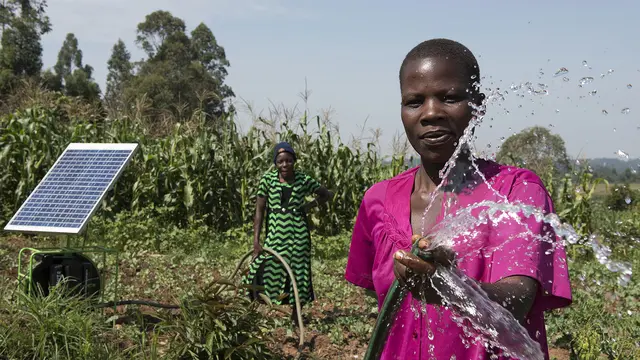
In Senegal, local communities want to utilise solar energy but the limited access to equipment and lack of financing are hampering efforts to improve energy access (Photo: UNDP Climate, via Flickr, CC BY-NC 4.0)
Agriculture underpins global livelihoods but is highly vulnerable to climate uncertainty. While the sector consumes around 30% of global energy and produces nearly a quarter of greenhouse gas emissions, more than 500 million smallholder farmers – who manage over 80% of the world’s farmland – often lack access to modern energy services.
Investing in productive energy solutions, such as solar-powered irrigation and refrigeration, can improve productivity, incomes and resilience, but adoption remains uneven. Gender, age and other socio-cultural factors shape farmers’ risks and opportunities, while factors such as limited finance and training constrain uptake in remote areas.
Addressing the interlinked challenges of energy poverty, gender inequality and climate vulnerability requires integrated approaches and stronger alignment of public and private investment to close persistent funding gaps across agriculture, energy access and climate adaptation.
What is IIED doing?
In 2024 IIED published work on coupling energy access with climate adaptation and resilience highlighting the need for a unifying, practical framework to guide project designers and implementers.
The work, which included a literature review and interviews with dozens of people and organisations, emphasised aligning energy, adaptation and resilience objectives across sectors to promote best practice, reduce fragmentation, and deliberately design projects and programmes that deliver sustained co-benefits for vulnerable communities.
Alongside the International Renewable Energy Agency, IIED is now taking this work on to create this framework – a practical, cross-sector guide designed to help practitioners integrate and measure climate resilience within agricultural projects that rely on electricity.
The GEAR (Growth through Energy, Agriculture and Resilience) framework will bring together fragmented and complex climate, energy and agriculture approaches, translating existing theory, best practice and indicators into a single, usable tool.
Against a backdrop of intensifying climate impacts and shrinking funding, a forthcoming research paper will explore how GEAR supports more strategic use of limited resources, to devise solutions that benefit people most vulnerable to the effects of climate change.
News and updates
Additional resources
Energising adaptation: key considerations for coupling energy access with climate adaptation and resilience, Kevin Johnstone, Sam Greene (2024), IIED working paper
Bundling agri-food systems innovations for women's resilience and empowerment – building the evidence base, Kevin Johnstone, Sam Barrett, May Thazin Aung, Ranjitha Puskur, Hom Gartaula, Eileen Nchanji, Prama Mukhopadyay, Everisto Mapedza, Cosmos Lutomia, Dessalegn Ketema (2023), IIED working paper
Can innovations in agri-food systems deliver gender equity and resilience?, Kevin Johnstone, May Thazin Aung, Sam Barrett (2023), IIED Briefing