Accelerating local development through inclusive energy planning
In Meru County, Kenya, IIED, STEER Centre and partners used the inclusive, cross‑sectoral energy delivery model (EDM) design approach to operationalise Kenya’s new integrated energy planning framework, which aligned investments with local priorities through energy‑driven development action.

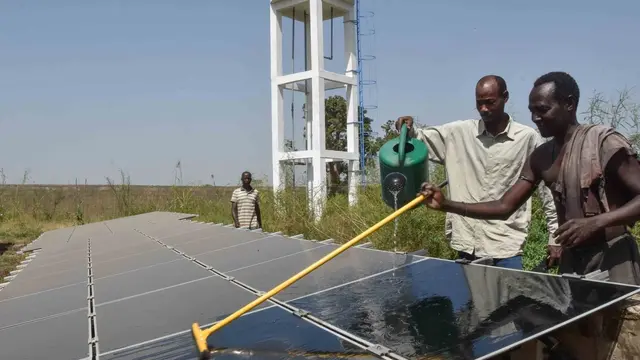
Irrigating a farm using a solar-power pump, Kenya (Photo: IWMI/Jeffery M Walcott/IWMI, via Flickr, CC BY-NC 2.0)
Energy is increasingly recognised as a key enabler of people’s wellbeing, through improving access to essential services and supporting livelihoods. But in many sub‑Saharan African countries, energy access remains deeply unequal: roughly 600 million people still lack electricity and over one billion lack cleaner cooking solutions, with serious consequences for health, incomes and resilience.
Conventional energy planning is frequently top‑down and siloed, and focuses narrowly on grid connections while overlooking the diverse priorities of local communities, especially those of marginalised groups.
As a result, energy plans often fail to translate into meaningful, equitable access to modern energy services and to generate broader development impacts.
In Kenya, county governments are mandated under the 2019 Energy Act and the Integrated National Energy Plan regulations (2025) to develop ten‑year County Energy Plans (CEPs) to inform national energy planning. These regulations state CEPs should support counties’ economic, social and political development, expand energy access across all sectors, and tackle cross-cutting priorities such as climate change and gender equality.
However, counties face significant challenges in effectively implementing this mandate. These include the insufficient availability of disaggregated data, limited technical expertise in cross-sectoral energy planning, and insufficient expertise in climate change and gender equality, disability and social inclusion.
What did IIED do?
Under the European Union-Kenyan Ministry of Energy Sustainable Energy Technical Assistance (SETA) programme, IIED, in partnership with Loughborough University’s STEER Centre and the local government in Meru County developed a model CEP using the EDM approach.
This approach frames energy as an enabler of broader development outcomes, engages with multiple stakeholders to understand different end-user groups’ priority needs and why they remain unmet, and identifies opportunities to deliver more inclusive energy services that maximise social, economic and environmental benefits.
The Meru CEP process generated valuable lessons for counties and development partners seeking to make local energy planning more inclusive, evidence‑based, cross-sectoral and aligned with sustainable development objectives. Work included:
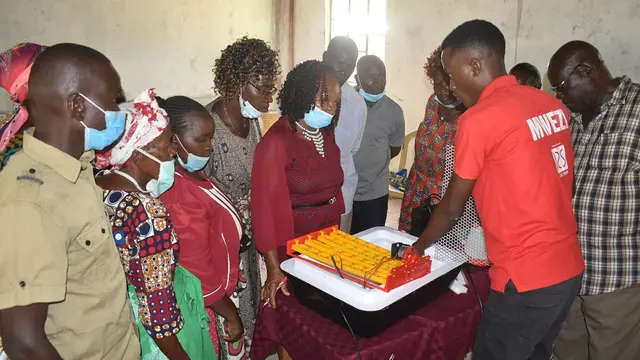
- Conducting in‑depth data collection and participatory needs assessments to identify both energy and non‑energy needs of diverse marginalised groups, which directly informed the design of tailored sectoral solution
- Facilitating cross‑sectoral planning and coordination through a cross-ministerial CEP planning committee. The CEP committee brought together key government departments, ensuring that priority energy investments were integrated into wider development plans and budgets, and
- Using EDM tools, including the EDM canvas, and geospatial analysis, to co‑design fully costed solutions for priority sectors such as agriculture, health, water and household energy.
Together, these efforts demonstrate how an inclusive, cross-sectoral planning approach such as EDM can help counties translate national energy planning frameworks into practical, locally-owned strategies that expand energy access and support local development priorities.
Additional resources
Energy Delivery Models hub: EDM for community and local development
Tools and approaches to support needs-based demand assessment and investment in County Energy Planning in Kenya (PDF), Ben Garside, Daniel Mwendwa, Adrian Onsare, Sarah Wykes (2023), UKPACT working paper
Modelling needs-based county energy demand: a case study using Meru County CEP solutions (PDF), Daniel Mwendwa, Adrian Onsare, Sarah Wykes (2023), UKPACT working paper
Vertical collaboration for county energy planning in Kenya (PDF), Emmanuel Ngeywo, Sarah Wykes (2022), UKPACT working paper
Data needs for county energy planning in Kenya (PDF) (2022), UKPACT working paper
Energy services for local development: integrated and inclusive planning for county governments in Kenya, Ben Garside, Nipunika Perera (2021), IIED working paper
Planning pro-poor energy services for maximum impact: the energy delivery model toolkit, Ben Garside, Sarah Wykes (2017), IIED toolkit