Why we need strong farmer organisations to achieve the world’s big environmental goals
National-level farmer organisations are essential allies in forest restoration, conservation and land degradation efforts – through capacity-building, mobilising internal finance and linking producers to markets.


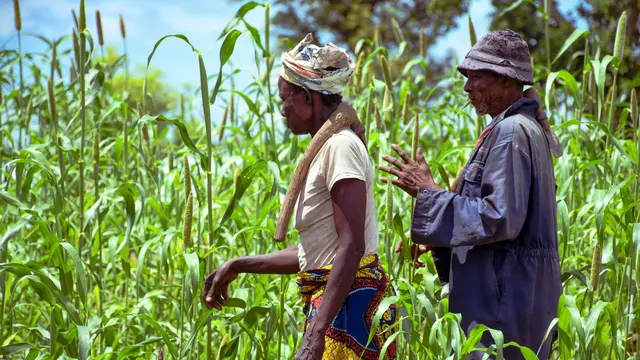
Training session in Mangochi district (Photo: copyright Farmers Union of Malawi)
Global ambitions to restore forests, prevent land degradation and manage ecosystems sustainably will fall short if they fail to engage forest and farm producer organisations (FFPOs).
These organisations operate across multiple levels: from first-tier small producer groups to second-tier associations or federations of cooperatives and ultimately to third-tier apex-bodies.
Apex-level FFPOs are national or regional umbrella bodies that represent and support networks of smaller, local producer groups, giving them a collective voice and the means to access services, markets and policy processes. This makes FFPOs essential partners for systemic change.
Large-scale environmental programmes must actively involve apex-level organisations to ensure interventions are locally owned and sustainable in the long term.
The Global Environment Facility’s (GEF) Dryland Sustainable Landscapes Impact Programme (DSL-IP) aims to avoid, reduce and reverse further degradation, desertification and deforestation of land and ecosystems in drylands, through the sustainable management of forest and farms. As an implementing partner of the Forest and Farm Facility, IIED is helping to integrate apex-level FFPOs into the DSL-IP. The aim is to bridge the gap between global ambitions and local action.
Why are apex-level organisations so valuable?
Apex-level FFPOs do much more than represent their members; they provide services such as access to finance, value chain development, governance training and policy advocacy.
By aggregating the needs and capacities of local producer groups, they help scale up sustainable land use, improve market access and influence national policy. For example, the Farmers Union of Malawi (FUM), established in 2003, is an umbrella body of farmers and farmer organisations. It has three core areas of operation: institutional capacity development, policy advocacy and agribusiness development.
FUM helps organise farmers into strong, viable groups, builds their capacity for collective action, and creates platforms for engagement. It also uses evidence-based research to advocate for policies that support sustainable agriculture and fosters business partnerships to strengthen value chains and promote commercial opportunities for smallholder farmers.
The FUM: strengthening and supporting local producers
IIED is leading the DSL-IP’s workstream of green value chain development across six countries: Angola, Botswana, Malawi, Namibia, Zimbabwe and Tanzania.
Implementation began in Malawi and IIED partnered with the FUM to strengthen the capacity of local producer groups, link them to extension services and markets, and mobilise internal and external finance to support green value chain development.
As part of this work the FUM has:
- Strengthened governance structures at the district level and provided capacity building across various topics including enterprise development strategies and internal governance
- Connected farmer groups with Malawi’s government extension services system to support their participation and voice their needs in decision-making spaces related to rural development
- Supported value chain development through building relationships with off-takers (buyers who agree to purchase crops in advance) establishing contractual arrangements, for example, between farming cooperatives and local primary schools which run meal programmes, and
- Facilitated access to finance through various strategies, including mobilising internal finance (such as collective money saving activities with village savings and loans associations) and external finance (such as helping to access to grants and loans from government-led platforms).
Apex-level FFPOs: critical agents for lasting change
Many restoration and land degradation programmes struggle to reach the local level effectively or to sustain impact beyond their funding cycles. One reason for this is they often overlook the farmer-led structures that are best positioned to deliver lasting change.
Apex-level producer organisations, like FUM, are a strong example. Sitting at the intersection of community action and national policy, these organisations are uniquely equipped to implement large-scale environmental programmes in ways that are grounded, inclusive and sustainable.
FUM’s work under the DSL-IP is an example of how aligning environmental goals with income-generating green value chains can incentivise sustainable land use. Through their extensive networks they scale up good practices by cascading training to local producers on a variety of topics across farming, governance and enterprise support.
Facilitating access to market enables producers to increase their income and maintain sustainable production. Their ability to mobilise both internal savings and external financing ensures interventions are financially viable. By anchoring activities in local governance structures, apex organisations also secure local ownership and policy alignment, making them essential partners in tackling land degradation and driving landscape restoration at scale.
To deliver lasting environmental impact, global programmes must engage apex-level producer organisations from the start. The DSL-IP is showing what’s possible.
Other initiatives funded by the GEF, the Green Climate Fund and similar mechanisms should follow suit. If we want to restore our forests and protect our lands, our call to action is this: recognise and resource these organisations as essential project partners.