Countdown to law for deforestation-free products: smallholders need support, not surprises
A first cross-regional survey of smallholder producers’ readiness for the new EU Regulation on Deforestation-free Products (EUDR) reveals significant gaps. Forest and farm producer organisations are well positioned to support their members to get on board.


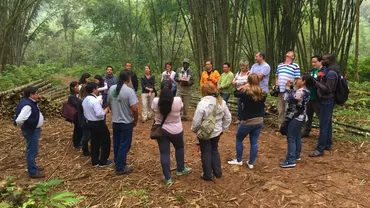
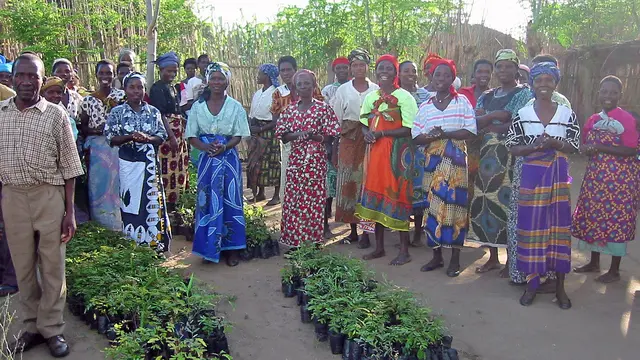
Members of the forest and farm producer organisations receiving training on the use of a geolocation tool (Photo: copyright FAO/Pilar Valbuena)
The Forest Declaration Assessment 2025 tracks collective progress toward the 2030 forest goals, and covers deforestation, degradation, restoration, biodiversity, finance, rights and governance.
And the report bears bad news: global forests are still in deep trouble. One measure to tackle deforestation, and a key part of the European Green Deal, is the European Union Regulation on Deforestation-free Products (EUDR) – a law aiming to boost consumption of ‘deforestation-free’ products.
Adoption of the ruling was welcomed as a landmark achievement. Yet the proposed start date has been delayed again – met by frustration for many who are hoping for bold action.
But the delay could be a thin silver lining as it may give smallholder producers, and those working to support them, a much-needed window to prepare for the incoming ruling.
Compliance concerns
Practitioners familiar with the new regulation and with the reality of smallholder forest and farm producers have raised concerns around whether smallholders will be able to prove their compliance with EUDR rules – for example, by obtaining geolocation coordinates of their plots and proving compliance with national laws with EUDR rules.
These producers play a vital role in global food systems and rural economies – but without compliance, they risk being excluded from lucrative EU markets.
New study of EUDR smallholder perceptions and preparedness
While there have been efforts to understand smallholders’ readiness for the new regulation, few have looked across multiple regions and value chains.
A new cross-regional study by the Forest and Farm Facility (FFF) – an initiative co-managed by FAO, IUCN, AgriCord and IIED – offers a snapshot of awareness of the regulation and preparedness for implementation.
The study is based on a survey of 286 smallholders producing EUDR relevant products such as coffee, cocoa and timber.
It points to some concerning gaps and suggests a significant proportion of smallholder forest and farm producers:
- Lack awareness of the precise requirements of the new EUDR
- Do not have the technical capacities and resources to prove compliance and thus acceptance into the EU markets, and
- Have mixed views regarding the impacts of EUDR on their operations and livelihoods.
High relevance, limited awareness
The relevance of the EUDR to the surveyed smallholders is clear: over 78% of respondents produce commodities covered by the regulation. A third already export to the EU, and 65% of the rest aspire to do so in future. Yet nearly half (48%) had never heard of the EUDR.
Among those who had, understanding was limited – 46% did not know the start date, 32% misunderstood its purpose, and only 35% knew how deforestation was defined in the EUDR. Despite this, 77% of current or aspiring exporters believed they were compliant, suggesting a risk of misinterpretation and non-compliance.
Information channels and institutional gaps
Most smallholders are learning about the EUDR through producer organisations and NGOs, with limited outreach from government actors.
This is a challenge, since public sector involvement is key to scaling up support to rural producers.
Legal and technical barriers loom large
Nearly half of respondents lack formal land titles, and most work on plots that are under four hectares, indicating that investment in compliance tools may be out of their economic reach.
Many lack digital identities, have not mapped their production areas and are not aware of geolocation data. Of those who have mapped their plots, only 5% received help from the companies they sell to, challenging assumptions about the expected corporate responsibility in due diligence.
Data ownership is another concern. Nearly 30% of those whose plots have been mapped do not own their geolocation data – challenging hopes around EUDR increasing smallholders’ agency in international markets. And 30% of current or aspiring exporters to the EU do not have access to a smartphone, limiting their ability to collect and manage compliance data.
Mixed perceptions of impact
A quarter of those surveyed expect EUDR benefits such as better prices or environmental gains, but just as many fear negative consequences. Others are unsure or expect no impact at all, highlighting both hope and uncertainty.
Limited support
Nearly half of respondents have not received any help related to the EUDR. Of those who did, most only received general information, and just a third accessed technical assistance. That is a gap that needs attention.
How producer organisations can help
To help close these gaps, the report offers eight practical ways that forest and farm producer organisations could help their members to navigate compliance requirements and access knowledge and technology that will equip them to prove their compliance.
Strategies range from launching awareness campaigns and supporting land tenure formalisation, to helping smallholders access geolocation tools, build digital identities and secure financial resources.
As the clock ticks for global forests, smallholders want to be part of the solution. But they need real support – not surprises – when the EUDR finally kicks in.