Financing infrastructure projects for ‘critical minerals’: whose energy transition?
As growing demand for ‘critical minerals’ and global geopolitical rivalries prompt new interest in transport infrastructure projects across Africa, the need for genuine partnerships between international partners and mineral-rich countries and communities is more important than ever.



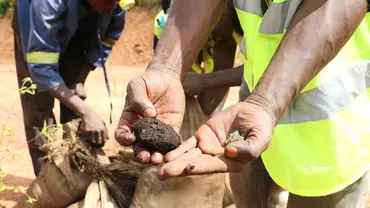
Cobalt is a key material in battery supply chains (Photo: IIED, via Flickr, CC BY-NC-ND 2.0)
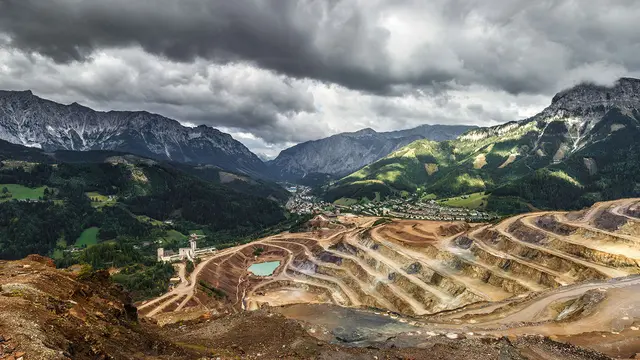
Alongside investments in mining, growing demand for energy transition minerals such as copper, cobalt, lithium and nickel is fostering the development of infrastructure corridor projects for exporting minerals to the global economic powers. Several such projects are being developed across Africa, with China, the European Union (EU) and the United States (US) pledging financial support.
The Lobito Corridor project – an ambitious infrastructure project to upgrade and build railways and roads in Angola, the Democratic Republic of Congo (DRC) and Zambia – illustrates this trend. The project is partly linked to EU and US efforts to secure access to minerals located in Zambia and the DRC.
Critical minerals and development finance questions
For mineral-rich countries and communities, this trend highlights important questions about development and development finance:
- How can infrastructure upgrades respond to local development priorities, rather than export objectives alone?
- How can they facilitate not just raw material exports, but also local value addition and economic diversification?
- How can countries establish strong social and environmental safeguards, to uphold rights and protect people and ecosystems?
- How can mineral-rich countries transition on their own terms – for example, via investments in renewable energy, decent jobs and domestic industry – rather than simply supply raw materials for energy transitions elsewhere?
To discuss these questions, IIED and Open Society Foundations (OSF) organised a side event at the 4th International Conference on Financing for Development (FFD4), building on prior IIED case study research on the Lobito Corridor.
We were joined by speakers Brian Kagoro from OSF; Ketakandriana Rafitoson, from Publish What You Pay and Trevor Simumba, a trade and investment policy expert based in Zambia.
The discussions also benefited from active audience contributions, including Zambian government officials and representatives from African regional organisations.
The side event highlighted how the interplay between global geopolitics and financing for development affects arrangements for energy transition-linked infrastructure projects and the need to respond to mineral-rich country and community priorities.
From extractivist models to genuine partnerships
Participants highlighted the history of one-sided extraction and dispossession that has characterised mining activities in Africa since colonial times. Today, under the guise of energy transition and sustainable development, the US, EU, China and other global economic powers risk reproducing these longstanding patterns by prioritising national self-interest over all other considerations.
Event participants noted that many mineral-rich countries are working to break this cycle of extraction and dispossession. Several governments, including those along the Lobito Corridor, have adopted policies to promote local processing and value addition, to export processed goods rather than just raw materials.
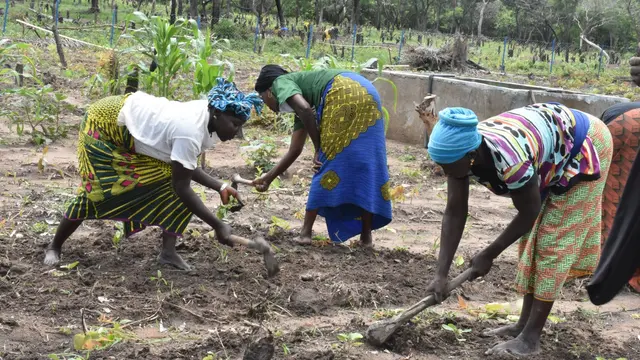
This includes a joint DRC–Zambia initiative to develop a battery supply chain on both sides of their shared border. Countries are also looking to harness enhanced connectivity for economic opportunities in agriculture and other non-mining sectors.
International guidance on promoting a just energy transition calls for project design to be responsive to such initiatives. In 2024, the UN Secretary-General’s panel on critical energy transition minerals released an authoritative set of principles that place human rights, environmental sustainability, equity, justice, benefit sharing, value addition and economic diversification at the centre of critical mineral activities.
Responding to host countries’ development priorities makes sense even from a narrow self-interest standpoint. In increasingly divisive global geopolitics, large economies may be tempted to promote extractive arrangements that primarily respond to their own concerns about securing supplies.
But developing genuine partnerships is the most effective way to ensure projects are viable in the longer term: security of supplies is best served through initiatives that work for all sides.
As such, international partners looking to finance energy transition projects should consider how they can support local efforts to leverage infrastructure upgrades for sustainable development within the region.
Such support can range from finance, skills and opportunities to ensuring legal commitments under international trade and investment treaties or project contracts do not unduly restrict policy space for host governments to pursue locally beneficial approaches.
What does ‘success’ look like?
Drawing on the Lobito Corridor example, discussions highlighted that infrastructure projects can involve many actors, with differing interests.
Host countries have their own development priorities and political situations. Local communities have diverse socioeconomic conditions, pressures and priorities, and often have no access to electricity themselves. And international partners, from funders to prospective importers, often have their own agenda.
Participants noted the importance of recognising this plurality of actors, interests and objectives, and the tensions and trade-offs that can arise. A genuine partnership needs a shared understanding of what success looks like, in ways that equitably respond to diverse interests. It must also connect infrastructure deals to local sustainable development priorities.
The core agreements governing projects should address these issues. Lofty statements abound in international conferences about financing for sustainable development.
But partnership or financing agreements for large infrastructure projects tend to align more closely with commercial, economic and geopolitical realities, favouring the interests of larger economies.
As well as facilitating smooth transit and trade, project agreements need to bridge the gap between rhetoric and reality. They can do this by regulating how the project will provide opportunities for local value addition, encourage economic diversification and support the development of local centres of excellence that can provide evidence, analysis and skills for local policymakers and supply chain actors.
Thinking through these complex questions requires specialist expertise and effective arrangements to facilitate public participation in decision making at all levels.
Large infrastructure projects can foster deep societal transformations, and policy decisions must align with the long-term development needs of mineral-rich low and middle-income countries to advance the Sustainable Development Goals.