Who will benefit from the Lobito Corridor revamp?
African trade route upgrade raises questions around critical minerals and people being left behind by the green energy transition.
Efforts to revitalise the Lobito Corridor trade route in central Africa must promote local economic development over raw material exports, while protecting social benefits and human rights, experts have warned.
Angola, the Democratic Republic of Congo (DRC) and Zambia are upgrading their infrastructure to aid transport of critical energy transition minerals like cobalt and copper. The rail system terminates at the port of Lobito on Angola’s Atlantic coast.
The United States and the European Union have committed financial backing to the project.
In a new briefing for policymakers, researchers from IIED set out key considerations around the Lobito Corridor and its role in the global transition to green energy sources.
Prominent among these are the questions of whether and how the project’s development will benefit the wider economies of the countries involved, while being fair to the people whose land it might encroach upon and the artisanal miners who dig up many of the raw materials.
Key points
- European Union and US financial backing underpins perceptions that the Lobito Corridor project is responding to the energy security concerns of wealthy nations
- Zambian parliamentarians have raised fears that “the project appeared to focus more on mopping up critical raw materials and not value addition”
- Harnessing the corridor’s full development potential will require the three nations to work together to maximise opportunities to add value and up-skill workers
- Mitigating environmental damage will also require close international coordination
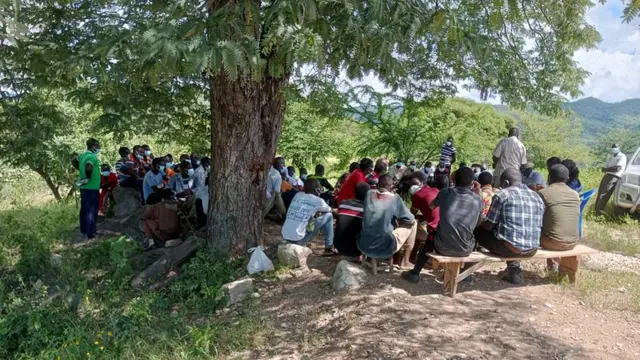
- Land acquisition for construction may provoke backlash and long-running disputes if handled poorly; effective community engagement and fair compensation will be vital, and
- As a transport project premised largely on exports, the Lobito Corridor highlights fundamental questions about whose energy transition it serves, with whose resources, and how the costs and benefits of that transition will be shared.
Lorenzo Cotula, an IIED principal researcher, said: “If the EU and other prospective funders are interested in a genuine, long-term partnership with Angola, the DRC and Zambia, they should support their efforts to promote economic development and improve the lives of their citizens.
“This project shouldn’t be only a means to export more raw materials more quickly to wealthier nations, or another chess piece in the great power game.
“An important question to ask is: ‘who are these minerals really critical for?’. Millions of people in mineral-rich, lower-income countries are being sidelined in a global rush for materials to power electric cars, computers and even military technologies in richer nations.”
For more information or to request an interview, contact Jon Sharman:
+44 7407 727 886, or [email protected]