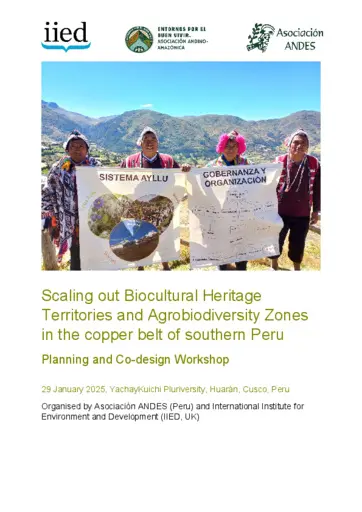
Scaling out Biocultural Heritage Territories and Agrobiodiversity Zones in the copper belt of southern Peru: planning and co-design workshop
In Peru, critical minerals for clean energy technologies, such as copper, are abundant. This presents both economic opportunities and social and environmental challenges, such as loss of biodiversity and displacement of Indigenous Peoples and local communities, among others.
In October 2024, Asociación ANDES (Peru) and IIED launched a new project with support from the Ford Foundation to scale up the Potato Park model in indigenous communities that wish to protect their biocultural wealth and pursue alternatives to extractive operations in the Peruvian Andes.
The next steps for the project will be to select the communities of focus in Apurímac; to analyse the different laws and policies that allow for sustainable and biocultural development; to map the actors in each selected territory; and to elaborate an implementation plan for the project. ANDES and the local Potato Park technicians will organise training workshops to scale the model to other communities.
This workshop enabled mutual learning, exchange of information and active participation of local communities and organisations in the planning of the project in a bottom-up process. The project will work with indigenous experts in each community who will be the intellectual leaders, because the communities have the most knowledge about the biocultural heritage territories.
Cite this publication
Available at https://www.iied.org/22650g