Against forced evictions: building a renewed action-research agenda in the era of climate change
IIED and partners are developing a renewed action-research and advocacy agenda against forced evictions in the context of climate change, while supporting the efforts of local groups fighting evictions.

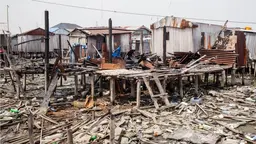
Site of a forced eviction of an informal settlement in Lagos, Nigeria (Photo: Camila Cociña, IIED)
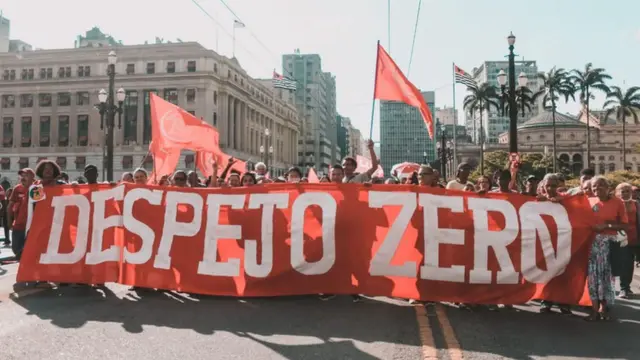
Experiencing a forced eviction is one of the most violent events that a community can encounter. According to the United Nations Commission on Human Rights, forced evictions constitute a gross violation of human rights (PDF) and a fierce manifestation of housing injustices. Yet, it is estimated that at least two million people are forcibly evicted each year.
The forced evictions agenda has historically received varying degrees of attention in global urban and housing debates, but this has recently fallen into the background.
At the same time, the climate crisis is creating new challenges in relation to forced evictions, with discourses around the prevention of environmental disasters becoming a common narrative to justify new waves of evictions – sometimes termed ‘benevolent evictions’.
Those living in informal settlements and in areas prone to disasters are the most affected by these climate-justified forced displacements, as has been highlighted by the Housing and Land Rights Network’s Violation Database.
On the other hand, climate change concerns can also open new entry points to fight forced evictions by highlighting the environmental costs of demolishing existing housing. Instead, homes in central areas can be upgraded and retrofitted to increase resilience.
Growing efforts to assess the impacts of improving existing housing provide an opportunity to bring the issue of forced evictions into environmental, economic and human development debates.
What is IIED doing?
IIED is undertaking a series of research activities to understand the environmental impacts of forced evictions and the effects of climate change in local anti-evictions struggles, thus developing evidence-based advocacy messages on preventing evictions in the context of the climate crisis.
The project builds on IIED’s work supporting social movements’ efforts and joining collaborative advocacy campaigns against evictions.
The project has two main components. Firstly, it explores the environmental impacts of forced eviction using diverse research methodologies. Employing known frameworks of determinants of risk (PDF) and disaster risk factors (PDF), the project will identify quantified and localised evidence assessing the impact of evictions on populations’ exposure and vulnerability and exposure to risks in the context of climate change.
Additionally, the project involves a quantitative exploration of the environmental costs of evictions in different typologies of informal settlements, and comparing potential emissions resulting from evictions, redevelopment and upgrading.
Secondly, the research will draw from a collaborative exploration of the effects of climate change in local anti-eviction efforts in Nigeria, Kenya, Brazil, Chile and Indonesia.
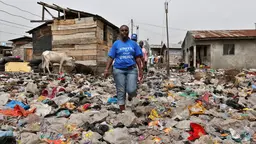
IIED is facilitating a series of online exchanges with five civil society and grassroots organisations: Slum Dwellers International Kenya (Kenya), Rujak Center for Urban Studies (Indonesia), Centro Gaspar Garcia de Direitos Humanos (Brazil), Justice and Empowerment Initiatives (JEI) (Nigeria) and Red de Derechos Humanos y Desalojos (Chile). Each of them is working on the prevention, documentation or monitoring of evictions to identify how climate change is influencing their work and struggles.
Together, these activities will aim to build advocacy messages that stress the linkages between the evictions and environmental agendas.
News and updates
Publications

Additional resources
Monitoring and stopping forced eviction: a crucial pathway to secure housing for all, Camila Cociña, Alexandre Apsan Frediani (2024), report
Project: Civic media for housing rights: lessons from struggles against evictions in São Paulo and Lagos
Towards housing justice. Four propositions to transform policy and practice, Camila Cociña, Alexandre Apsan Frediani (2024), issue paper