Interview: Putting global South communities at the centre of climate and nature funding conversations
As COP30 kicks off, Juliana Tinoco, who conceived the idea of the Global South House, a platform for philanthropic actors, sets out her ambition for the platform and the stronger global South leadership she hopes will come out of it.
The Global South House is a platform bringing together philanthropic actors from the global South, for the global South. Its aim is to redirect resource flows and challenge power dynamics so that communities in global South territories – and the local solutions they champion – are at the centre of global conversations on climate and nature funding.
The Global South House is hosting a range of events at COP30 in Brazil and providing a space to connect and build synergies. IIED will participate as a knowledge partner of the Global South House activities in Belém, and will be coordinating the systematisation of the strategic messages as they emerge from the discussions and events during COP.
Juliana Tinoco (JT) is the executive coordinator of Alianza Socioambiental Fondos del Sur (Socio-Environmental Funds of the Global South) and conceiver of the Global South House
Q: Why has the Global South House been formed – what gap is it seeking to fill?
JT: The Global South House was created to address deep structural imbalances in the way global financial flows are directed toward climate, nature and people.
Although the global South is home to most of the planet’s biodiversity and stands on the frontlines of climate impacts, not nearly enough global philanthropic resources for climate action reaches local actors. Of the money that does, it’s only a small amount that directly supports Indigenous Peoples, traditional communities, youth-led initiatives and gender-focused agendas.
While climate philanthropy might intend to reach the people most affected by the climate crisis, it is actually part of the structures that are reproducing inequalities − and leaving behind those most in need.
But there are actors within the fields of climate financing and philanthropy that have been proposing concrete ways to address this imbalance for many years. These are locally rooted, activist-oriented funds, led by practitioners, organisers and leaders of movements from the global South.
These philanthropic bodies are coming together in the Global South House. It’s a platform built by and for the global South, designed to centre the voices, experiences and solutions of philanthropic actors connected to territories, to Indigenous and traditional communities and to social movements; representing people who have been historically excluded from decision-making processes.
This movement of funds is growing and has made it clear that it wants to be in the conversations around climate finance. Until now, these dialogues have been dominated by big philanthropies, large bilateral corporations and the international financial funds sitting under the UNFCCC.
Q: How do members of the Global South House differ from the big philanthropies you mention?
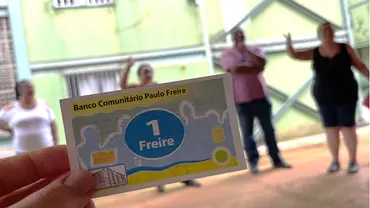
JT: Big philanthropic bodies often operate through top-down strategies and complex bureaucratic structures. Members of the Global South House are funds that act from the ground up. Their funding mechanisms are democratic, accessible and transparent, ensuring that resources go directly to people and communities.
Proximity is key and is what sets these locally rooted funds apart from the bigger players. They are nested within the territories and are part of the communities they represent. They understand the needs of the people and can be responsive and agile – in a way that a cumbersome, top-down philanthropic body cannot.
Take for example environmental defenders. These people often face death threats and are forced to leave their homes and communities. They need access to money, but this is risky – they can be traced by their bank accounts.
Who is going to get money to these people? We're not talking about institutions or projects here – these are people who need rapid response mechanisms from actors who understand the practicalities of their struggle. Or when informal settlements are hit by a climate disaster, it is often community organisations from the area or the local church that typically respond first.
Proximity goes hand in hand with trust. Indigenous Peoples, Afro-descendant communities, traditional and marginalised communities, youth and women’s groups trust that these funds will represent them in decision-making processes and resource allocation. The funds have transparent governance models; they can reduce risks and costs for funders while maintaining efficiency and accountability.
They also adopt intersectional and community-driven monitoring and learning systems, measuring what truly matters to the people involved rather than to distant donors.
In essence, members of the Global South House redistribute power: they place communities – not donors – at the centre of funding priorities, making sure that resources strengthen autonomy, local governance and systemic change, rather than perpetuating dependency.

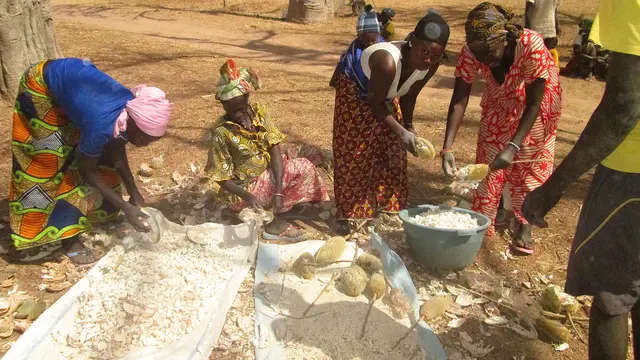
Transparency efforts are key to helping the Central African Republic assess its climate funding and support needs (Photo: UNDP Climate/Central African Republic, via Flickr, CC BY-NC 4.0)
Q: You reference “redistributing power” − what does that look like in practice?
JT: In practical terms, we're talking about money. Communities in the territories need finance, and they need that finance to be flexible. No rigid, box-ticking reporting requirements. And they need to be able to spend the money in a way that is in line with their own vision of resilience and development, not the expectations of distant donors.
So, yes, redistributing power is about money. But it’s also about changing deeply entrenched perceptions around money – about who gives it and who gets it.
Those who bring the money know best, right?
No, it is the communities themselves who know how money should be deployed – they are the true custodians of innovative climate and social solutions. They know how strengths and skills within the community can be pooled to drive their own development and resilience. This is the very concept of community philanthropy (PDF) – it goes beyond money and looks at how power from within the community can be harnessed.
Q: What are your hopes for COP30?
JT: Speaking as a Brazilian, COP30 is a historic moment for the global South – held in the Amazon, a region that embodies both the urgency of the climate crisis and the possibilities of transforming our planet.
We hope that COP30 will serve as a platform to amplify Southern leadership, demonstrating the most effective and innovative responses to the climate crisis are already being built within territories of the global South.
We’re calling for concrete recognition of locally-led and community-based funding mechanisms as essential actors in implementing climate and socio-environmental justice. And we hope to see a growing coalition – of donors, investors, governments and movements – committed to financing systems that are fair, inclusive and rooted in justice.
Q: How can organisations partner with the Global South House and its members?
JT: Our invitation is for organisations to come and listen – we’ll be sharing how and where we work, and the different thematic areas we work on. So, come and engage, explore with us where there may be synergies.
Our programme of discussions for COP30 is open for registration. You can participate in the physical space at COP itself or connect with us online - all sessions will be live-streamed. You can also follow us on LinkedIn and Instagram!
COP30 will mark the first edition of the Global South House – it’s an exciting moment. Join us!