Integrating housing and homelessness into climate governance
IIED is working on initiatives to highlight housing and homelessness as key agendas for climate governance, generating evidence to identify gaps and opportunities to advance housing justice in climate action.

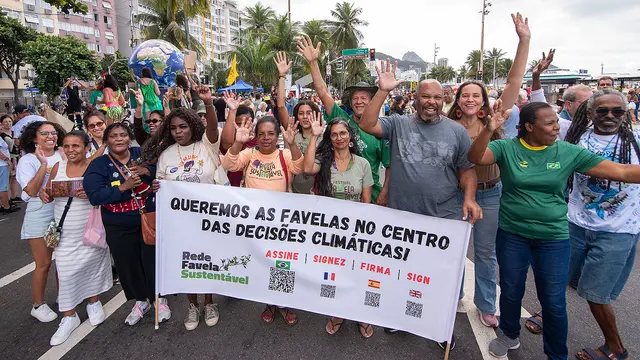
"Without dignified housing, there is no climate justice" – Brazilian housing social movement at the people's march of COP30 in Belém, 2025 (Photo: Alexandre Apsan Frediani, IIED)
The housing sector is closely intertwined with climate change; the construction industry contributes significantly to greenhouse gas emissions, while people living in inadequate housing or experiencing homelessness face some of the most severe impacts of the climate emergency.
Despite this, the presence of housing in climate debates is relatively new and has received relatively little attention. From neighbourhood climate action plans to global negotiations on climate adaptation, mitigation and just transitions, more evidence and advocacy are needed to ensure climate commitments and policies recognise housing needs and rights.
Understanding what the omissions, barriers, opportunities and entry points are for integrating housing and homelessness into climate governance processes is critical for more justice-driven climate responses in cities.
What is IIED doing?
Building on its expertise in housing, urban development and climate governance, IIED is working to strengthen the links between housing justice and climate action.
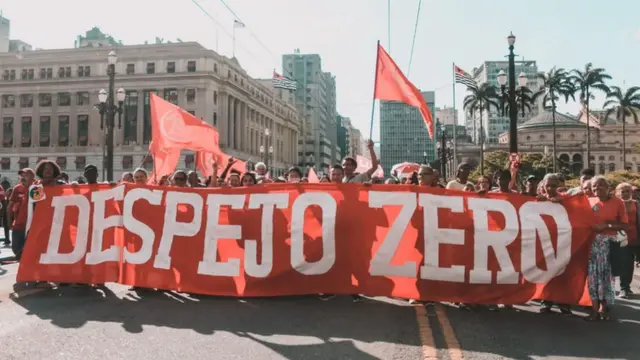
Previous collaborative work has explored forced evictions and climate change, the supply chain of sustainable building materials for housing in informal settlements, and the promotion of narrative shifts that frame slum upgrading as a form of climate action.
From 2026, the IIED’s housing justice team is developing three areas of work:
Homelessness and climate action
Working with Depaul International, IIED is examining how homelessness and its underlying causes feature in national climate plans, particularly Nationally Determined Contributions (NDCs) and National Adaptation Plans (NAPs).
This work will highlight the alarming blindness of climate plans towards people experiencing homelessness, while showing how critical climate-related drivers of homelessness are linked to phenomena that are already part of countries’ climate priorities – such as extreme weather events that destroy homes, disruptions of livelihoods affecting migration, rising housing running costs, and gradual environmental changes that make homes uninhabitable.
A joint report, ‘The climate blind spot on homelessness: omissions and opportunities in national climate plans’, released ahead of the 31st international climate change conference (COP31) in November 2026, makes two key recommendations: protect people already experiencing homelessness from climate impacts, and prevent climate shocks and climate policies from pushing more people into homelessness.
Housing and climate adaptation in African cities
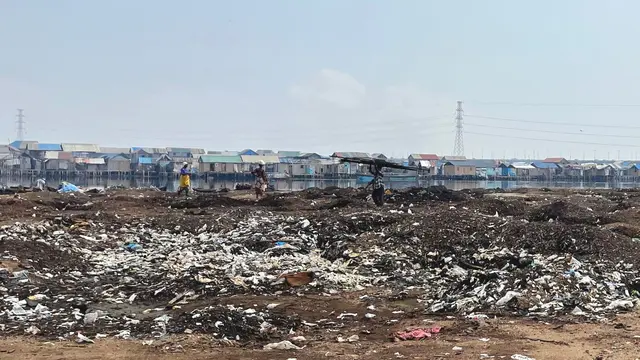
Alongside the African Cities Research Consortium, IIED is exploring how the wider systems that shape access to housing in African cities affect climate adaptation.
Rather than focusing only on the condition of homes, a study proposes a series of pathways. The potential approaches include:
- Advancing non-speculative and collective housing options
- Prioritising upgrading and improvements to existing homes
- Promoting housing finance and insurance that meets the needs of the people most as risk
- Reforming the governance of building materials and codes
- Protecting tenants' rights in climate adaptation measures, and
- Reforming urban planning and land use regulation to support inclusive housing-led climate adaptation.
Housing justice voices in the climate space
Through the Hub for Housing Justice, IIED has convened civil society organisations to elevate their messages and participation in climate discussions.
The publication 'Housing justice at COP30: civil society voices in the climate space' captures contributions from organisations in Brazil, Lebanon, India, Indonesia, the US, Kenya and Spain, in conversation with organisations such as UN-Habitat and Misereor. These contributions aim to influence future climate-housing conversations by recognising who is shaping these discussions, how they are doing so, and what this means for housing rights and justice.
Together, these initiatives aim to generate evidence, practical recommendations and new ways of framing housing and homelessness within climate governance processes.
They support a central message: there can be no climate justice without housing justice.
Additional resources
The climate blind spot on homelessness: omissions and opportunities in national climate plans, Camila Cociña, Paula Sevilla-Núñez, Alexandre Apsan Frediani (2026), Depaul International
Housing justice at COP30: civil society voices in the climate space, Hub for Housing Justice (2026)
The value chain of building materials in informal settlements: challenges to access resilient and sustainable housing in Freetown and Harare, Camila Cociña, Marcelle Mardon, Alexandre Apsan Frediani, Patience Mudimu-Matsangaise, Francis Reffell (2026). Urbanisation Journal, 11(1), 131-145
Housing justice and climate change in cities, Alexandre Apsan Frediani, Camila Cociña, Paula Sevilla Núñez (2025), IIED Briefing Paper
Forced evictions and climate change: the damaging impact on risks and emissions, Camila Cociña, Alejandro Barcena, Paula Sevilla Núñez, Alexandre Apsan Frediani, José Manuel Roche (2025), IIED Issue Paper
Longread: Building resilient homes in informal settlements. Understanding access to building materials in Freetown and Harare, Camila Cociña, Marcelle Mardon, Alexandre Apsan Frediani (June 2024)
Article: No climate justice without housing justice, Alexandre Apsan Frediani (2022), IIED