Primary

  • About
  • News and insight
  • Our approach
  • Publications
  • About
  • News and insight
  • Our approach
  • Publications
Sign up for our newsletters
  • Biodiversity
  • Climate change
  • Communication
  • Drylands and pastoralism
  • Economics
  • Energy
  • Fisheries
  • Food and agriculture
  • Forests
  • Gender
  • Governance
  • Land acquisitions and rights
  • Law
  • Monitoring, evaluation and learning
  • Natural resource management
  • Policy and planning
  • Poverty
  • Sustainable markets
  • Urban
  • Water

Secondary

  • Urban
  • Climate change
  • Biodiversity
  • Natural resource management
  • Food and agriculture
  • Sustainable markets
  • Policy and planning
  • Forests
  • Governance
  • Communication
  • Economics
  • Poverty
  • Monitoring, evaluation and learning
  • Land acquisitions and rights
  • Energy
  • Law
  • Gender
  • Drylands and pastoralism
  • Fisheries
  • Water

Search IIED

  • About
  • News and insight
  • Our approach
  • Publications
Sign up for our newsletters
  • Biodiversity
  • Climate change
  • Communication
  • Drylands and pastoralism
  • Economics
  • Energy
  • Fisheries
  • Food and agriculture
  • Forests
  • Gender
  • Governance
  • Land acquisitions and rights
  • Law
  • Monitoring, evaluation and learning
  • Natural resource management
  • Policy and planning
  • Poverty
  • Sustainable markets
  • Urban
  • Water
Drylands and pastoralism
Climate change
Policy and planning

Pages tagged with

Misconceptions on drylands and pastoralism

12 entries

Farmer and animals walking through a drylands area in Chad
Countering desertification and defusing climate wars: why myths matter

Insight, 18 December 2024

Preview of 20906g
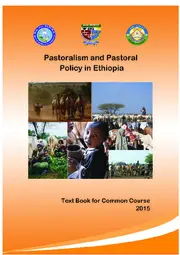
Pastoralism and pastoral policy in Ethiopia

Publication, 01 April 2015

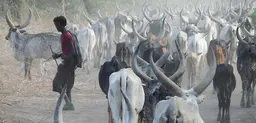
A man is surrounded by cattle on a dusty trail.
Mitigating farmer-herder conflict

Archived Project

A man and a horse plough a dry-looking field.
Drylands and climate-resilient development – valuing climatic variability

Event on 29 September 2021

People and cattle in an arid landscape
MOOC on ‘pastoralism in development’: an online learning journey

Active Project

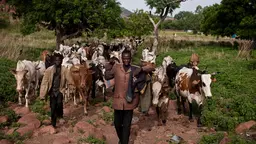
Cattle herds settle on village fields.
The Sahelian Great Green Wall: start with local solutions

Insight, 04 February 2021

A herd of goats.
Farmer-herder conflict: open your eyes, change the narrative, find solutions

Insight, 10 November 2020

Millions of Kenyans depend on the Ewaso Ngiro river and its tributaries, but over-abstraction and changing weather patterns are reducing river flows (Photo: Denis Onyodi/Kenya Red Cross Society, Creative Commons via Flickr)
Building research capacity for sustainable water and food security in drylands of sub-Saharan Africa (BRECcIA)

Archived Project
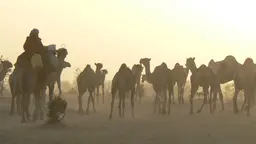
A pastoralist with camels in Niger. Pastoralists use resources flexibly and adapt to climate variability more easily than many other groups. State policies that favour settled agriculture are more of a challenge (Photo: Stephen Andersen/IIED)
Does climate change cause conflicts in the Sahel?

Insight, 13 September 2016

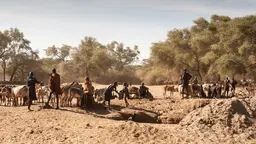
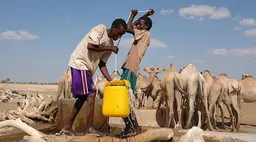
Pastoralists pull water from a well near Denan in the Somali Region of Ethiopia for their camels. (Photo: Andrew Heavens, Creative Commons via Flickr)
Pastoralism and policy training: addressing misconceptions and informing dialogue

Active Project

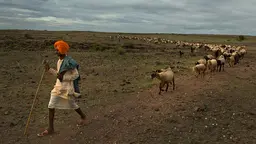
A male shepherdwith a stick leads dozens of sheep winding behind him on a dusty trail
Valuing variability

Article

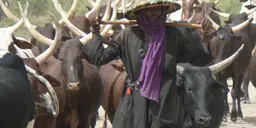
WoDaaBe pastoralist with his cattle.
Pastoral livelihoods and climate change in Niger

Archived Project

Related tags
Pastoralism
Conflict
Sahel
Climate change adaptation
Climate finance

Footer

  • News and insight
    • Insights
    • News
    • Events
    • In conversation
    • Podcasts
  • Our approach
    • Manifesto
    • Partnerships
    • Process
    • Impact
    • Hidden handbrakes
  • Publications
    • About publications
    • Accessibility
    • Privacy policy
    • Media centre
    • IIED Europe
  • About
    • Contact us
    • Raise a concern
    • Accountability
    • People
    • Jobs and internships
Subscribe to newsletters back to top

© 2026 International Institute for Environment and Development (IIED)

Accessibility Privacy policy Terms and conditions Cookie preferences