Countering desertification and defusing climate wars: why myths matter
The 16th session of the Conference of the Parties of the United Nations Convention to Combat Desertification concluded last week in Riyadh, Saudi Arabia. In the wake of the talks, IIED’s David Pertaub and Florence Crick explore the concept of ‘crisis narratives’ and the harm they cause, and explain why it’s time to set the story straight on the drylands.



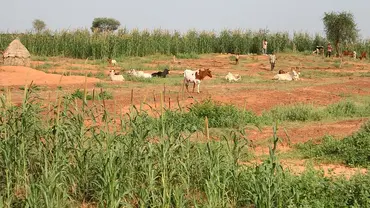
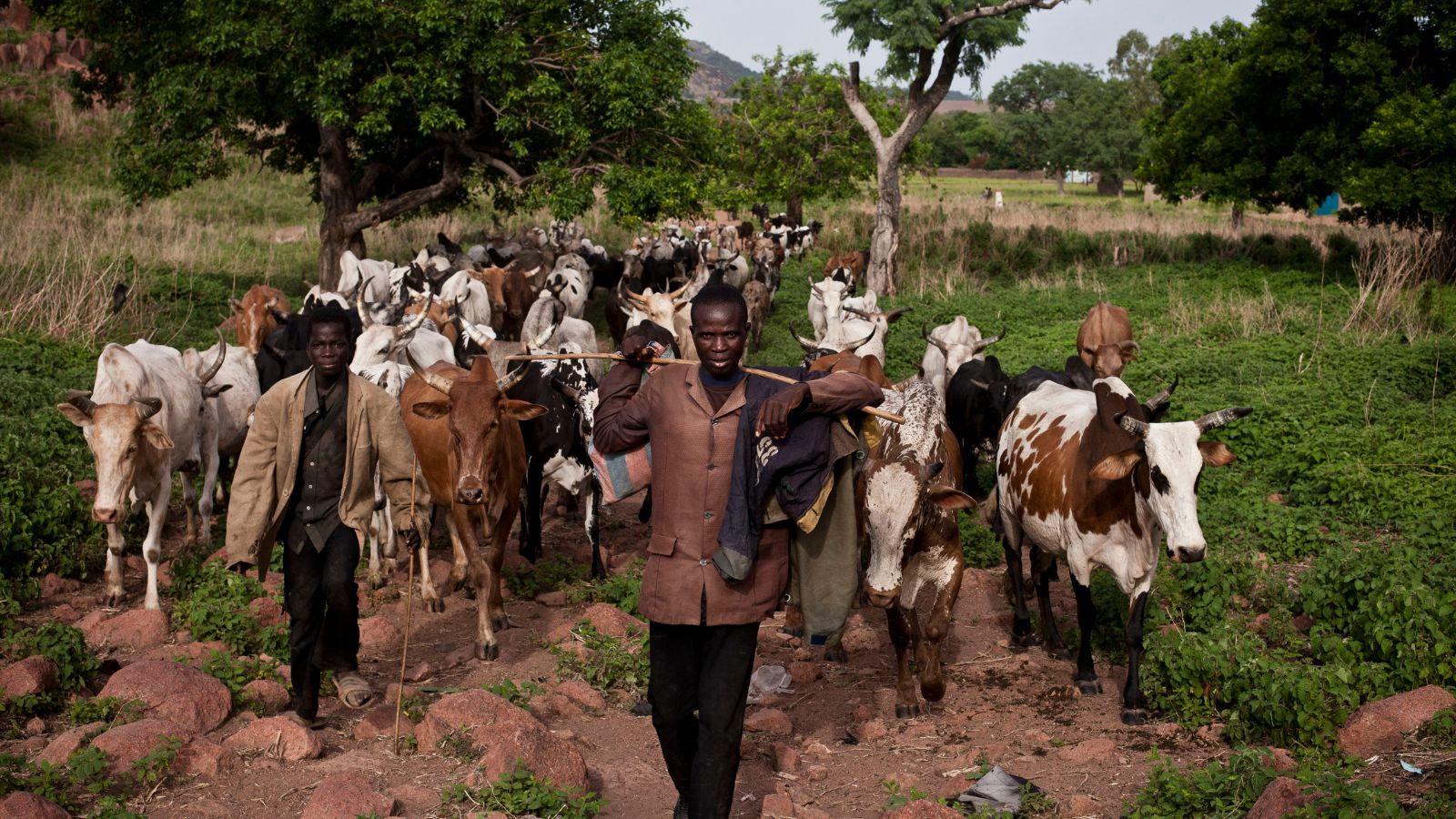
Livestock and farmers walking through drylands in Chad (Photo: Gilles Coulon)
Last week, all eyes were on Riyadh, Saudi Arabia, where the 16th session of the Conference of the Parties of the United Nations Convention to Combat Desertification (UNCCD COP16) was taking place. With the talks now over, it’s time to reflect on the enduring power of ‘crisis narratives’ in international development.
Crisis narratives, as defined by Emery Roe, are simplified cause-effect stories that policymakers and donors rely on to manage uncertainty and complex problems. They offer clear diagnoses and straightforward policy prescriptions, often framed in catastrophic terms to heighten their urgency.
While these narratives are undeniably useful for mobilising resources and uniting stakeholders to act, they are also deeply flawed and frequently based on colonial prejudices. By oversimplifying complex issues, they perpetuate harmful stereotypes and enable policies that harm the very people they aim to help. In short, they are a Trojan horse. We need to be very careful about the policy agendas hidden inside them.
Climate wars and the desertification crisis
Set up in the wake of extended droughts in Africa’s Sahel region in the 1970s and 1980s, the UNCCD was originally created to address an urgent problem: the seemingly relentless advance of the Sahara into crop farming areas and the related ‘destructive’ practices of local communities.
Activities and initiatives under the UNCCD umbrella have since evolved beyond this original framing. However, the basic underlying premise – that of a ‘desertification crisis’ in dryland areas – remains firmly in view.
Concerns about drought due to the global climate emergency only serve to reinforce this. And the more recent but complementary narrative around the ‘climate security crisis’ or ‘climate wars’ adds the view that climate change is the cause of increased violent conflict in drylands.
Both these narratives have been largely debunked in the research literature. They are far too simplistic and reductionist, and have little genuine explanatory value.
Still, surely they are useful for advocacy and convening a diverse coalition of actors from both the global North and global South? And now that desertification has been institutionalised in the UN system, isn’t it simpler and more effective to correct misunderstandings by working within the existing system?
The reality is that embracing these ‘quick-fix’ crisis narratives comes at a very high price. One might even describe it as a pact with the devil.


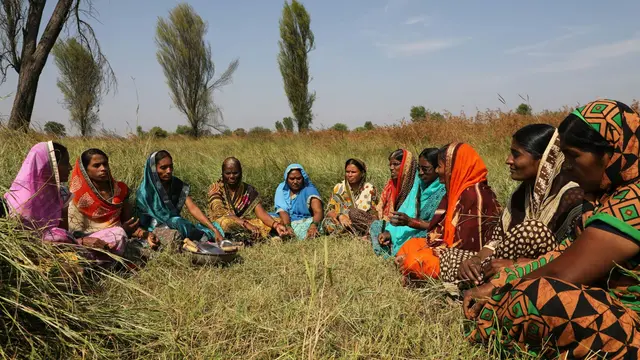
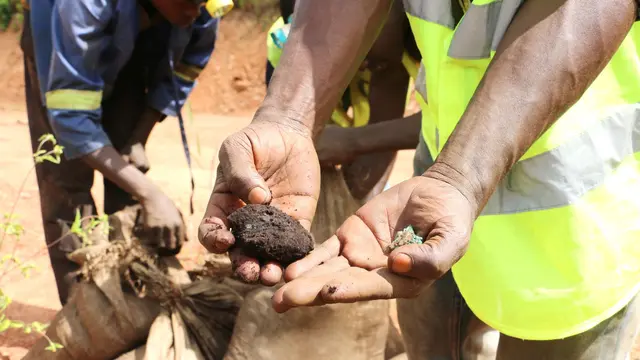
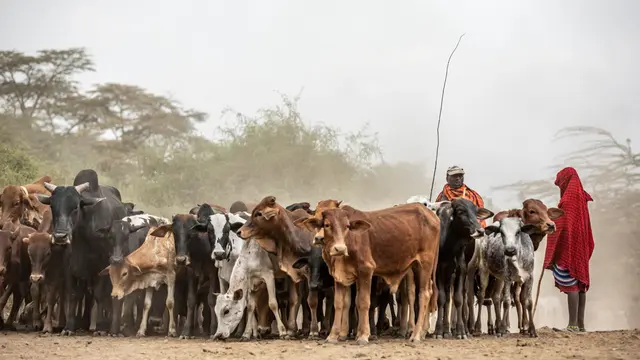
Photos like the one on the left, taken in Chad, in the Sahel, are often used to promote the desertification narrative; however, the other two images, also taken in Chad at a different time of year, tell a very different story – one of prosperity and plenty (Photos: Gilles Coulon)
The case for a convincing ‘counter-narrative’
Narratives are not innocent fables. Part of their appeal – and their power – comes from the fact that they echo some very enduring, influential and demonstrably false colonial-era myths and stereotypes about the rangelands.
These myths have been, and continue to be, used to justify the marginalisation and dispossession of local people, particularly pastoralists. They sanction age-old development interventions that favour the interests of some actors, often external, over others. Rather than building resilience to climate change, they can increase the overall vulnerability of the most disadvantaged local people.
What is needed for real transformative change is not a rehashing of discredited old tropes. Instead, we need to elaborate an effective and convincing ‘counter-narrative’ – a story that empowers rather than subjugates. We need to tell a clear story about the drylands, grounded in empirical research, but simple and compelling enough to replace the oppressive colonial narratives. A story that provides a positive programme of action, rather than a fragmented critique of existing practice.
Grounded in the latest multi-disciplinary research, the ‘valuing variability’ paradigm completely upends the traditional storyline: it provides development actors with a new entry point and an opportunity to reframe their interventions.
The starting point should no longer be that drylands are degraded and especially vulnerable to climate change – places where conflict is inevitable.
Narratives for the drylands: comparing colonial, crisis and 'valuing variability' narratives
Telling a new story: resilient drylands
Drylands are not arid wastelands, but areas of opportunity for those who understand them. Dryland livelihood systems (particularly extensive mobile pastoralism) are especially well suited to the climatic unpredictability of their environment. Local people are already experts in adaptive management and sustainable resource use; they have the tools to be uniquely resilient to climate change, and they have established traditions of cooperation and mutual assistance.
Ill-conceived and inappropriate development initiatives, coupled with cultural, economic and political marginalisation, are the real drivers of climate vulnerability and conflict. Interventions that address climate vulnerability as a means of reducing conflict are doomed to fail and will not lead to any long-lasting change.
Policies and projects should start with this local expertise and knowledge. They should engage with local governance institutions and production methods proven to work in the drylands. Above all, policies should be accountable to the needs and preferences of all citizens in the drylands.
Narratives matter. Let’s make sure we’re telling the right ones.
Additional resources
- Journal article: Depicting decline: images and myths in environmental discourse analysis, Tor A. Benjaminsen (2021)
- Book: Valuing variability: new perspectives on climate resilient drylands development, Saverio Krätli (2015)
- Book: The political economy of soil erosion in developing countries, Piers Blaikie (1985)