Can AI support locally-led nature restoration?
As AI tools begin to enter nature restoration work, they offer new ways to support biodiversity monitoring, farming advice and access to funding. But for locally-led organisations, real benefits will depend on whether these technologies are transparent, accessible and designed to strengthen – rather than undermine – community rights, local leadership and data sovereignty.

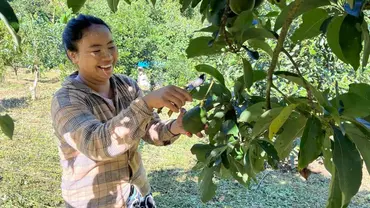
What advice would AI give local communities in Viet Nam that are growing forages to prevent soil erosion and improve soils as well as provide livestock feed? (Photo: Alliance of Bioversity International and CIAT, via Flickr, CC BY-NC-SA 2.0)
As artificial intelligence (AI) gains more users around the world, questions are emerging about how to make sure its use is ethical and sustainable. For locally-led organisations working on nature restoration initiatives, the potential is intriguing – but so are the risks.
Imagine a scenario: you’re working on a locally-led agroforestry project in northern Viet Nam. After a series of community meetings, smallholder farmers decide to plant new varieties of fruit trees suited to local soil and climate conditions. As the trees begin to grow, farmers need timely and trusted agricultural advice. But the project’s technical team is based in Hanoi and regular travel to remote areas is difficult.
Then you hear about a new tool: an AI-powered chatbot designed to support extension workers and farming communities. Farmers can send questions in their local language via text, voice or images, and receive AI-generated advice based on a large agricultural knowledge base.
Would you use it?
The tool could transform how information is accessed and exchanged between remote communities and technical experts, making support readily available. But the AI could also lead to significant problems – it could provide poor advice risking food security for many, or it could widen the gap between more and less tech-savvy farmers, perpetuating existing inequalities.
AI is a thorny area with potential and serious risks to consider.
To explore these issues, IIED’s Reversing Environmental Degradation in Africa and Asia (REDAA) programme commissioned research examining the scope for AI to support locally-led nature restoration initiatives.
The report reviews 68 AI tools used across nature conservation and related fields, examining their functions, accessibility, cost and technical requirements. The goal was to unpack potential applications, prospects, risks and barriers that locally-led nature restoration organisations may face when adopting these new technologies.
The findings point to promising opportunities for AI to support more effective and inclusive restoration, but they also highlight the importance of caution.
Opportunities for locally-led restoration
One of the clearest areas where AI could support nature restoration is biodiversity monitoring.
AI-powered tools can analyse images and sounds to identify species and track ecosystem health. Camera traps, acoustic sensors and satellite imagery are more cost-effective and time-efficient than manual monitoring. And, if integrated with local research systems or governance structures properly, AI tools could deliver these benefits at granular and contextually relevant scales.
Livelihoods and local-level businesses could benefit from AI tools, too. Virtual assistants and chatbots could provide bespoke training and guidance to smallholder farmers or community groups working on restoration.
AI tools may also help organisations navigate complex grant systems, improving access to funding opportunities and assisting with grant proposal writing.
Significant risks to consider
The lack of transparency in many AI models is a significant area of concern. Often described as ‘black boxes’ due to the opaque nature of their decision-making processes, these systems make it difficult to understand how conclusions are reached, undermining trust.
AI bias can prioritise certain species, ecosystems or regions due to developer assumptions or limited data. In data-poor regions, unvalidated AI systems may lead to flawed recommendations with harmful ecological consequences. ‘Hallucinations’ are also a common feature in AI tools, where systems produce incorrect but confident responses due to missing context.
Indigenous Peoples and local communities can contribute valuable knowledge to AI systems, but they may lose control over how that information is used. This could threaten data sovereignty and reinforce power imbalances.
Some tools also raise surveillance concerns. Drones, remote sensing systems or monitoring platforms could potentially be used to track ecosystems or communities – without consent.
Many organisations working at the community level still lack reliable access to basic equipment such as laptops, smartphones or reliable internet connectivity – making AI adoption unrealistic.
Moving forward with care
Participants in the research expressed cautious interest in exploring how AI might support restoration work.
Some noted that AI could help reduce technical barriers to community participation, strengthening local data ownership. Others saw potential in advanced tools such as drones and AI monitoring systems, provided they are affordable, accessible and linguistically inclusive.
But many raised concerns and highlighted the importance of co-designing tools with local organisations and communities, ensuring ethical protocols for data collection and community-driven approaches that protect community rights and data sovereignty.
The adoption of AI should be culturally grounded and driven by community needs rather than technological novelty.
While it could enhance locally-led nature restoration, the challenge remains in ensuring it’s used in ways that strengthen – rather than undermine – local leadership, accountability and meaningful participation.