Addressing the nutrition gap in climate action
The impact of climate change on nutritional outcomes is frequently overlooked, and climate adaptation actions often fail to address this vital issue. Sarah McIvor and Annet Nakyeyune are co-developing nutrition-sensitive adaptation plans with World Vision and communities in Tanzania and the Solomon Islands.



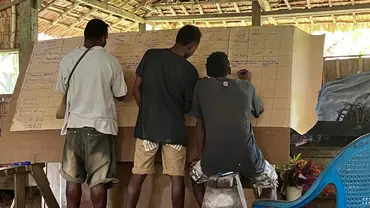
A community member inputs into the climate risk assessment for food and nutrition security in Ngwamanota community, Kishapu District, Northern Tanzania (Photo: World Vision)
Later this month, experts from around the world will gather to discuss how to achieve ‘sustainable food for global health’ at the International Congress of Nutrition in Paris.
We will present initial findings from a joint research project with World Vision Ireland, as part of their Irish Aid-funded NOURISH programme, which looks at the effects of climate change on nutrition, food security and equity, and develops practical solutions.
Our research with communities in Tanzania and the Solomon Islands suggests that climate change impacts nutrition outcomes and that considering nutrition must play a crucial role in effective climate action.
Historically, nutrition and dietary diversity in relation to climate change have received less attention compared with research on climate impacts on agricultural productivity, particularly cereal crops. While this focus can help build climate resilience and meet calorie deficits, focusing on too few crops can result in insufficient dietary diversity and reduced intake of nutritious foods containing essential vitamins and minerals.
We need to foster collaboration between climate, agriculture and nutrition specialists, and take a holistic approach to climate adaptation that incorporates diet and nutrition into climate responses.
Developing community-led nutrition-sensitive adaptation plans
IIED and World Vision have been working with communities in Tanzania and the Solomon Islands to develop nutrition-sensitive, climate adaptation plans.
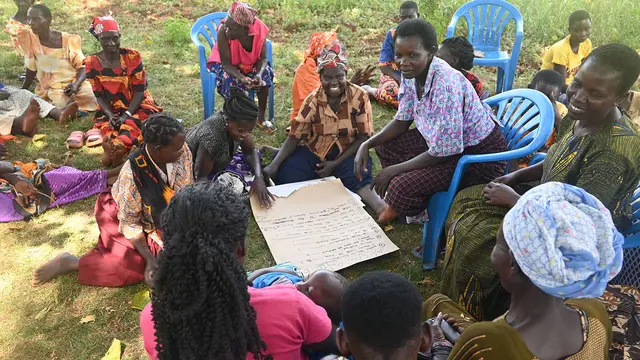
We created safe spaces for children, young people, men and women to outline how climate change was impacting their nutrition and food security, what coping strategies they use, and explore their long-term adaptive solutions to overcome these challenges.
Climate change and nutrition in Tanzania and the Solomon Islands
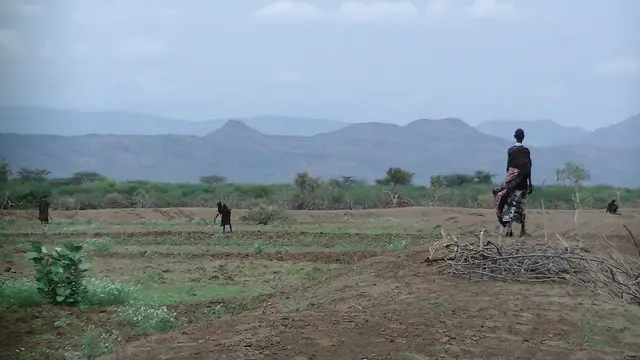
We worked with the Ngwamanota community in Kishapu District in Northern Tanzania to explore nutrition-sensitive options for climate adaptation. Most people here are involved in subsistence agriculture and livestock rearing.
Alarmingly, children between the ages of 7-12 years told us they often skip meals as a coping strategy. This maladaptive practice in a community facing child stunting exacerbates the severity of impacts, including nutritional and health outcomes. Climate action should ensure households – and especially children – don’t need to resort to this option.
In the Solomon Islands, cyclones can impact the area for two to three weeks, restricting access to the sea, the market and the production of staple foods.
The village of Toroa on Makira Island is home to approximately 250 residents who depend on subsistence farming and fishing for their livelihoods. Surrounded by swaying coconut trees in a peaceful bay, Toroa highlights the reality of being both left behind and vulnerable: there are no telephones, electricity, health centres or secondary schools.
To cope with landslides and flooding, people plant multiple gardens in various locations. Yet even so, an older man reported that he had lost all five of his food gardens, leaving him facing worsening poverty and starvation.
Communities at the forefront of driving effective climate and nutrition action
As climate impacts worsen and affect food security, families decide which meals to prepare based on availability rather than nutritional requirements. We observed a significant dependence on past experience to cope with current climate impacts, and while some coping strategies may prove helpful in the short term, many will come under increasing pressure under more unpredictable and heightened climatic changes.
Community-led approaches are crucial for reaching the most vulnerable and those furthest behind.
We co-designed simple climate risk and vulnerability assessment tools with community members that greatly enhanced engagement across various social groups.
This community collaboration produced well-contextualised, nutrition-sensitive adaptation plans that clearly outline the solutions and actions communities will undertake, as well as what support they need from others, including government, NGOs and other stakeholders such as research institutes and donors.
Involving children in discussions brought crucial perspectives that may have been overlooked by other social groups, underscoring the importance of including children's voices in climate action initiatives, particularly in relation to access to food and nutrition.
Working alongside communities in Tanzania and the Solomon Islands has reinforced our understanding that local communities are not just victims of climate change but dynamic agents of climate response, bringing forward effective solutions.
It taught us that co-creating with communities and ensuring representation of diverse social groups, including children, in developing adaptation plans, provides a valuable opportunity for collective reflection and learning, inclusive decision-making and renewed motivation to build resilience.
This approach encourages a shift from extractive and top-down methods to community-driven adaptation planning, leveraging existing informal and formal structures that are the foundations of community cohesion and self-help. This approach also provided the opportunity to link Indigenous and technical knowledge into a single plan for action.
Developing nutrition-sensitive climate action
Researchers in different disciplines must emerge from their technical silos and be willing to learn from each other’s disciplines - and from community members – to tackle the multi-dimensional nature of climate impacts and ensure important issues such as nutrition are not overlooked.
We will be publishing a guide on how to conduct community-led nutrition-sensitive climate adaptation planning later this year.
We would like to acknowledge the contributions of World Vision Ireland (Clodagh McLoughlin and Maurice Sadlier), World Vision Tanzania (Irene Abusheikh Gillah) and World Vision Solomon Islands (George Mae) and IIED project manager Marion Pobo.