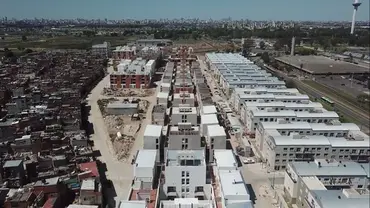
State of our cities. Participatory climate action in low-income urban settlements: evidence from cities in Mexico, Brazil and Argentina
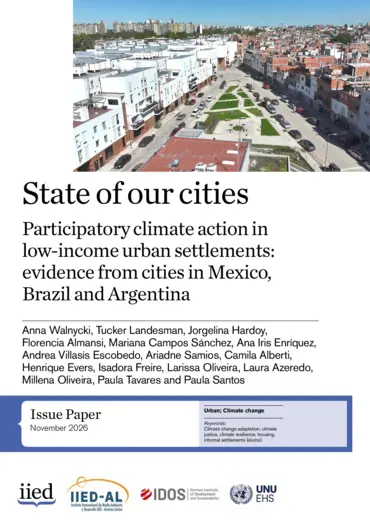
Low-income communities, who are most exposed to climate risk and have the lowest carbon footprints, are routinely excluded from processes meant to address climate challenges.
Drawing on five urban labs in Argentina, Brazil and Mexico, this paper shows that low-income settlements are not only sites of vulnerability but also essential sites of climate action.
Through co-production, quick-win pilots and nature-based solutions, the labs shaped master plans, a national upgrading programme and a ministry-run heat monitoring. The lesson: urban climate action often hits governance problems before hitting technical problems.
To resolve this, the institutions, funders and policymakers working on urban climate action must ensure the legitimacy of low-income and vulnerable settlements before trying to to scale climate action projects; and where basic needs go unmet, delivering mitigation initiatives alongside adaptation measures can support transformative climate action.
Cite this publication
Available at https://www.iied.org/22783iied