Rebuilding trade rules through WTO reform: what next for sustainable development?
At a recent World Trade Organization (WTO) conference, top of the agenda was the organisation’s reform and the vital opportunities this provides to address pressing trade challenges. Anna Ducros and Laura Kelly examine the focus and outcomes and ask, what does this mean for global trade and sustainable development – and where do we go from here?



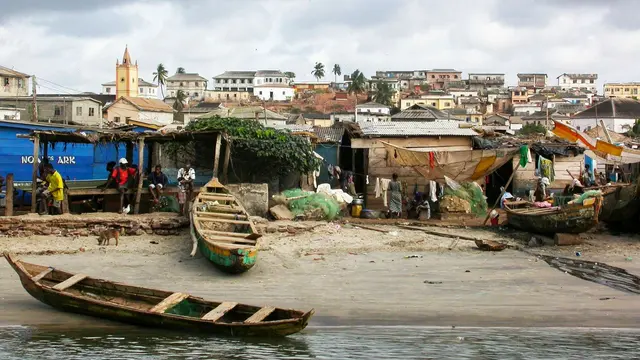
Fishing is a main source of livelihood for the families of Elmina in Ghana and community members often sail days in search for food and income (Photo: Seyiram Kweku via Unsplash)
At the 14th WTO Ministerial Conference (MC14) in Yaoundé, Cameroon, WTO reform was at the forefront of discussions. Many conversations came back to the fact that international trade – and the systems supporting the flow of trillions of dollars worth of goods and services every year – is under considerable stress.
And while trade value is at a record high, the international trade environment is becoming increasingly fragmented and characterised by geopolitical maneuvering, high uncertainty, rising protectionism and the constant reconfiguration of value chains.
For decades, international trade has been at odds with inclusive, sustainable development. Though central to its core mission, the WTO has failed to ensure that trade supports both the development and environmental sustainability of all countries. This is not new: Small Island Developing States (SIDs) and least developed countries (LDCs) often navigate tight fiscal space and low investment in their economies, leading to compromises between sustainability for economic gain and access to global markets.
Against this background, director general Ngozi Okonjo-Iweala noted that over the last 40 years, the WTO system has failed to adapt and has left too many behind. One thing was impossible to ignore: WTO reform is essential – and the opportunity to bring critical change in international trade, climate solutions and geopolitics.

Yellow bass being prepared outside of the 14th Ministerial Conference in Yaoundé. A new WTO agreement aims to reduce harmful fishing subsidies (Photo: Anna Ducros, IIED)
What did the WTO conference achieve?
Above all, the conference saw calls for a functioning rules-based global trade system from civil society, the private sector and governments. It is often assumed that businesses want limited regulation. But many business representatives at MC14 were in favour of a rules-based order, with Microsoft highlighting clear rules as key to increasing trade.
Meanwhile, many European Union companies argued for the European Commission regulation on combating deforestation associated with tropical commodities to improve environmental outcomes.
Although trade ministers failed to agree a plan of how or when to undertake WTO reform during MC14, delegates left with draft texts of the ‘Yaoundé package’. These include a draft plan for WTO reform as well as drafts of a ministerial decision on electronic commerce, of a moratorium on the WTO Agreement on Trade-Related Aspects of Intellectual Property Rights (TRIPS) violation and situation complaints, and of a special and differential treatment package.

Anna Ducros (IIED), Sebastian Mathew (independent consultant), Gaoussou Gueye (African Confederation of Artisanal Fisheries Organisations), Leontine von Levetzow (BMZ Germany) and Megan Jungwiwattanaporn (Pew Charitable Trust) discuss progress under the WTO Agreement on Fisheries Subsidies (Photo: Grace Evans/Pew Charitable Trust)
Building on progress to align sustainability and trade
Clearly, more progress is needed, and the WTO can still ‘do better’. But MC14 also highlighted examples of positive progress the reform process can build on. For example, even in this moment of geopolitical strife, it was clear South-South trade relations are strengthening and that environmental concerns remain built into global trade initiatives.
MC14 was also an opportunity to celebrate the WTO agreement on fisheries subsidies – an international ban on the most harmful fisheries subsidies – that entered into force in September of last year. Subsidies reform offers a unique opportunity for countries to reinvest in their coastal communities, such as aligning social protection schemes with fisheries management plans or developing marine protected areas.
To support this, the WTO has established a new Fish Fund which provides financial support to developing countries seeking to undergo subsidies reform.
By committing to further negotiations for a more comprehensive fisheries agreement (PDF) the WTO has shown that it can – and is willing to – align environmental sustainability and trade.
Important questions remain. For countries undergoing reform, what can the budget line for environmentally harmful fishing subsidies be used for instead? How can these positive investments be tailored to local realities, centering on the priorities and needs of small-scale fishing actors? These questions were explored at a side event in the trade and sustainability hub that ran alongside MC14.
In terms of embedding environmental sustainability into trade agreements, the WTO has a chequered history, with low-income countries fearing their use as non-tariff barriers.
A new initiative that could help is the Integrated Forum on Trade and Climate Change. Established by Brazil and Australia, this is a platform for negotiators, experts and business to discuss how to better integrate environmental concerns into trade negotiations and vice versa. This aims to help build mutual understanding of countries’ different perspectives and how issues such as environmentally harmful subsidies could be addressed.

The view from the Palais de Congrès in Yaoundé during MC14, where a key focus was on WTO reform (Photo: Anna Ducros, IIED)
What key reforms should the WTO focus on now?
The ongoing WTO reform process is a vital opportunity to address the challenges of the global trade landscape and embed issues important to low-income countries. Key issues now for the WTO and its members include:
- Maintaining a focus on the links between trade and sustainable development, across a range of sectors. For example, advancing the fisheries subsidies negotiations should include a more comprehensive set of subsidies that are environmentally harmful and consideration of how subsidies, and their reform, impact social and economic wellbeing of coastal communities.
- Special and differential treatment (SDT) for developing countries and LDCs must remain central to WTO commitments, recognising the diversity of economic realities in this group and adopting a more granular approach to SDT to suit their different circumstances. Local contexts must be carefully considered to ensure socioeconomic conditions support actors and their ability to engage in sustainable resource use.
- Trade reforms also need to be linked with other upcoming international discussions that impact sustainable economic development, including the World Bank Spring Meetings later this month, the United Nations Framework Convention on Climate Change (UNFCCC) intersessional in June, the UN Convention on Biological Diversity (CBD COP17) in October, and the UN climate change conference (COP31) in November.
Most importantly, reform needs to be supported by political will and collaboration, as well as backed by resources to ensure that a rules-based order can be restored that can achieve economic and environmental benefits for all.
Further reading
Critical minerals, trade rules and industrial strategies: who benefits?, Lorenzo Cotula, Jesse Coleman, Lindlyn Tamufor Moma (2026), IIED Briefing
Breaking down siloes: reforming financing and trade for climate adaptation in LDCs, Laura Kelly, Anna Ducros, Sejal Patel (2025), IIED Briefing
Insight: A storm overhead and a leaky bucket: reflections from the Spring Meetings, Isatou F Camara (2025)