SECURe: Strengthening and Enhancing Contextual Urban Resilience
Urban living labs have been acclaimed as an effective way to engage a wide range of city actors in the co-creation of resilience solutions. IIED has produced an innovative approach to urban labs that has been tested in cities in India and South Africa.

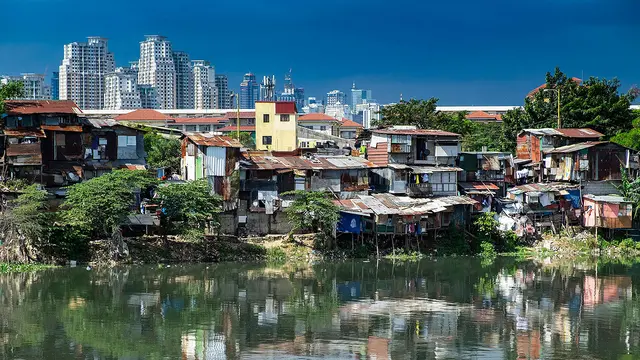
Aerial view of Sao Paulo showing contrasting types of housing (Photo: Lucas Marcomini, via Unsplash)
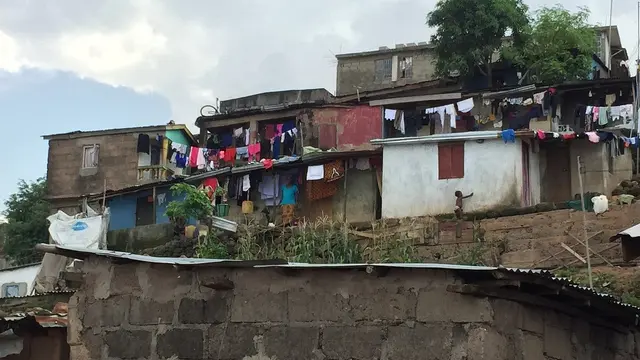
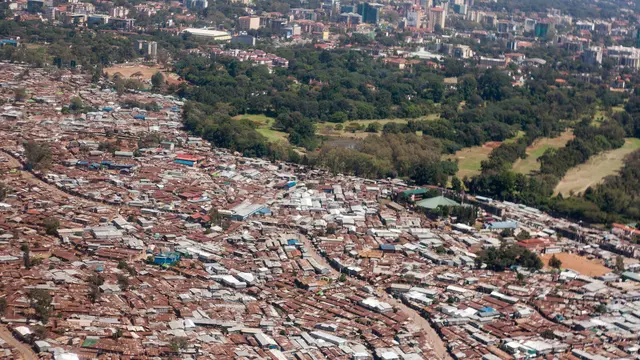
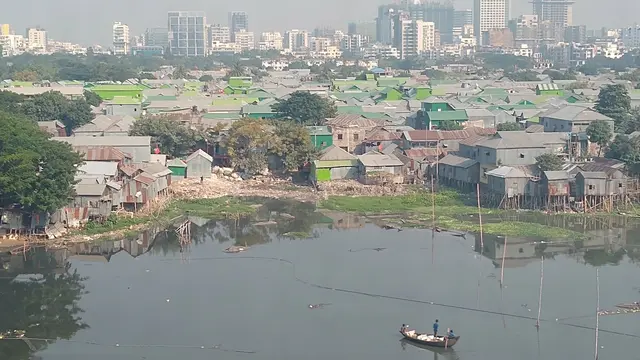
Urban development in low- and middle-income countries drives the accumulation of climate risk globally, and will continue to do so over the coming decades. However, this risk is unevenly distributed, disproportionately affecting residents of informal settlements due to their heightened vulnerability.
Despite these risks, existing urban governance structures marginalise informal settlement dwellers, restricting their access to resources and decision-making processes. For this reason, exclusionary governance is an urgent policy priority for urban resilience.
Cities are increasingly recognised as complex systems where urban development and adaptation are shaped by dynamic socio-economic, environmental and technological interactions. In response, urban governance has shifted towards collaborative innovation and experimentation, moving away from traditional top-down planning approaches.
Within this evolving governance landscape, urban living labs (ULLs) have emerged as a promising approach that brings together academia, industry, government and civil society to collaboratively co-create and test solutions for urban resilience.
Despite this promise, there is room for improvement in ULL design, particularly by integrating formal and informal governance structures and the urban economy. Adaptation is inherently political and cannot be reduced to innovation. Different city groups tend to hold conflicting priorities and visions of what a resilient city should look like. This leads to political struggles over public investments that cannot be resolved through technical innovation alone, even when pursued through collaborative design and testing.
What did IIED do?
The Strengthening and Enhancing Contextual Urban Resilience (SECURe) project was developed to address the challenge of building resilience through urban living labs.
Supported by the Adaptation Research Alliance and funded by the climate adaptation and resilience programme of the UK’s Foreign, Commonwealth and Development Office, SECURe was implemented in partnership with Participatory Research in Asia (PRIA) and ICLEI Africa.
IIED developed and tested a structured framework to guide the design of urban living labs – including a toolkit for applying the framework – accounting for how research and decision-making interact while driving urban risk and development.
Through this process, a suite of tools and methodologies have been developed to support organisations facilitating urban living labs, ensuring their impact extends beyond isolated interventions.
These resources enable researchers and practitioners to navigate and influence urban governance and resilience investments, including infrastructure development, basic service delivery and climate finance.
By piloting these methodologies, SECURe has strengthened the resilience of marginalised groups living in informal settlements in India and South Africa.
Development of the SECURe approach
The SECURe project leveraged expertise from policy, research and practice organisations across the world, and conducted consultation that included:
- Co-creation workshops: four regional workshops with over 100 organisations from Latin America, sub-Saharan Africa and Asia that explored urban risk profiles, governance structures and resilience challenges, and shared insights and intervention strategies
- Case studies and literature review: nine case studies were gathered from practitioners and researchers engaged in urban resilience initiatives, and a comprehensive literature review integrated insights from urban political ecology and science and technology studies to ensure the framework was theoretically grounded.
- Engagement with an advisory committee: a group of 20 urban resilience experts, including donors, researchers, city networks and practitioners, was formed to review and refine findings.
Piloting the framework and its impact
Ajmer, India: the SECURe framework was deployed in seven informal settlements across five wards, where marginalised communities, including Scheduled Castes, Scheduled Tribes and migrant populations, face significant challenges in water security, sanitation and waste management.
Led by PRIA, the intervention addressed water scarcity, poor sanitation infrastructure and governance inefficiencies, all of which disproportionately impact women. Some households received water only once every 48 hours, while others depended on costly private water tankers. Climate change exacerbated these issues, causing flooding and the spread of waterborne diseases.
The SECURe framework facilitated a multi-stakeholder engagement process, using co-production methodologies to address power imbalances and exclusionary governance structures. The pilot helped integrate community-based organisations and women self-help groups into formal governance, improving the delivery of water, sanitation and hygiene services, and enhancing women's participation in decision-making.
Durban, South Africa: the SECURe framework was piloted in two informal settlements, in collaboration with ICLEI Africa, the University of KwaZulu-Natal and IIED. These settlements face climate-related risks, particularly flooding, disrupting livelihoods and basic services. The intervention focused on co-producing knowledge to strengthen community-based flood early warning systems.
The pilot empowered informal settlement residents, fostering self-organisation and conflict resolution within and between settlements. It also helped redress power imbalances between communities and municipal governments. Knowledge co-production methodologies such as structured learning exchanges, community-based research and arts-based engagement facilitated dialogue among city actors.
The SECURe framework informed broader city-wide strategies, ensuring informal settlements are included in municipal resilience planning. The pilot helped embedding and upscaling the Community-Based Flood Early Warning System (CBFEWS) into city policy based on co-produced knowledge, demonstrating how community-driven systems can enhance urban resilience.
Urban living labs for resilience: scaling impact
Following the piloting of the SECURe framework, IIED and partners are now working to scale the impact of climate solutions in cities of India, Kenya, Myanmar and the Philippines.
The project partners are strategically designing and deploying urban living labs in Ajmer and Jodhpur (India), Dunga (Kenya), Yangon (Myanmar) and Iloilo (The Philippines), so they can influence municipal and corporate social responsibility funding. Find out more.