Climate change rivals war for disruptive impact on life in Mali
Survey finds drought a huge factor in people being driven from their homes.
Droughts have emerged as one of the top factors driving people from their homes in war-torn Mali as the effects of climate change worsen – even outranking conflict for some groups of migrants.
Research by IIED also shows the cost of relocating can massively exceed a person’s annual income if they’re forcibly displaced.
IIED, with partners DanChurchAid and Tassaght, surveyed more than 400 households from the Mopti region, considered one of the country’s most fragile due to conflict and economic struggles.
Respondents were placed in three categories: those who were permanently displaced, those who migrated temporarily to find work, and those who chose to stay put. IIED interviewed migrants and displaced people originally resident in the Mopti region, either there or in the location to which they had been forced to move.
IIED and DanChurchAid are now calling on developed countries, as well multilateral funds like the Fund for Responding to Loss and Damage, the Global Environment Facility and the Green Climate Fund, to increase financial disbursements to conflict-affected countries like Mali to enable them to address the climate-driven losses they are suffering – but which they have not caused.
Governments and international agencies should also invest in integrated data systems that record Malians’ socio-economic vulnerability alongside their exposure to climate and conflict risks. This will help target social protection and adaptation schemes effectively, reducing inefficiency while maximising reach.
Key findings
- Survey respondents perceived droughts as having become more common in recent decades, happening most years. Three decades ago, villagers told IIED, droughts took place about every second year
- Households that experienced fewer climate risks were 2.3 times less likely to be displaced and 1.5 times less likely to have to migrate for work
- Conflict exposure significantly raised the likelihood of forced displacement. Households that faced less violence and insecurity were three times less likely to be uprooted
- Displaced people said conflict was the factor that most influenced their relocations, closely followed by “financial and food crisis caused by drought”. Those who migrated voluntarily ranked the effects of drought highest
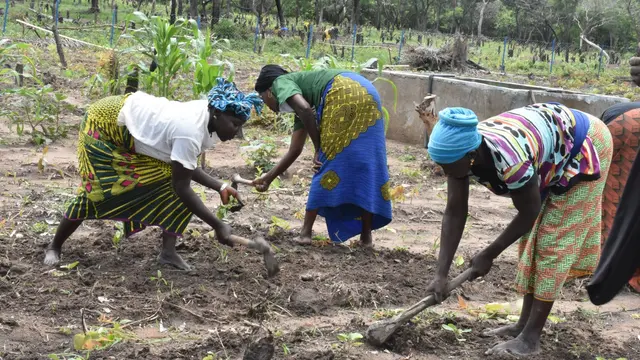
- The temporary migrant group told us they faced losses equivalent to 90% of their annual income, and displaced households a staggering 184%, following the events that forced their most recent relocation. Even people who stayed where they were suffered huge losses after the most recent environmental disaster they experienced, worth about 75% of their annual income
- Persistent sadness and feelings of hopelessness were reported by over half of displaced households, and more than 60% reported a significant loss of cultural identity including severed ties to ancestral lands. Temporary migrants experienced heightened psychological stress due to social fragmentation and precarious living conditions
Ritu Bharadwaj, an IIED principal researcher and the paper’s lead author, said: “Families who rely on agriculture and livestock are really vulnerable to environmental disruptions – especially in war-torn areas. Lacking many assets or alternative sources of income, they are often forced to undertake distress migration to sustain themselves.
“A weak social safety net compounds these vulnerabilities. With food assistance or publicly backed employment schemes often unavailable, households are left with few options but to move away.
“In the current climate of funding cuts and political backlash in rich countries, vulnerable nations are facing an even greater shortfall in climate finance.
“The best way of using what money is available is getting it to the local level, where it can generate real value.
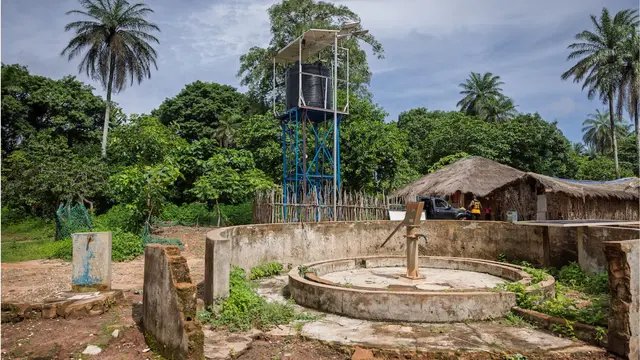
“Research suggests funding things like irrigation projects or water retention infrastructure is much more effective than simply handing out cash year after year – and makes communities more resilient in the face of future climate impacts.
“This means aid recipients will become less dependent on foreign help over time.”
Mattias Söderberg, global climate lead at DanChurchAid, said: “This research highlights the fact that climate change is a fundamental driver for instability and human suffering.
“To prevent future conflicts, we must address the threats posed by climate change and invest in adaptation now.
“It is clear that climate change forces people to leave their homes in order to survive. However, richer countries can help create stability by taking responsibility and increasing funding for adaptation and efforts to address loss and damage.”
Notes to editors
- The Fund for Responding to Loss and Damage was set up at COP28
- A launch event for this paper was held on 3 April
For more information or to request an interview, contact Jon Sharman:
+44 7407 727 886, or [email protected]