Incentives for coastal conservation and fisheries management
IIED is working with partners to assess, strengthen and scale incentives for local environmental stewardship of coastal areas across Asia and Africa.

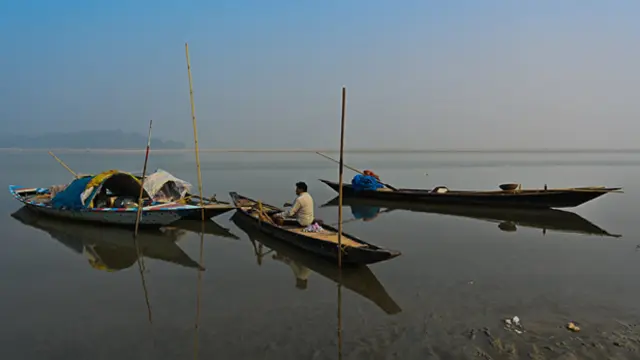
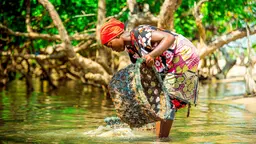
Saint Martin’s Island is home to thousands of fishers and Bangladesh’s only coral reef (Photo: Annabelle Bladon, IIED)
Coastal resource management, conservation and restoration can support sustainable aquatic food systems, with long-term benefits for people, nature and climate. But these interventions often impose costs on coastal communities – for example, a temporary loss of income or food.
These costs are not only an issue of social equity, but they can also undermine efforts to protect and restore coastal ecosystems and to manage resources for sustainability.
This can be addressed through interventions that offer positive economic incentives for coastal stewardship by resource users, enabling or motivating behaviour change by reducing the associated costs or increasing the benefits.
These incentives can be provided to individuals or communities through a range of different tools, including social protection, subsidies, market-based tools such as payments for ecosystem services, or rights-based interventions.
Incentive-based interventions can be directly linked to specific actions such as compliance with a closed fishing season. They can also indirectly enable stewardship by strengthening capacity for stewardship, or by altering contextual factors that enable or undermine capacity (i.e. economic, social, or regulatory environments), which, in turn, motivates actions.
Examples of indirect incentives are measures that strengthen and diversify coastal livelihoods and develop sustainable markets for marine resources, reducing overall vulnerability and building resilience.
However, there are challenges around incentives that limit their effectiveness and their uptake, particularly in the marine environment:
- There is lack of rigorous impact evaluation, and unintended consequences are underexplored
- Effectiveness is often limited by a lack of attention to equitable governance, and
- Innovative financing strategies are required.
What is IIED doing?
IIED is working with partners to enable more effective and more equitable coastal conservation and fisheries management through locally appropriate incentive-based approaches, with a focus on Mozambique, Tanzania and Bangladesh. The project has four main objectives:
- Build knowledge of opportunities and challenges around incentive-based approaches to coastal conservation and fisheries management, including best practices for their design, implementation, monitoring and evaluation
- Strengthen institutional, legal and policy frameworks for incentive-based approaches to coastal conservation and fisheries management in Mozambique, Tanzania and Bangladesh
- Strengthen incentives for conservation and management of select coastal areas in the target countries, including through designing, evaluating, and adapting interventions, and
- Ensure financial sustainability of selected incentive-based interventions in the target countries.
This work builds on learning from previous IIED projects, including efforts to strengthen an incentive-based approach to hilsa fisheries management in Bangladesh and to design a similar approach in Myanmar.
It also draws lessons and methods from IIED’s global work with the World Bank to leverage social protection and labour market systems, policies and programmes as a means of incentivising more sustainable fisheries management.
The project is part of the Asia-Africa BlueTech Superhighway (AABS) initiative led by WorldFish (2023-30) under the UK’s Climate and Ocean Adaptation and Sustainable Transition (COAST) Programme of the Blue Planet Fund.
While our primary goal is to strengthen incentives in the target countries, in the longer term we aim to support scaling of evidence-based incentive models across Asia and Africa through South-South knowledge exchange and collaboration.
News and updates

Additional resources
Enabling and incentivising coastal stewardship, Jeneen Hadj-Hammou, Peadar Brehony, Manuel Castiano, Anna Ducros, Emma Etchells, Simeão Lopes, Rodrigo Oyanedel, Ruth Pinto, Samiya Selim, Kokubanza Timanywa, Kate West, Annabelle Bladon (2026), WorldFish, paper
Blog: From incentives to resilience: lessons from Songo Songo’s octopus fishery, Catherine Muyonga, WorldFish (May 2026)
A practical guide for communicating interventions to strengthen coastal stewardship in Mozambique, Celma Costa (2026), WorldFish, paper
Blog: Can social protection be used to support sustainable small-scale fisheries (PDF), Julius Francis, WIOMSA newsbrief (May 2026)
Case study: Incentives for Coastal Stewardship in Cox’s Bazar, Bangladesh, Samiya Ahmed Selim (May 2026)
Reforçando os incentivos económicos para a gestão costeira em Moçambique, Manuel Castiano, Simeão Lopes (2026), WorldFish, policy briefing
Incentive-based approaches as a game changer for Zanzibar’s fisheries, Mwanahija Shalli, Julius Francis, Ruth Pinto, Annabelle Bladon, Jeneen Hadj-Hammou (2026), WorldFish, policy briefing
Video: Fish4Thought: Incentivizing coastal stewardship through social protection, WorldFish webinar (November 2025)
Strengthening incentives for coastal stewardship in Bangladesh, Samiya Selim, Ruth Pinto, Annabelle Bladon (2025), WorldFish and IIED, policy brief
Incentives for coastal stewardship in Tanzania, Kate West, Emma Etchells, Kokubanza Timanywa, Peadar Brehony (2025), WorldFish and IIED, report
Blog: Strengthening an eco-credit program in Tanzania for coastal conservation and sustainable fisheries management, Moni Mukherjee (February 2025)
Blog: Towards socially just fisheries management and conservation in Bangladesh, Alina Paul-Bossuet, Jeneen Hadj-Hammou (June 2024)
Article: Harnessing South-South collaboration: the Africa-Asia BlueTech superhighway takes off (October 2023)
Video: Connecting social protection and fisheries management, World Bank presentation (May 2022)
Blog: How social protection can support people and sustain fisheries, Annabelle Bladon, Yuko Okamura (May 2022)
Connecting social protection and fisheries management for sustainability: a conceptual framework, Annabelle J Bladon, Gunilla Tegelskär Greig, Yuko Okamura (2022), World Bank Social Protection and Jobs Policy and Technical Note
Myanmar's artisanal hilsa fisheries. How much are they really worth?, Lauren Burcham, Klaus Glenk, Michael Akester, Annabelle J Bladon, Essam Yassin Mohammed (2020), IIED working paper
The business case for investing in Myanmar’s artisanal hilsa fishery, Annabelle J Bladon, Michael Akester, Lauren Burcham (2020), IIED briefing
Financing Myanmar’s fisheries through fiscal reform, Annabelle J Bladon, Michael Akester, Essam Yassin Mohammed (2020), IIED briefing
Informing incentive-based management of Hilsa fish in Myanmar – results of a choice experiment, Klaus Glenk et al (2020), IIED working paper
Financing incentive-based hilsa fisheries management in Myanmar through fiscal reform, Klaus Glenk, Paula Novo, Wae Win Khaing, Wint War Lwin, Lauren Burcham, Essam Yassin Mohammed, Khin Maung Soe, Michael Akester, Annabelle J Bladon, Eugenia Merayo (2020), IIED working paper
Balancing carrots and sticks: incentives for sustainable hilsa fishery management in Bangladesh, Nadia Dewhurst-Richman, Essam Yassin Mohammed, Md Liaquat Ali, Kaisir Hassan, Md Abdul Wahab, Zoarder Faruque Ahmed, Md Monirul Islam, Annabelle J Bladon, GC Haldar, Chowdhury Saleh Ahmed, Mihir Kanti Majumder, Md Mokammel Hossain, Atiq Rahman, Belayet Husseinl (2020), IIED issue paper
Social protection for small-scale fisheries in the Mediterranean region – a review, FAO (2019)
Evaluating the ecological and social targeting of a compensation scheme in Bangladesh, Annabelle Bladon, Essam Yassin Mohammed, Belayet Hossain, Golam Kibria, Liaquat Ali, E.J. Milner-Gulland (2018), PLoS ONE 13(6): e0197809.