Connecting social protection with fisheries management and conservation
Social protection has untapped potential to promote environmental stewardship. IIED is working with partners to develop a vision for social protection – 'blue social protection' – that enables and incentivises more sustainable and productive fisheries, while addressing the needs of vulnerable men and women who depend on them.

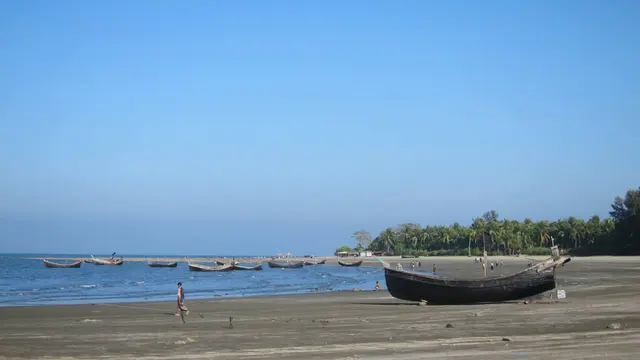
Traditional small-scale fisheries at the Brahmaputra river (Photo: WorldFish/Sourabh Dubey via Flickr, CC BY-NC-ND 2.0)
Fish stocks and marine biodiversity are in global decline, affecting not only the people who depend on the fisheries sector for their livelihoods, but also wider society.
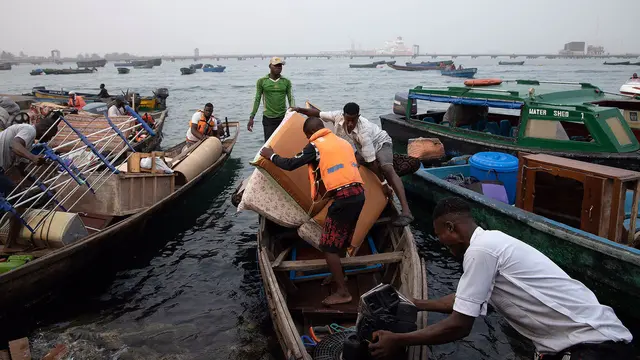
Fishers and fish workers – most of whom are small-scale workers living in the global South – face increasingly high levels of risk as overfishing, climate change and other human activities play havoc with their lives and livelihoods.
Fisheries management and conservation interventions should reduce these risks in the long term, but they usually impose costs on fishers and fish workers, such as lost income or nutrition, in the short to medium term.
These costs can undermine the legitimacy and impact of an intervention, particularly where governance is weak, and for the most vulnerable they can be insurmountable. This tends to result in low compliance with regulations and unsustainable or destructive fishing activities, which ultimately exacerbate the impacts of climate change and fuel vulnerability.
Social protection (social assistance, social insurance and labour market policies and programmes) can help people – especially the most vulnerable – to manage risk and build resilience against shocks, while complementary demand-side policies and programmes can help create more jobs and connect workers to them.
But access to effective social protection is limited, particularly among informal workers and including most small-scale fishers and fish workers.
As momentum builds globally to make social protection more universal and climate resilient, governments have an opportunity to leverage these systems, policies and programmes to enable and incentivise behaviours that support more productive, sustainable and resilient fisheries, while also reducing poverty and vulnerability.
This approach has potential to help fisheries sustain and increase their contributions to a range of Sustainable Development Goals, including those related to food, nutrition, income and climate.
What is IIED doing?
Building on our previous work on economic incentives for sustainable fisheries in Bangladesh and Myanmar, as well as research with FAO on social protection in Mediterranean small-scale fisheries, IIED is exploring how social protection systems, policies and programmes can be leveraged to support fisheries management and conservation interventions.
In collaboration with the World Bank’s Social Protection and Jobs Global Practice, IIED conducted a global stocktake of social protection and labour market interventions in the fisheries sector.
This led to the development of a conceptual framework to guide policymakers and practitioners towards a more integrated approach to social protection and fisheries management.
The framework describes the social-ecological risks faced by fishers and fish workers and outlines the main potential pathways for leveraging social protection interventions to enable and incentivise sustainability in the fisheries sector.
It also provides a set of recommendations on how to put this into practice. The framework has been summarised in an infographic.
IIED has also worked with the World Bank to design and document five country-level case studies that share challenges, opportunities, and lessons from efforts to connect social protection and labour market interventions with fisheries management in Sri Lanka, Viet Nam, Costa Rica, Kenya, and Solomon Islands.
These case studies provide a range of different contexts in terms of their scope, objectives, approaches and data availability. These intersectoral country efforts and their main messages were summarised in a brief overview note.
Building on these lessons, we worked with the World Bank to draft a handbook aimed at practitioners looking for innovative ways to support sustainable fisheries, including those working in ministries responsible for fisheries, social welfare, jobs and finance, as well as stakeholders and development partners working with them.
The handbook provides practical knowledge on why intersectoral approaches to small-scale fisheries, social protection and jobs are needed, and how to start implementing them, including guidance on what information is required and how to obtain it.
We are currently working with the World Bank and others to support country stakeholders in their efforts to promote sustainable fisheries and wider coastal stewardship by leveraging social protection interventions.
Through a community of practice on 'blue social protection’, we aim to promote dialogue across sectors and disciplines, to facilitate sharing of best practices, and to build the capabilities of governmental and non-governmental organisations to implement more integrated, aligned and coordinated approaches to fisheries and social protection.
We are also actively seeking funding to generate more evidence on the role of social protection in promoting environmental stewardship in the fisheries sector, and to support scaling of evidence-based models.
News and updates
Publications
Additional resources
Enhancing food and nutrition security through blue social protection, Annabelle Blado, Gunilla Tegelskär Greig, Yuko Okamura, Rebecca Marie Ohlson, Gianluigi Nico (2026), World Bank, policy briefing
Incentive-based approaches as a game changer for Zanzibar’s fisheries, Mwanahija Shalli, Julius Francis, Ruth Pinto, Annabelle Bladon, Jeneen Hadj-Hammou (2026), WorldFish, policy briefing
Infographic: Leveraging social protection and labor market interventions for sustainable fisheries (PDF), Annabelle Bladon, Gunilla Tegelskär Greig, Yuko Okamura, Gianluigi Nico (2025), World Bank Group
Five questions on blue social protection (PDF), Annabelle Bladon, Gunilla Tegelskär Greig, Yuko Okamura, Gianluigi Nico (2025), World Bank Group
Blue social protection: protecting people, fish and food (PDF), Annabelle Bladon, Gunilla Tegelskär Greig, Yuko Okamura, Gianluigi Nico (2025), INFOFISH International Magazine
Blue social protection: protecting people, fish and food. Handbook | Methodology and data (PDF) | Glossary, Annabelle Bladon, Gunilla Tegelskär Greig, Yuko Okamura, Gianluigi Nico (2025), World Bank Group
Social protection: between the lines, Gunilla Tegelskär Greig, Yuko Okamura, Gianluigi Nico, Annabelle Bladon (2025), SAMUDRA report
Video: Supporting countries in leveraging social protection for sustainable fisheries (2025), World Bank Blue Social Protection webinar
Presentation: Blue social protection: leveraging social protection for sustainable fisheries (2025), World Bank Blue Social Protection webinar
Video: Integrating social protection with fisheries management for sustainability (2024), World Bank Blue Social Protection webinar
Integrating social protection with fisheries management for sustainability: overview of country case studies, Yuko Okamura, Annabelle Bladon, Gunilla Tegelskär Greig, Gianluigi Nico (2024), World Bank Group
Integrating social protection and economic inclusion with management of Sri Lanka’s coastal fisheries, Tijen Arin, Shalika H. Subasinghe, Annabelle Bladon, Tiloka Sunayani De Silva (2024), World Bank Group
Connecting social protection, labor market interventions and fisheries management in Viet Nam, Nga Thi Nguyen, Gianluigi Nico, Thanh Hai Nguyen, Annabelle Bladon, Anna Ducros (2024), World Bank Group
Exploring alternatives for the economic inclusion of low-income, artisanal fisher communities in Costa Rica: case study of artisanal fishing and mollusk gathering communities in Puerto Cortés and Golfo Dulce, Martha Janneth Sanchez Galvis, Luz Rodriguez-Novoa (2024), World Bank Group
Supporting sustainability in Kenya’s fisheries through social protection and labor market interventions. Kevwe Sylvester Pela, Samantha Ashley De Martino, Federica Ricaldi, David William Japp (2024), World Bank Group
Opportunities for linking fisheries management and social protection in Solomon Islands. Anita Ellen Kendrick, Vinci Vincenzo; Xavier F. P. Vincent, Fiona J. Howell, Son H. Nguyen (2024), World Bank Group
Infographic: Connecting social protection and fisheries management for sustainability, Annabelle J Bladon (2022), Project material
Connecting social protection and fisheries management for sustainability: a conceptual framework, Annabelle J Bladon, Gunilla Tegelskär Greig, Yuko Okamura (2022), World Bank Social Protection and Jobs Policy and Technical Note
Social protection for small-scale fisheries in the Mediterranean region – a review, FAO (2019)
Evaluating the ecological and social targeting of a compensation scheme in Bangladesh, Annabelle Bladon, Essam Yassin Mohammed, Belayet Hossain, Golam Kibria, Liaquat Ali, E.J. Milner-Gulland (2018), PLoS ONE 13(6): e0197809