IIED at World Water Week 2015
IIED et l'UICN, dans le cadre de la Global Water Initiative (GWI) en Afrique de l'Ouest, seront présents à la Semaine mondiale de l'eau à Stockholm en Suède du 23 au 28 Août 2015.

Family farmers growing rice on their plot of land in the irrigated perimeter of Sélingué dam in Mali (Photo: Mike Goldwater/GWI West Africa)
La Semaine mondiale de l’eau à Stockholm est un évènement annuel qui se penche sur un large éventail de questions relatives à l'eau à travers le monde. Le thème de cette année est «l'eau pour le développement». L'eau est considérée comme essentielle à tous les défis au cœur des Objectifs de développement durable (ODD) et des Objectifs du millénaire pour le développement (OMD) qui les précédaient.
IIED, en collaboration avec l'UICN (Union internationale pour la conservation de la nature), met en œuvre la Global Water Initiative (GWI) en Afrique de l'Ouest, un programme qui soutient les agriculteurs familiaux et les gouvernements pour s’assurer que les grands barrages contribuent à améliorer les moyens de subsistance et la sécurité alimentaire des populations. La GWI est financée par la Fondation Howard G. Buffett.
Dans le cadre de la Semaine mondiale de l'eau 2015, nous organiserons un événement intitulé «Pour des barrages socialement justes et économiquement viables en Afrique de l'Ouest» afin de partager quelques-unes des leçons tirées du travail de la GWI en Afrique de l'Ouest. Nous chercherons à échanger nos expériences avec des acteurs venants d’autres pays et régions, sur comment faire en sorte que les grands barrages à buts multiples soient plus « justes socialement et viables économiquement».
Le séminaire explorera les perspectives régionales (Afrique de l’Ouest) et étatiques ainsi que celles des exploitants familiaux sur les questions de la sécurité des droits fonciers, de la viabilité économique des investissements dans les grands barrages et de comment faire en sorte qu’ils stimulent le développement local.
Les travaux de la GWI montrent que, finalement, des systèmes de gouvernance plus équitable peuvent améliorer les impacts sociaux des barrages polyvalents, permettant aux hommes et aux femmes de la zone de bénéficier d’une meilleure productivité agricole et d’une réduction de la pauvreté tout en garantissant l’atteinte des objectifs nationaux.
Détails de l’évènement
Quand: Dimanche 23 août (16h – 17h30)
Ou: Room FH 201
Intervenants:
- Nouradine Touré, Coordination Régionale des Usagers et Usagères du Bassin du Niger (CRUBN)
- Mahamane Touré, Communauté économique des États de l'Afrique de l'Ouest (CEDEAO)
- Ibrahima Hathie, Initiative prospective agricole et rurale (IPAR Sénégal)
- Jérôme Koundouno, GWI Afrique de l’Ouest/UICN
- Jamie Skinner, GWI Afrique de l’Ouest/IIED
Le programme de l’évènement est disponible ci-dessous.
Evènement associé: Jamie Skinner fera aussi partie d’un groupe de discussion lors du workshop sur «l’eau comme force pour le développement durable et l'éradication de la pauvreté», le mercredi 26 Août (9h – 10h30). Il donnera une présentation sur la façon dont le droit à l'eau en Afrique de l’Ouest passe par la sécurité des droits fonciers.
Vers des barrages socialement juste et économiquement viables en Afrique de l’Ouest
L’agriculture dans les grands périmètres irrigués de riz doit être pensée de manière à bénéficier à la fois à l’Etat, en termes de rentabilité économique et de sécurité alimentaire nationale, et aux exploitants familiaux, puisque ce sont leurs moyens de subsistance qui en dépendent.
Lors de la construction de nouveaux barrages et systèmes d'irrigation à grande échelle, davantage d'informations doivent être fournies sur leur viabilité économique et la façon dont l'eau, la terre, et les bénéfices économiques pourront être partagés de façon équitable et de manière à stimuler le développement local.
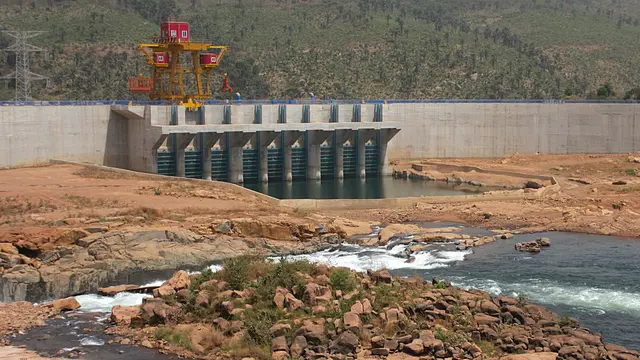
En Afrique de l'Ouest, la construction de barrages à buts multiples est une stratégie clé des gouvernements pour répondre aux besoins nationaux en matière de sécurité alimentaire et énergétique, en particulier dans le contexte de la variabilité croissante du climat. Il existe déjà 150 barrages dans la région et 40 autres sont prévus. Mais le besoin de développement national doit-il pour autant l’emporter sur les droits des communautés locales affectées?
La GWI en Afrique de l’Ouest aborde l'économie politique des barrages à usages multiples et leurs impacts sociaux, positifs comme négatifs, sur les exploitantes et exploitants locaux.
Le coût élevé du développement de l'irrigation à grande échelle, d'une part, et le faible niveau de production de riz constaté de l’autre, soulèvent un certain nombre de questions.
Ces projets agricoles répondent-ils aux besoins de sécurité économique ou alimentaire de manière juste, équitable et sur la base d’un respect des droits ? Les avantages financiers considérables issus de la production d'hydroélectricité profitent-ils au développement des communautés locales? Qui bénéficie le plus des décisions gouvernementales sur l'utilisation de l'eau et des grandes infrastructures?
Publications
- Note politique: Agriculture irriguée et résilience des exploitations familiales : logiques en confrontation
- Note politique: Obtenir le consentement des populations affectées : l’exemple de Kandadji au Niger
- Fiche d’information: Niger: un fonds local pour partager les bénéfices du barrage de Kandadji
- Fiche d’information: Barrages en Guinée : des propositions pour réussir le développement local
- Rapport: Spécialisation ou diversification? Perspectives divergentes sur la riziculture irriguée par trois grands barrages dans le Sahel
Agenda
- 16h: Message de bienvenue et introduction, avec Jamie Skinner
- 16h05: Les barrages à buts multiples en Afrique de l’Ouest: vue d’ensemble, avec Jérôme Koundouno
- 16h10: Une planification économique et sociale réaliste pour le développement de barrages pour l’irrigation en Afrique de l’Ouest, avec Ibrahima Hathie (IPAR Sénégal)
- 16h30: Protéger les droits et partager les bénéfices: enjeux de gouvernance autour des barrages en Afrique de l’Ouest, avec Jamie Skinner
- 16h45: Groupe de discussion sur les perspectives régionales de la société civile et des représentants gouvernementaux, avec Nouradine Touré, Mahamane Touré et un représentant des bailleurs de fonds.
- 17h: Séance de questions-réponses animée par Jérôme Koundouno
- 17h20: Synthèse et conclusion
Contact
Lucile Robinson ([email protected]), Chargée de communication – GWI Afrique de l’Ouest