Ghana’s hidden forestry revealed in first study of its kind
Research in Ghana shows how small businesses that depend on forests employ more than a million people and produce many valuable products, but are left out of national statistics, with big social and environmental consequences.
The neglect of this hidden sub-sector by the state not only contributes to forest loss, but also to a gradual decline in employment prospects and a huge loss of revenue to the government, according to the new study.
The report — Hidden Forestry Revealed — was written by Paul Osei-Tutu and colleagues and published by the International Institute for Environment and Development.
Global concerns that deforestation contributes 20% of the greenhouse gas emissions that cause climate change puts ever increasing scrutiny on what is going on at a national level in countries such as Ghana.
But for local people in Ghana the loss of forests has more immediate impacts. For example, forest loss outside Ghana's forest reserves between 1960 and 1980 led to a 70-80 per cent decline in their contribution to Ghana's timber production and a further loss of 19-27 per cent between 2003 and 2006.
Even in forest reserves there are problems. Only 3 out of 214 were maintained in 'excellent' condition by 1993 according to an independent review.
Loss of forest is undermining employment and revenue in the forest industry, Ghana's fourth largest foreign exchange earner. This exacerbates poverty rather than providing a sustainable opportunity for economic growth.
The new study quantifies for the first time the role played in this story by small forest enterprises (less than 30 employees). These small enterprises are largely left out of formal statistics, government planning and management but may even outweigh the formal forest sub-sector in their contribution to livelihoods and their impact on the sustainability of the forests.
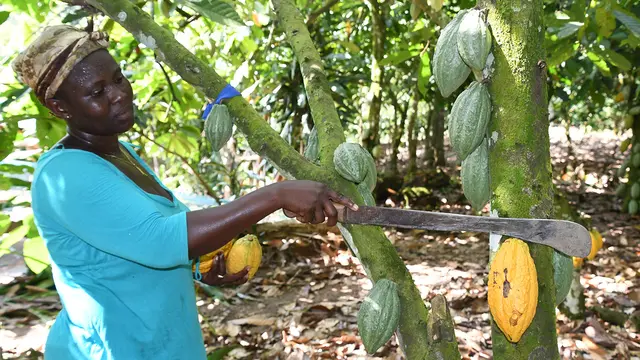
Employing well in excess of a million people across Ghana, these small forest enterprises produce a vast array of local products from construction timber, furniture and biomass energy to non-wood oils, food, spices, dyes, medicines and craft, not to forget ecotourism ventures and the less tangible protection of environmental services.
But the state does not take account of this sub-sector and this contributes to forest loss and a decline in employment prospects, and means that the government suffers a huge loss of revenue.
According to Hidden Forestry Revealed all is not lost.
A new alliance of government and non-government actors has been brokered by Tropenbos International Ghana, with funding from the International Institute for Environment and Development.
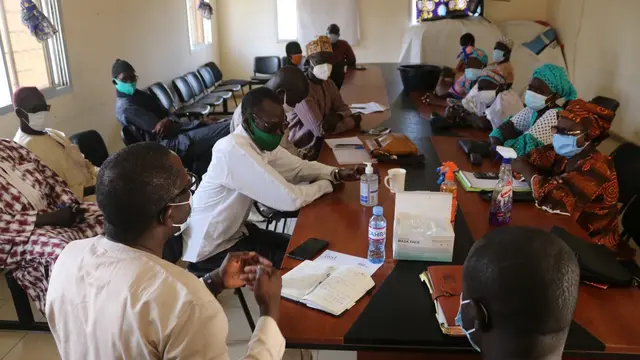
Under the banner of 'Forest Connect' this alliance is starting to reach out and engage with these small forest enterprises, clarify their resource rights, help to organise them and involve them in discussions about sustainability and provide business structures to support them. The long term vision is that small forest enterprises may become the foundation for sustainability, reduced carbon emission and poverty reduction not a threat to those aims.
"This report provides a vital example of the complicated and practical hard work that will be needed to avoid deforestation and provide a sustainable future for local forest dependent people and the planet as a whole," says Duncan Macqueen, Team Leader of the Forest Team at the International Institute for Environment and Development (IIED).
Download the full report