Embedding climate action into informal settlement upgrading: pilot success paves the way
The work of IIED and partners has pushed climate change onto the radar of city planners − who are now integrating climate action into informal settlement upgrading plans.

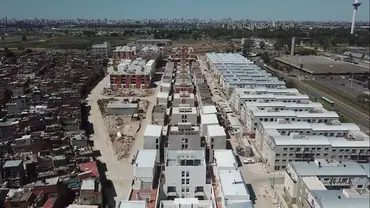
Informal settlement in Buenos Aires known as 'Villa 21' (Photo: Fernando Almansi)
Informal urban settlements are structurally vulnerable to flooding, drought and extreme heat – all impacts of climate change. But people living in these places are rarely included in climate policies and plans and informal settlements receive miniscule amounts of climate funding and investment.
IIED is working with our network of partners to show what taking climate action could mean: community-driven upgrading of housing, infrastructure and basic services.
Under the Transformative Urban Coalitions (TUC) programme, IIED, IIED-América Latina (IIED AL), United Nations University - Institute for Environment and Human Security (UNU-EHS), German Institute of Development and Sustainability (IDOS), and the World Resources Institute (WRI) worked with the Institute of Housing of the City of Buenos Aires (IVC) and city stakeholders to retrofit a nature-based solutions intervention, co-produced with resident associations, and to mainstream climate adaptation and mitigation into informal settlements’ planning and policies.
For IVC’s city planners, the programme shifted mindsets around embedding climate action. Residents reported tangible benefits: more green spaces, cooler and shadier streets, less direct sun exposure and fresher air.
Facilitated exchanges with other cities in Argentina led to the municipality of Rosario integrating climate mitigation and adaptation into the city’s informal settlement upgrading plans. The city has now begun embedding nature-based solutions and climate resilient development into upgrading plans for specific settlements.
In the past, there was almost no consideration of climate change; we worked with standardised design assumptions, and the issue of climate change was not the focus. Today I believe that the TUC project provides us with a space where we can advise each other, exchange ideas and create new teams, better able to tackle the climate change issue in the neighbourhoods.
− Cristian Lara, urban planner, IVC
This work was delivered with support from Germany's Federal Ministry for Economic Affairs and Climate Action.