Country platforms: are we asking the right questions?
As the UNFCCC COP30 approaches in Belém, Brazil, country platforms have gained renewed attention across climate finance discussions. The COP30 Circle of Finance Ministers launched its report with contributions to the Baku–Belém Roadmap in Washington, DC, highlighting five areas that included the creation of country platforms and strengthening of domestic capacity to attract sustainable investments, as a roadmap to mobilise US$1.3 trillion annually by 2035. But amid the excitement, a critical question remains: are the country platforms truly shifting power or simply optimising systems that were never built for equity?



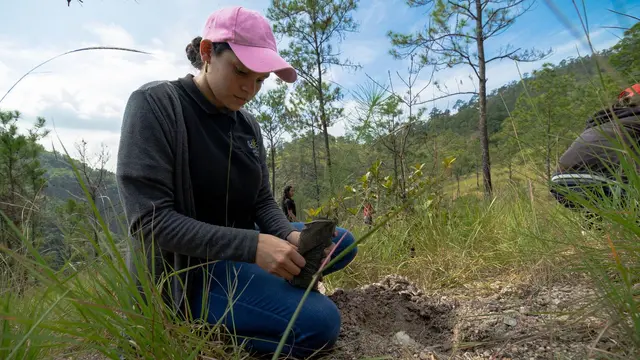
Consultations of communities in Kibaale, Uganda (Photo: copyright LIFE-AR Uganda)
Country platforms have capacity to align diverse funding sources behind national climate priorities, reduce fragmentation and improve coordination.
From the Bangladesh Climate and Development Partnership to the Just Energy Transition Partnerships (JETPs) in South Africa, Vietnam, Indonesia and Senegal, we have seen promising examples emerge. These platforms blend loans and grants, support sectoral transitions, and aim to scale climate action.
Yet, most platforms still operate within donor-recipient frameworks that reinforce existing inequities. Studies show (PDF) that climate finance continues to flow primarily to the most bankable, lowest risk, highest return projects, often in middle-income countries, leaving least developed countries (LDCs) behind.
The examples of country platforms are largely focusing on middle-income countries and convened by the global North with less LDC representation. The result? Hopefully a more coordinated architecture, but not a more just and inclusive one.
LIFE-AR has been working on governance systems including setting up national platforms, albeit with less visibility, but with documented examples in this publication.
The country platform moment at COP30: what LDCs bring to the table
LIFE-AR’s national platforms are designed by and for LDCs, guided by principles that challenge conventional thinking and place countries and communities at the centre of climate finance delivery.
These platforms are not donor-driven, they are governed and implemented by LDCs, rooted in local realities and long-term vision.
- They are country-owned and contextualised, tailored to national institutions, political dynamics and local contexts. There’s no one-size-fits-all blueprint. Recognising barriers to accessing finance, LIFE-AR supports long-term institutional strengthening through a 10-year strategy that builds durable systems and invests in in-country expertise over external consultants.
- More than mobilising finance, LIFE-AR aims to transform climate governance. It embeds locally led adaptation (LLA) principles, with delivery mechanisms that decentralise finance and empower local actors. At least 70% of climate finance is directed to community-prioritised investments.
- Platforms use a whole-of-government and whole-of-society approach, engaging ministries, subnational governments, civil society, academia and the private sector to ensure inclusive governance.
- While aligned with nationally determined programmes, LIFE-AR is more ambitious, reforming governance and transforming climate finance systems through principle-based, country-led planning systems rooted in equitable partnerships.
The six LIFE-AR frontrunner countries, Bhutan, Burkina Faso, Ethiopia, Malawi, The Gambia, and Uganda, are demonstrating what country platforms can achieve. A second cohort is now developing theirs.
All are building track records in effective finance delivery, gender and social inclusion, learning and long-term sustainability.
Rethinking country platforms: lessons from LIFE-AR
Coordination without shifting power will not deliver meaningful results. Real transformation requires confronting the power dynamics that have kept climate finance locked in donor driven cycles. LIFE-AR’s partnership compact redefines relationships between LDCs and stakeholders moving from consultation to co-design, from participation to genuine partnership.
Countries and communities must be decision makers, not just beneficiaries. Locally led adaptation principles emphasise patient, predictable funding and investment in local capabilities. LIFE-AR operationalises this at scale, showing that community leadership isn’t just possible, it’s essential.
Strengthening systems and capabilities is part of climate action. Building knowledge, skills and institutions is as critical as funding adaptation projects. LIFE-AR’s long-term strategy lays the foundation for countries to access diverse funding sources independently, reducing over reliance on traditional donor channels. However, this takes time and sustained investment.
Country platforms must build evidence to demonstrate effectiveness. LIFE-AR follows a phased approach: establishment to strengthen governance, test and evolve to refine delivery mechanisms, and scale up to enable learning and proof of concept.
The LDC communities of practice share lessons across countries, building collective expertise and momentum.

Looking ahead: will country platforms deliver for the most vulnerable?
As COP30 advances, the climate finance actors must ask themselves: will we keep refining coordination within existing power structures? Or embrace transformative models that shift power, build capabilities and deliver finance where it’s needed most? The LDC Group is already on this path.
Seizing this moment requires confronting hard questions: who sets priorities? Who makes decisions? Who benefits? LIFE-AR is beginning to show what’s possible when we design backwards from genuine country ownership, informed by real barriers to accessing climate finance.
For donors and development partners, this means moving beyond efficiency to equity. Streamlined processes that ignore power dynamics won’t deliver. Equity demands shifting decision making authority to the countries and communities most affected by climate change.
For multilateral institutions, it means recognising that coordination is not just technical, it’s political. Aligning finance with national priorities requires navigating governance structures and historical imbalances to build trust.
For private investors, it means seeing locally-owned solutions as both ethical and effective. LIFE-AR’s 70/30 principle to channel finance to locally prioritised investments reduce risk and improves long-term outcomes both social, environmental and financial.
The climate crisis won’t wait for us to get comfortable with 'business-unusual'. We’re racing against time. Radical disruption is needed, along with the courage to innovate, fail and learn.